

Key Takeaways
- The signaling aspects of the endocannabinoid system would be deficient without 2-AG, a key endogenous cannabinoid.
- 2-AG is responsible for the central nervous system, immune system, and other organ activities.
- The most crucial enzymes for its formation are DAGL and MAGL.
- These enzymes could possess some synergistic effects for neuroprotection, inflammation suppression, and mood alteration.
2-Arachidonoylglycerol or 2-AG, has generated significant attention given its role within the endocannabinoid system (ECS). Like all other cannabinoids, they interact with the body through specialized receptors that mediate the actions of endogenous cannabinoids. As a result, 2-AG is one of the most crucial naturally produced molecules that interact with cannabinoid receptors. This article investigates 2-AG, creating an understanding of what it is and its benefits on cannabis users.
What Is 2-AG (2-Arachidonoylglycerol)
2-Arachidonoylglycerol (2-AG) is a type of monoacylglycerol and one of the two most important endocannabinoids which were discovered in humans, together with anandamide.
It is primarily located in the neural tissue where 2-AG is believed to be produced in moderate quantities. As an agonist at cannabinoid receptors, it initiates and ECS stimulation while assisting energy balance and several other activities to achieve homeostasis within the body.
2-AG as a Primary Endogenous Cannabinoid Receptor Agonist
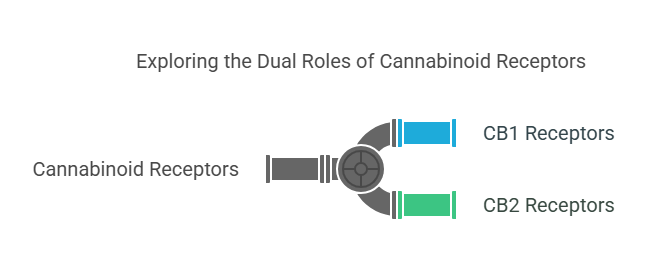
2-AG acts as a full endogenous agonist for both CB1 and CB2 receptors. Full agonism signifies that 2-AG is capable of stimulating these receptors, which results in the induction of cellular responses that affects mood, memory, pain, as well as the immune system activities.
- CB1 receptors are heavily concentrated in most parts of the central nervous system. Their location allows them to regulate the release of specific neurotransmitters and synaptic plasticity.
- CB2 receptors have a higher expression level in peripheral tissues such as the immune system and are believed to modulate the inflammation process as well as the activity of immune cells.
Discovery and Role as the Second Endogenous Cannabinoid
2-AG was discovered as the second endogenous cannabinoid after anandamide. Its discovery was initially in the early 1990s. Its discovery was groundbreaking since it proved the existence of a relatively strong endocannabinoid system throughout the human body. This explains why 2-AG is involved in maintaining tissue integrity. Its value stems from its presence in the brain, immune cells and the tissues of the digestive tract.
How Does 2-AG Interact with Cannabinoid Receptors
With the immune system and the CNS, 2-AG comes into contact with cannabinoid receptors that govern myriad of physiological functions.
The Role of 2-AG in CB1 and CB2 Receptor Activation
The majority of 2-AG receptors are found in the brain area, which explains their ability to significantly influence a person’s cognition, memories, emotion-driven decisions, and body movements. Meanwhile, most peripheral CB2 receptors populate the immune cells with the function of dampening inflammatory responses and immune activation.
This demonstrates that 2-AG has a multifaceted effect on the nervous and immune systems. The 2-AG molecules bind to receptors and keep the body intact during shifts in the environment or in disease states.
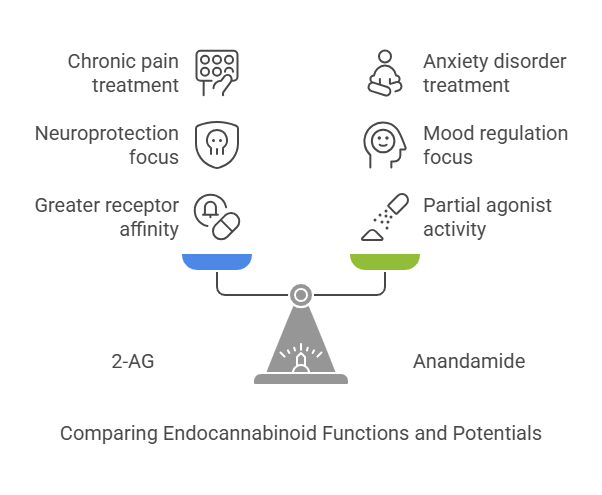
The Differences Between 2-AG and Anandamide
2-AG and Anandamide are neuroprotective cannabinoids in the endocannabinoid system that serve different purposes. Among some of the common differences between them are:
Insights from Rat Brain Studies on 2-AG Distribution
Using animal models, especially rats, studies depict that 2-AG is more concentrated in the limbic forebrain, nucleus accumbens, and hippocampus than other endocannabinoids. Since these areas are concerned with emotions, psyche, memory, and reward, studies on rat tissues also showcased that 2-AG helps in regulating mood and stress to a particular extent. It might have some roles of distribution in the reward system, which relates to smoking self-administration.
Biochemical Pathways of 2-AG: Synthesis and Degradation
The various biochemical processes for the synthesis and breakdown of 2-AG are tightly controlled in specific ways to allow for its optimal use within the endocannabinoid system.
How Diacylglycerol Lipase (DAGL) Synthesizes 2-AG
2-AG is synthesized from diacylglycerol (DAG) by the action of the enzyme diacylglycerol lipase (DAGL). This process primarily occurs in postsynaptic neurons, where it acts as a retrograde signaling molecule, traveling backward across synapses to modulate neurotransmitter release. This ability to influence synaptic transmission is crucial for regulating synaptic plasticity, a process that underlies learning and memory. DAGL’s activity in synthesizing 2-AG is tightly controlled to prevent overstimulation of cannabinoid receptors [1].
Enzymatic Breakdown via Monoacylglycerol Lipase (MAGL)
When 2-AG is no longer needed for signaling purposes, it undergoes swift breakdown due to the action of the enzyme monoacylglycerol lipase. This particular breakdown process is important to the use of the cannabinoid receptors for it seeks to avoid unnecessary processes such as immune suppression and neuronal unresponsiveness. The rapid breakdown of 2-AG through MAGL not only limits the effectiveness of the endocannabinoid but also ensures there are no prolonged adverse effects that upset the homeostasis balance.
Why Rapid Degradation of 2-AG Matters
The fast breakdown of 2-AG is crucial in regulating how long its signal lingers. Prolonging 2-AG’s presence within the cleft can lead to inhibition of cannabinoid receptors, rendering them less useful. It is beneficial for it to break down quickly to constrain the overactivity of the immune system and the unregulated secretion of neurotransmitters. Such regulation prevents the ECS from being lesion responsive for periods but unresponsive when needed, eliminating negative side effects.
Functions of 2-AG in the Central Nervous System (CNS)
This endogenous cannabinoid receptor ligand is useful in regulating body activities within the central nervous system (CNS).
2-AG’s Role in Synaptic Transmission
2-AG is produced by post-synaptic neuron terminals and functions as a messenger to modulate the quantity of neurotransmitter released from the presynaptic terminal. All these events occur in a neuron, where an equilibrium between excitation and inhibition must be maintained. 2-AG attaches to the cannabinoid receptors embedded in the presynaptic neuron, and it is thought that these receptors modulate synaptic plasticity related to learning and memory, which precedes the synapse [2].
Intracellular Calcium Regulation and Homeostasis
Intracellular free calcium is one of the important minerals 2-AG controls in addition to having other inhibitory functions. For instance, by controlling calcium entry into the neurons, 2-AG changes neurotransmitter release, gene expression, and other processes in the calcium signaling cell. Too much or too little calcium affects the function of neurons causing neurodegenerative disorder so it indicates how important 2-AG is for brain homeostasis.
Influence on Limbic System and Emotional Regulation
The limbic system is a complex system responsible for emotions and their expression, motivation, and stress-coping mechanisms. The existence of 2-Arachidonoylglycerol (2-AG) in the amygdala and hippocampus suggests that these places are possibly involved in memory and emotional control. 2-AG modulates may also affect mood changes in depression or anxiety and other types of addiction. Research done on 2-AG can offer solutions on how emotional regulation can be enhanced and therefore treat such conditions.
2-AG in Health and Disease: Implications and Therapies
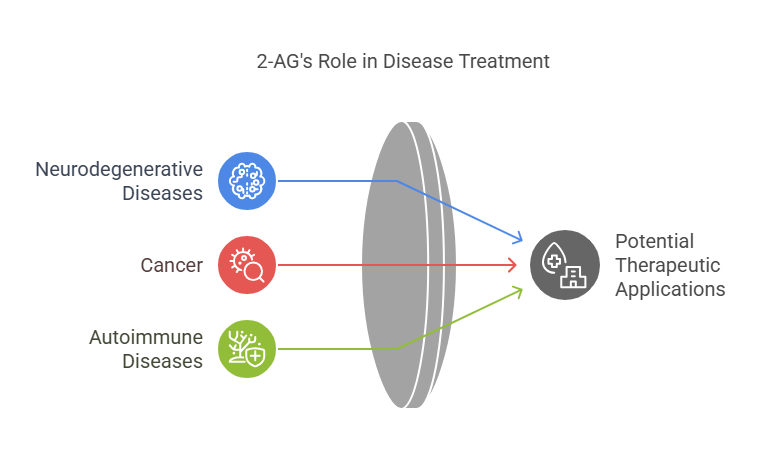
2-AG could be employed in the treatment of neurodegenerative diseases, cancer and autoimmune diseases.
2-AG’s Anti-Inflammatory Effects
The immune system uses 2-AG as an anti-inflammatory, helping it to function properly. For example, Multiple Sclerosis is an autoimmune condition in which an individual’s own body targets its nervous system. This condition is correlated to problems with signaling from the Endocannabinoid System (ECS). 2-AG has the potential to alleviate more than just MS if the CB2 receptors on immune cells are activated, as they are implicated in the inflammation seen in rheumatoid arthritis and inflammatory bowel diseases (IBD), where inflammation leads to tissue destruction and organ impairment.
Therapeutic Potential in Neurological Diseases
Due to its capacity to modulate the ECS and impact neuronal activities in the brain, 2-AG has gained acceptance in treating several neurological disorders. For example, Alzheimer’s disease and Parkinson’s disease are neurodegenerative disorders with marked synaptic and neuronal loss. 2-AG levels are increased in areas of the brain afflicted by these diseases. Furthermore, MAGL inhibitors are hypothesized to act as therapeutic agents for these conditions. These agents may improve the regulation of neurotransmitter release, inflammatory responses, and cognitive functions by enhancing 2-AG signaling[3].
Challenges in Modulating Endocannabinoid Levels
Targeted therapies aimed at 2-AG are complicated because of their quick destruction and other unwanted consequences. Researchers are focusing on selective inhibitors of enzymes like MAGL and DAGL which may give better control over 2-AG levels.
The Role of 2-AG Beyond the Brain
2-AG acts on peripheral systems such as the reproductive system and digestive tract.
2-AG’s Impact on the Digestive System
2-AG is also critical in some peripheral body systems such as the gastrointestinal tract. Animal studies show that 2-AG can change the movement of the intestine and alter the perception of pain.
The canine gut research has demonstrated that 2-AG modifies the enteric nervous system and smooth muscle cells, suppressing the contractions of the gut during digestion. This suggests that 2-AG may be a therapeutic target for gastrointestinal maladies such as irritable bowel syndrome (IBS) and inflammatory bowel disease (IBD), which involve hypermotility and inflammation of the gut.
Involvement in Sperm Activation and Reproductive Health
Among its many functions, 2-AG mediates the activation of sperm with particular regard to the function and efficacy of sperm in mammalian reproduction. Research shows that 2-AG controls the motility of sperm by acting on receptors CB1 and CB2 located in the testes and epididymis. This indicates that 2-AG may be active in the processes of sperm maturation and fertilization, thereby influencing fertility.
Future Directions in 2-AG Research
Targeted therapies can be possible through the learning and studying of DAGL and MAGL suppressors that control 2-AG levels.
2-AG as a Target for Drug Development
The discovery of DAGL and MAGL inhibitors has been a step in the right direction when it comes to drug development that changes the 2-AG signaling. Since 2-AG is known to effect pain, inflammation, and mood a lot, it can be possible that altering the way it is produced or broken down would be useful.
If DAGL is inhibited, the body would have more 2-AG levels which could cure chronic pain, epilepsy, and other neurodegenerative problems. Prolonging the action of 2-AG would be possible through MAGL inhibitors which can give relief from inflammatory problems as well as enhance synaptic transmission in the brain.
2-AG and the Endocannabinoid System in Clinical Trials
Other animal models have provided great insight into the pharmacological effects of 2-AG, but clinical trials will be necessary to assess the safety and efficacy of MAGL inhibitors and other components that alter 2-AG levels in humans. Furthermore, as researchers try to understand the role of 2-AG in health and disease, clinical trials will give us a deeper understanding of therapy’s full potential.
Challenges in Research and Therapeutic Applications
A critical issue of concern for researchers studying 2-AG is managing its levels so that cannabinoid receptors are not either overstimulated or under activated. Over activating 2-AG may result in immune suppression while under activating it may adversely impact memory and mood. Mechanisms concerning the inactivation of endocannabinoids in particular have to be studied further in detail along with the modification of therapies designed to lower 2-AG which are necessary to go from theoretical research to effective treatment strategies.
Frequently Asked Questions
What is 2-AG’s primary role?
2-AG is an endogenous ligand that interacts with CB1 and CB2, receptors that have an effect on the synapse’s functioning, inflammation, and mood.
How does 2-AG differ from anandamide?
2-AG is higher in concentration and a full agonist in comparison to anandamide which makes it a relatively weaker receptor agonist.
Can 2-AG be used as a therapeutic agent?
Research surrounding MAGL inhibitors point towards the possibility of developing specialized therapies for ailments like certain neurodegenerative disorders, chronic pains, and autoimmune diseases.
What diseases are linked to altered 2-AG levels
2-AG is considered to be at abnormal levels in conditions like, but not limited to, Alzheimer’s disease, Parkinson’s, most mental health illnesses, depression, and various arthritis and neural pain disorders.
Conclusion
2-arachidonoylglycerol (2-AG) is an important endogenous cannabinoid receptor ligand within the endocannabinoid system, which plays a critical role in homeostasis. It is useful in health and well-being because it controls such vital functions as processing of pain, immune response, gaining neuroprotection, and synaptic processes. Further research should be conducted on 2-AG to increase its use in health and wellness.
References
- Keimpema, E., Alpár, A., Howell, F., Malenczyk, K., Hobbs, C., Hurd, Y. L., … & Harkany, T. (2013). Diacylglycerol lipase α manipulation reveals developmental roles for intercellular endocannabinoid signaling. Scientific reports, 3(1), 2093. https://doi.org/10.1038/srep02093
- Baggelaar, M. P., Maccarrone, M., & van der Stelt, M. (2018). 2-Arachidonoylglycerol: A signaling lipid with manifold actions in the brain. Progress in Lipid Research, 71, 1-17. https://doi.org/10.1016/j.plipres.2018.05.002
- Kanwal, H., Sangineto, M., Ciarnelli, M., Castaldo, P., Villani, R., Romano, A. D., … & Cassano, T. (2024). Potential Therapeutic Targets to Modulate the Endocannabinoid System in Alzheimer’s Disease. International Journal of Molecular Sciences, 25(7), 4050. https://doi.org/10.3390/ijms25074050