When you’re ready to explore cannabis infusions, there’s no better place to start than with the cannabis double boiler method. Using low heat and slow melting, you can preserve potency and flavor while creating a final product that’s perfect for making edibles or enhancing your favorite recipes. Mastering this technique will help you control your desired temperature, protect delicate plant matter, and achieve consistent potency every time.
Key Takeaways
- The double boil method uses gentle, indirect heat to infuse cannabis into your cooking oil of choice, ensuring the chemical reaction of decarboxylation happens without scorching your cannabis flower.
- Decarbing raw cannabis flower before infusing allows the THC and CBD to become bioavailable (fat soluble), maximizing the health benefits of your final product.
- Stirring occasionally and maintaining low temperatures are crucial for extracting cannabinoids from decarbed cannabis without destroying the desired compounds in the process.
What Is the Cannabis Double Boiler Method, and Why Should You Use It?
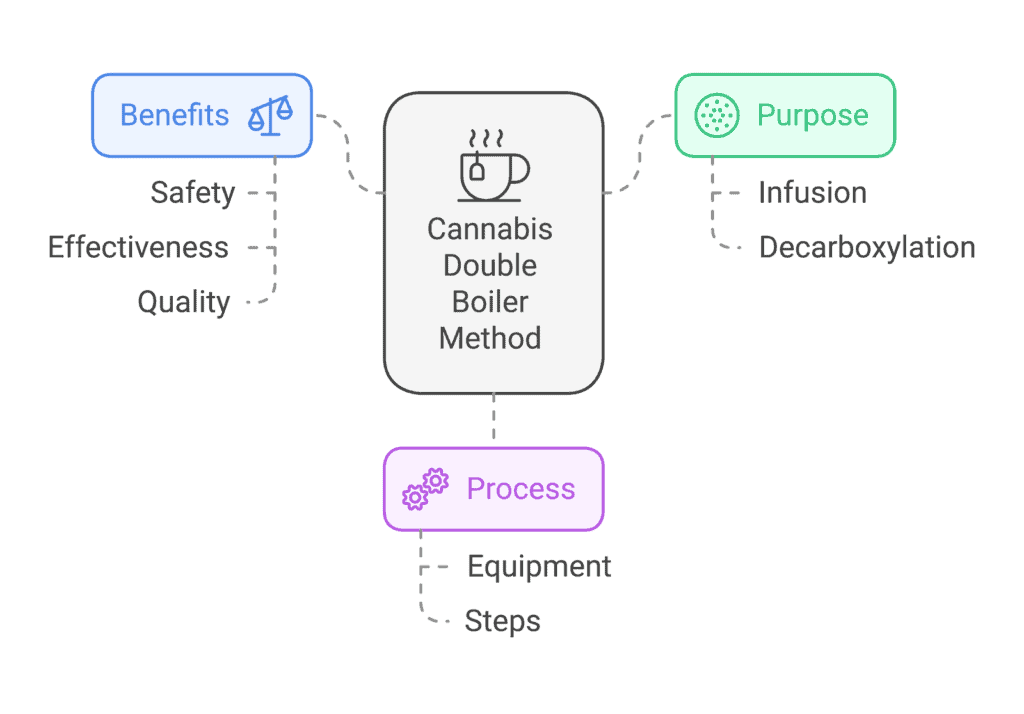
You should use the cannabis double boiler method because it infuses cannabis into oils like coconut oil or olive oil slowly and at low temperatures, helping preserve cannabinoids and flavor better than other methods.
How It Works
This cooking method involves placing your plant material (often ground cannabis or decarbed flower) in a smaller pot or bowl over boiling water.
- The water bath in the bottom pot heats evenly, transferring mild, indirect heat to the top pot.
- This ensures you don’t scorch the cannabis or the cooking oil you’re using.
- Slow melting over a long period maintains a stable infusion process.
Here are some points that highlight how it gently applies the heat source needed to infuse cannabis:
- Indirect heat: Water temperature is regulated to prevent burning.
- Consistent potency: The boiler method keeps your infusion at a desired temperature.
- Retained flavor: Lower heat preserves terpenes and taste.
By keeping the heat controlled, you reduce the risk of a burnt taste or compromised chemical reaction in your cannabis-infused oil.
Why It’s Better Than a Crock-Pot or Slow Cooker
Some folks swear by a crock pot or a slow cooker, but the double boiler method is ideal if you want a more hands-on approach.
Potential Drawbacks
If you’re a set-it-and-forget-it type, you might prefer other methods like using a crock pot. However, if you’re after fresh taste and consistent potency, the double boiler method ensures the final product has minimal plant matter residue and maximum therapeutic value.
Making a quick comparison can help illustrate why double boiling may be your go-to choice:
| Method | Pros | Cons |
| Double Boiler Method | Great temperature control, preserves terpenes, easy stirring occasionally | More hands-on |
| Crock Pot/Slow Cooker | Minimal monitoring, convenient | Higher chance of overcooking, less control |
How Do You Decarboxylate Your Cannabis Flower Properly?
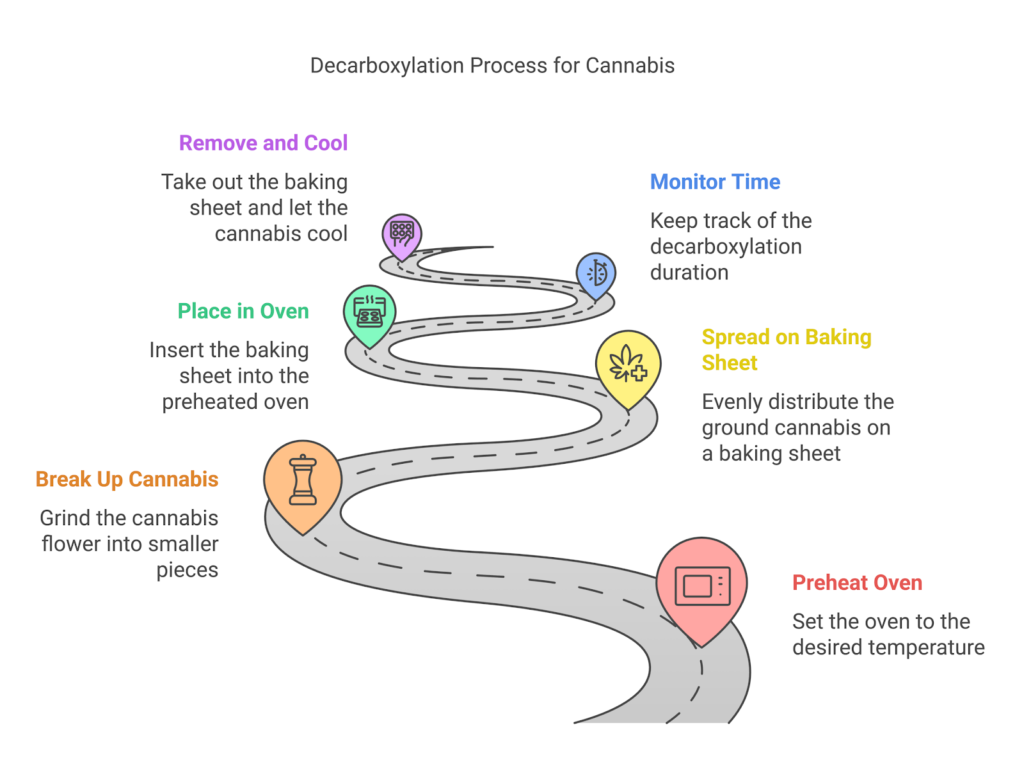
You need to decarboxylate your cannabis to activate the THC and CBD in raw cannabis flower, ensuring you get the most out of your cannabis-infused oil.
Step-by-Step Guide
- Decarboxylation is crucial before making canna oil, canna butter, or regular butter infused with cannabis.
First, preheat your oven to around 230°F (110°C). - Place ground cannabis or raw cannabis flower on a baking tray lined with aluminum foil.
- Bake for about 30-40 minutes, stirring occasionally to get a light brown color.
- Let it cool completely before proceeding.
- Use a coffee grinder if you want a finer texture, but remember that too fine might let more plant material slip into your final product.
- Decarbed weed (or decarbed flower) can be stored in an airtight container in a dark place until you’re ready to infuse.
Store properly and avoid exposure to oxygen, and you’ll preserve the potency of your decarbed cannabis.
Understanding the Decarboxylation Process
This chemical reaction involves converting THCA to THC and CBDA to CBD in raw cannabis.
Recognizing When It’s Done
Your cannabis will appear lightly toasted, which makes it ideal for the infused cannabis steps in the double boiler method.
Which Oils Work Best for the Double Boiler Method?
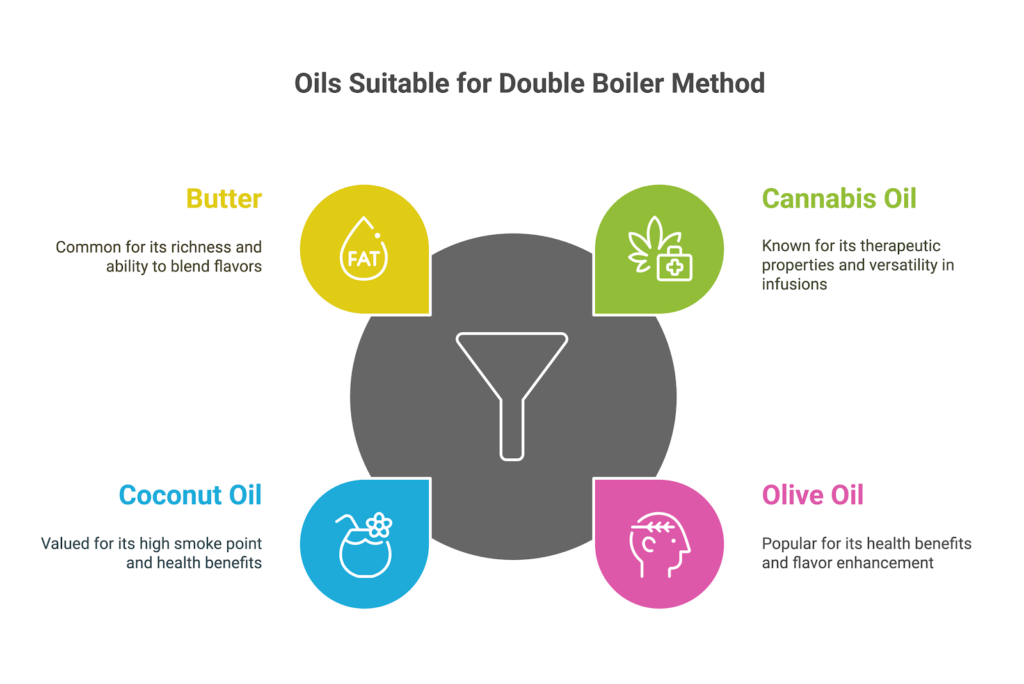
You want to choose an oil that suits your personal preference, but coconut oil and olive oil are favorites for making edibles thanks to their healthy fat profiles.
Coconut Oil vs. Olive Oil
Infused coconut oil is known for its higher saturated fat content, making it excellent for binding with cannabinoids. Olive oil is more delicate but still a great cooking oil if you prefer a lighter taste.
- Coconut oil: Creates a stable product with a longer shelf life due to its composition.
- Olive oil: A good option for health benefits and subtle flavor, though it may have a shorter shelf life.
Coconut oil has a mild sweetness and is often used in baking or with a half teaspoon of any seasoning for dozens of recipes, while the olive oil can be drizzled on bread, salad, or used in light sauces to make a dozen cookies or more with a Mediterranean twist.
Vegetable Oil and Regular Butter
Vegetable oil works well for many recipes but can have fewer health perks compared to coconut or olive oil. Regular butter, on the other hand, is classic for making canna butter if you prefer more traditional edibles.
CBD Oil Infusions
If you’re more into the wellness side, you can add a few drops of high-quality CBD oil to your double boiler infusion to boost the CBD content in your final product.
What Are Some Tips and Tricks for Making Cannabis Infusions at Home?
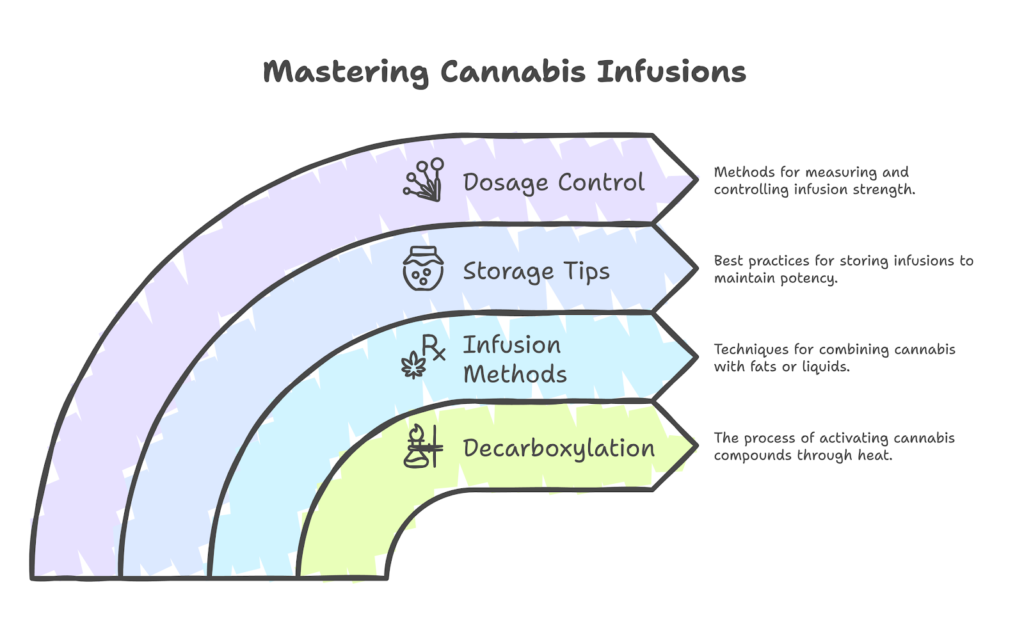
You’ll perfect your cannabis oil recipe by controlling the heat source, using the right ratio of decarboxylated cannabis to cooking oil, and being patient during the infusion process.
Infusion Process Essentials
Proper stirring and consistent temperature are game changers for your infused oil. Keep your mixture over low heat, and never let the water bath boil vigorously.
- Use a cheesecloth or coffee filter to strain plant material so your cannabis infusion remains smooth.
- Add water to the bottom pot only as needed, preventing evaporation or scorching.
- Maintain a desired temperature range (around 180°F to 200°F) to avoid damaging cannabinoids.
Even if you’re only making a small batch, consistent stirring and proper filtration lead to a refined final product with minimal waste.
Enhancing Flavor and Potency
Some folks like to add herbs or spices (think rosemary or thyme) to their infused oil for added complexity.
Storing Your Infused Oil
Always store your infused oil in an airtight container. A dark place helps maintain freshness, prolonging the last batch you made and ensuring no rancid taste creeps in over time.
Tips on Handling Plant Material
If you notice leftover plant matter, filter it out. If you want stronger infusions, let the mixture sit for a few hours, or even overnight, maintaining low temperatures so you don’t degrade cannabinoids.
Conclusion
Mastering the cannabis double boiler method opens up a world of culinary adventures that go far beyond baking brownies or a dozen cookies. By decarboxylating properly, choosing the right cooking oil, and maintaining low heat, you’ll craft potent cannabis infusions with a smooth taste and minimal leftover plant matter. So, grab that baking tray, a bit of aluminum foil, your ground cannabis, and a double boiler—you’re now ready to explore a whole new side of cannabis oil recipes. Just remember to store properly, keep your heat source consistent, and enjoy the fruits of your labor.
How Long Does the Double Boiler Infusion Process Take?
This process can take anywhere from one to three hours. You’ll want to simmer gently, stirring occasionally, to ensure the cannabinoids infuse thoroughly into the oil. A long period of low heat usually improves potency and flavor.
Can I Use Decarbed Cannabis Directly Without Straining?
Yes, you can, but you’ll end up with more plant matter in your final product, which can affect texture and taste. Most people prefer using cheesecloth or a coffee filter to strain out the ground cannabis, resulting in a smoother oil.
How Do I Know My Infusion Is Ready?
Look for a consistent color change and slightly thicker texture in your infused oil. If it smells pleasantly herbal and looks well-combined, you’ve completed the double boil technique successfully for a perfect final product.