Welcome to your informal yet factual guide on thc-tolerance. If you’ve ever wondered why you no longer feel the same effects from cannabis after repeated marijuana use, you’re not alone. This phenomenon, often called cannabis tolerance or THC tolerance, involves how your cannabinoid receptors respond over time. Whether you occasionally enjoy recreational marijuana use or consider yourself among regular cannabis users, understanding how you develop tolerance can help you make informed choices. We’ll explore potential adverse health effects, what triggers tolerance, and how you can manage cannabis consumption more effectively.
Key Takeaways
- Chronic cannabis use and higher doses contribute to faster development of tolerance, leading to reduced THC effects and possible cannabis impairment.
- A tolerance break or t break can help restore sensitivity to marijuana, especially for heavy cannabis users.
- Balancing the frequency of cannabis consumption with awareness of withdrawal symptoms and potential dependence is key to maintaining a safer experience.
What Is THC Tolerance?
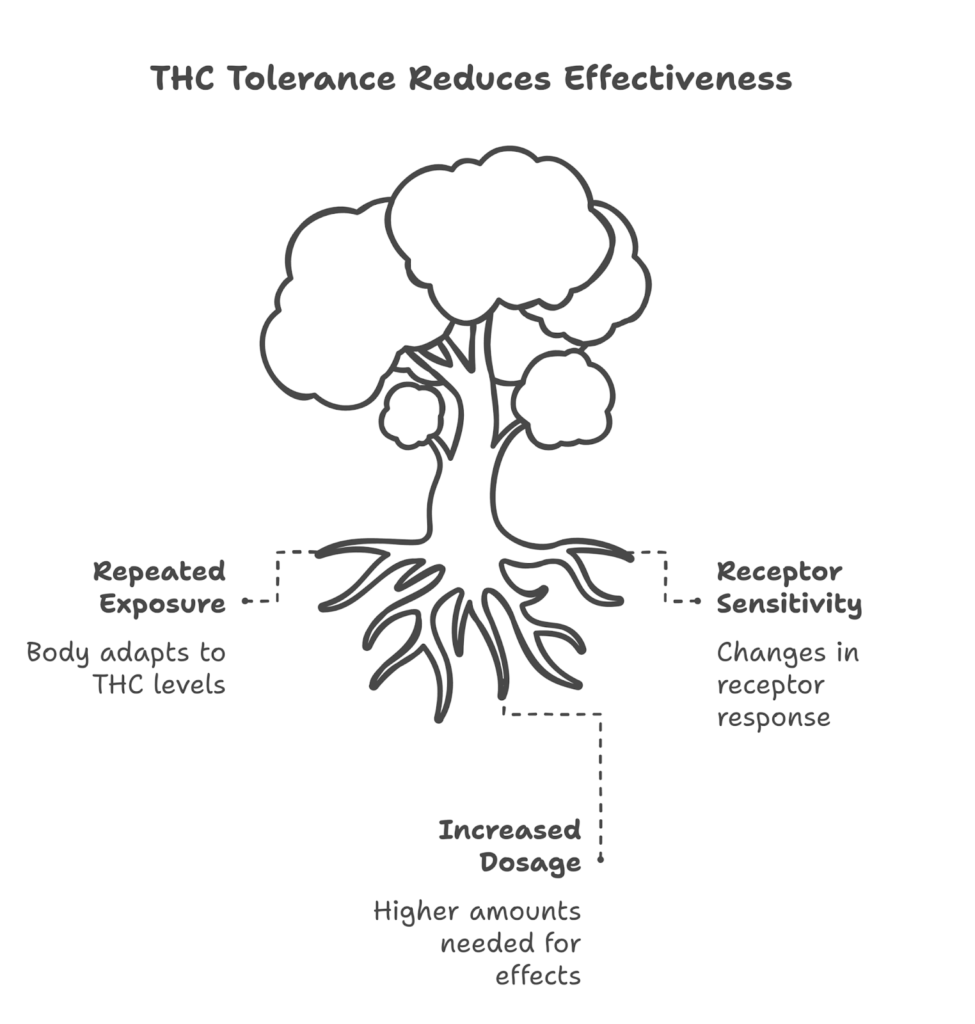
THC tolerance is how your body becomes less responsive to the psychotropic medication properties of marijuana with repeated use. Chronic cannabis users and even occasional cannabis users may find they need more of the substance to experience the same initial high. Over time, if you rely on higher doses, you may risk drug abuse and face challenges such as cannabis withdrawal syndrome, especially if you’re among chronic daily cannabis smokers.
Mechanisms Behind Tolerance
You develop tolerance to cannabis primarily because your brain’s cannabinoid receptors undergo regionally selective downregulation after repeated exposure. This process can reduce the acute effects of the substance, so you may no longer feel that initial buzz, leading you to use more.
- Animal research: Studies using laboratory animals like the rat brain reveal how repeated THC can alter motor inhibition and lead to partial tolerance in controlled tests.
- Behavioral models: Biological psychiatry often examines how psychological and physical factors interact, with repeated exposure to THC causing down regulation of cb1 receptors.
- Influential Studies: Experts such as de wit have explored how cannabinoids affect psychomotor function, showing how chronic users adapt over time.
All these findings highlight that tolerance isn’t just about feeling less high. It’s rooted in how your body adapts to frequent exposure, often requiring higher doses to achieve the desired experience.
Types of Tolerance
In some cases, you might experience different patterns of tolerance to cannabis, depending on your use habits, genetic makeup, and how quickly your body adjusts. Here are a few variations:
- Pharmacodynamic Tolerance: Your cells become less responsive to marijuana, so you need higher doses of THC to achieve intoxication.
- Pharmacokinetic Tolerance: Your body processes cannabis more efficiently over time, reducing the impact of single doses and diminishing your high.
- Cross-Tolerance: Sometimes tolerance to cannabis extends to other drugs with overlapping mechanisms, meaning you might react differently to substances that once affected you in a predictable way.
Whether you develop partial tolerance or full tolerance, knowing the difference can help you adjust your cannabis habits responsibly.
Why Does Tolerance Develop Over Time?
Tolerance to cannabis develops through repeated substance exposure that leads your body to adapt. Chronic users often find they need higher doses to feel the same effects, which can raise concerns about dependence, cannabis impairment, and potential adverse health effects.
Biological Factors
On a biological level, your brain chemistry adjusts when exposed to cannabis repeatedly. This adaptation involves cb1 receptors becoming less responsive, tied to the development of tolerance.
- Chronic Cannabis Use: Chronic cannabis can trigger a steady down regulation of cannabinoid receptors, eventually requiring more marijuana for the same high.
- Neurological Adjustments: Repeated exposure can influence motor inhibition and psychomotor function, making the impairing effects less noticeable.
- Receptor Desensitization: Some research points to regionally selective downregulation in the brain, where certain areas reduce receptor activity faster than others, complicating your experience.
These shifts can be especially noticeable in chronic daily cannabis smokers, whose frequent use paves the way for deeper neurological changes.
Behavioral Influences
Your habits and environment also affect how quickly you build tolerance. Factors like how often you use cannabis, where you do it, and your overall lifestyle all play a part.
- Frequency of Use: Heavy cannabis users and regular cannabis users build tolerance faster than occasional cannabis users, often needing higher doses.
- Contextual Clues: Consistently pairing marijuana use with specific places or times can make your brain anticipate the drug, dulling its effects.
- Concurrent Substances: Combining cannabis with other drugs or alcohol can magnify tolerance and lead to extra adverse health effects.
Regular users might grapple with withdrawal or nausea if they quit suddenly, while some rely on a cannabis tolerance break or t break to reset their system. Seeking additional resources can help you develop healthier patterns of marijuana use.
How Does Tolerance Impact Your Cannabis Experience?
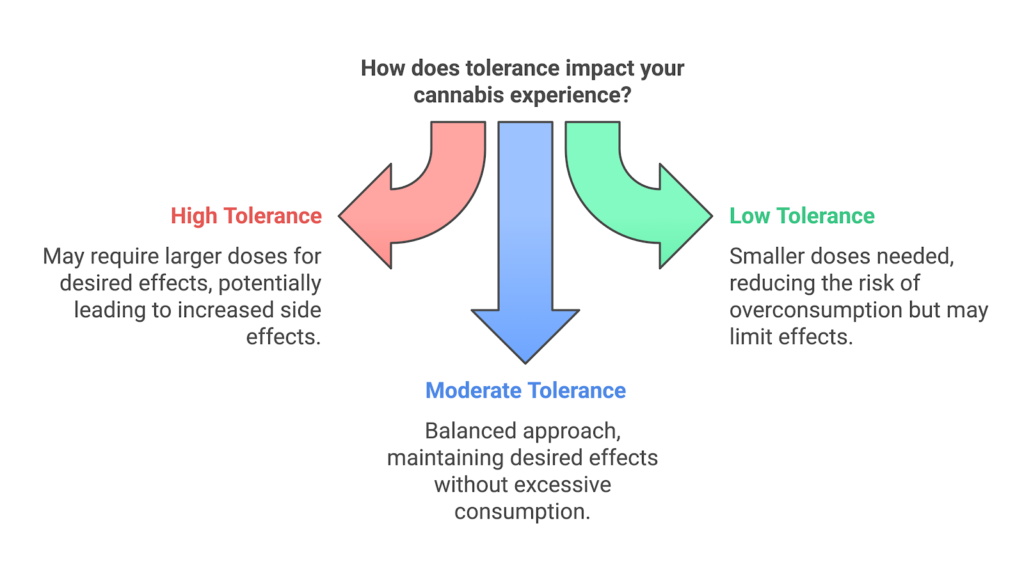
Rising tolerance can alter how you perceive cannabis, from the intensity of your high to overall satisfaction. Chronic cannabis use might mean needing ever-increasing amounts, potentially leading to fewer benefits and escalating concerns.
Physical and Psychological Effects
Physically, high tolerance can hide certain side effects while pushing you to use a larger dose for the same relaxation or euphoria. Psychologically, cannabis may no longer provide the relief or enjoyment it once did.
- Increased Consumption: As your THC tolerance and cannabis tolerance rise, you might switch to stronger cannabis products or higher doses.
- Potential Withdrawal Symptoms: Heavy cannabis users who stop abruptly may face withdrawal symptoms like headaches, irritability, nausea, or anxiety—signs of addiction or withdrawal.
- Reduced Intoxication: Over time, you need more cannabis to achieve the same intoxication, risking further escalation if not monitored.
Taking a planned tolerance break can help reset your system, though it may involve short-term discomfort if you’re used to a high tolerance.
To give you a clearer perspective, here’s a quick comparison of low tolerance and high tolerance:
| Low Tolerance | High Tolerance |
| Strong euphoric effects | Milder or diminished euphoria |
| Greater sensitivity to small doses | Requires higher doses for the same effects |
| Noticeable impairment | Potentially less obvious impairment |
| Likely to experience “couch-lock” | May feel compelled to keep consuming more |
| Increased risk of acute side effects (e.g., paranoia) | Gradual onset of withdrawal symptoms if usage stops |
Risks and Considerations
Raising your tolerance doesn’t just affect how high you feel; it can introduce complications for your health, budget, and routine.
- Escalating Costs: Consuming more cannabis to reach the same high can strain your finances.
- Health and Safety: Chronic cannabis users might encounter cannabis withdrawal syndrome, along with heightened cannabis impairment that impacts driving performance and divided attention.
- Long-Term Effects: Persistently higher doses may trigger adverse health effects, including altered psychomotor function and changes in brain chemistry.
Being aware of these risks helps you make smarter decisions, whether you’re a newcomer or a seasoned user.
What Can You Do About THC Tolerance?
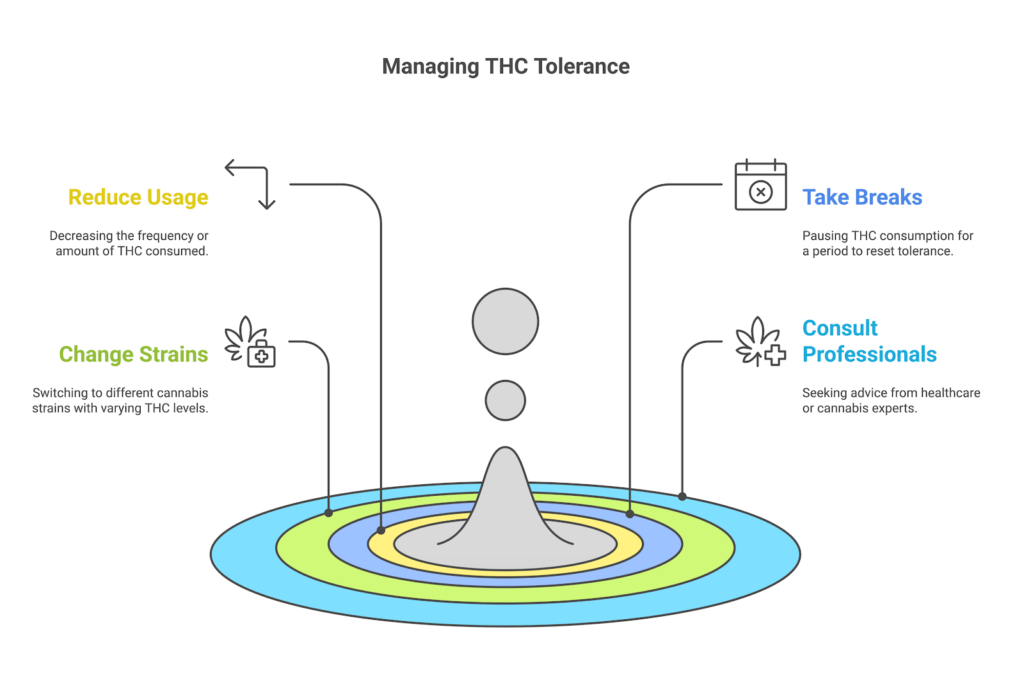
If you’re noticing you’re not getting the same effects, a few simple adjustments can help. Everyone’s body is unique, but these steps can guide you in resetting or reducing your thc tolerance.
Taking a Tolerance Break
A cannabis tolerance break, often called a t break, means abstaining from marijuana for a set time. This is especially useful for chronic daily cannabis smokers or heavy cannabis users who want to lower tolerance and avoid severe withdrawal symptoms.
- Duration: Even a few days away from cannabis can bring noticeable results, though some recommend at least two weeks.
- Managing Withdrawal: You might deal with irritability, sleep problems, or appetite changes—symptoms of cannabis withdrawal syndrome—but these usually pass.
- Gradual Reduction: If quitting entirely feels too tough, tapering your use can help you adjust more smoothly.
A deliberate break can help renew your sensitivity to THC and recalibrate how cannabis fits into your life.
Other Strategies To Manage Tolerance
Sometimes you can’t or don’t want to take a full break. Here are more ways to manage your thc tolerance:
- Alternate Strains: Rotate between different cannabis products to avoid constant exposure to the same cannabinoid profile.
- Microdosing: Reducing your dose can help your body reset without full abstinence and may lower potential adverse health effects.
- Mindful Use: Notice how you feel before, during, and after cannabis consumption. Recognizing your limits helps prevent dependence and curbs excessive intoxication.
These methods can keep your tolerance at a manageable level without cutting out marijuana entirely.
Conclusion
THC tolerance is a natural consequence of repeated marijuana use, but it doesn’t have to dictate your experience. By staying aware of the biological and behavioral factors involved, you can keep your tolerance in check. Whether you plan a structured t break or adjust your cannabis consumption, being mindful about how you use cannabis allows you to enjoy its benefits while minimizing risks.
Frequently Asked Questions
Is a Tolerance Break Necessary for Everyone?
Not always. If you’re a light or occasional cannabis user, you might not need a formal cannabis tolerance break. But if you find yourself using more to feel the same effects, a planned break can be beneficial.
How Long Should a T Break Last?
Many people suggest a two-week t break to reset tolerance, but it can vary. Some chronic users may need a month or more to fully readjust, while others notice improvements after just a few days.
Can Switching Strains Prevent Tolerance Buildup?
Alternating strains may slow tolerance by exposing you to different cannabinoid profiles. However, if you consistently use higher doses, you could still build tolerance no matter which strain you choose.