You may be a cannabis grower or not, but you’ve likely heard of thrips. Though sometimes barely noticeable to the naked eye, they can make all the difference if not controlled. So let’s take a moment to discuss a bit about cannabis thrips, why they are relevant, and how to avoid their ruining your harvest. By the end, you will know how to locate, avoid, and even deal with infestations from thrips so that your cannabis remains green and flourishing.
Key Takeaways
- Thrips are small, flying pests that suck cells from cannabis leaves, which makes streaky marks or markings on the plant.
- Effective control often consists of a combination of prevention measures, environmentally friendly treatments, and integrated pest management (IPM).
- Prevention is typically the best defense against infestation through means such as reflective mulch and sticky traps.
What Are Cannabis Thrips, and Why Should You Be Concerned?
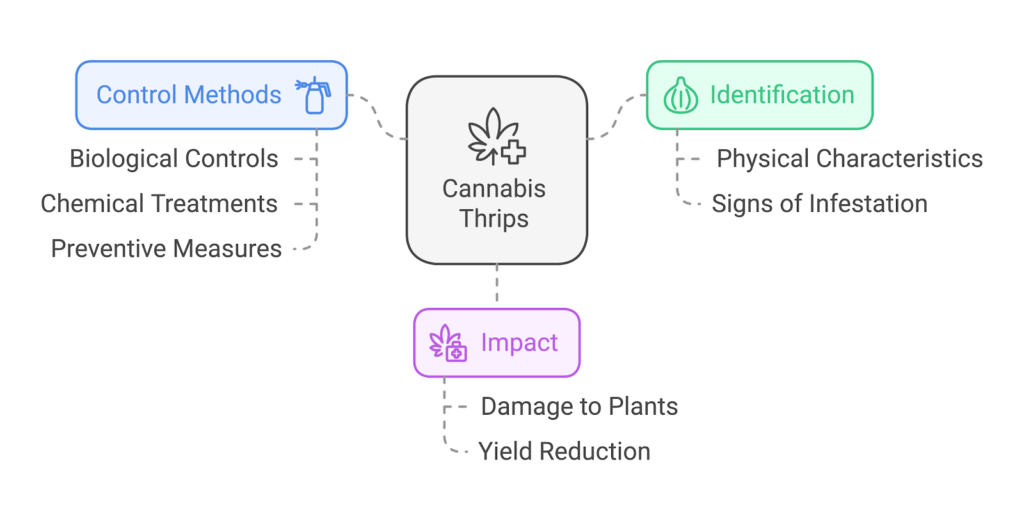
Cannabis thrips are such minuscule insects that folks often don’t notice them until the damage becomes impossible to ignore. They feed on the inner liquids of your cannabis leaves, which can weaken the entire plant over time. Moreover, certain thrips might carry unwanted plant diseases, including the notorious tomato spotted wilt virus. This virus can compound your growing headaches, decreasing both the quality and quantity of your yield.
How Do Thrips Affect Cannabis Plants?
Thrips wreak havoc by piercing the outer surface of cannabis leaves and sucking out the good stuff within. A few key symptoms or signs might pop up:
- Stunted Growth
Thrips interfere with normal development, leaving plants puny and not nearly as robust as they should be. - Visible Discoloration
You might see silvery or bronze lines on leaves. These markings often indicate heavy thrip feeding activity. - Potential Disease Spread
Of all the various thrip species, western flower thrips are infamous for spreading pathogens such as the tomato spotted wilt virus.
Thrips can spread quickly from one cannabis plant to the next by hopping around if left unchecked. They can hurt large sections of your garden before you even know what is going on.
Understanding the Thrips Life Cycle
One reason thrips can be so troublesome is their complex life cycle. Knowing each stage helps you plan your attack:
- Egg Stage
Female thrips deposit eggs within plant tissues, making them nearly invisible to the naked eye. - Larval Stage
These young thrips don’t have wings yet, but they consume plant material with gusto, causing a lot of the visible damage. - Adult Stage
Fully grown thrips can fly, spreading from one cannabis plant to another and making infestations even harder to contain.
Checking for all stages—especially in hidden spots—can save you from a widespread outbreak.
How Can You Prevent Thrips on Cannabis Plants?
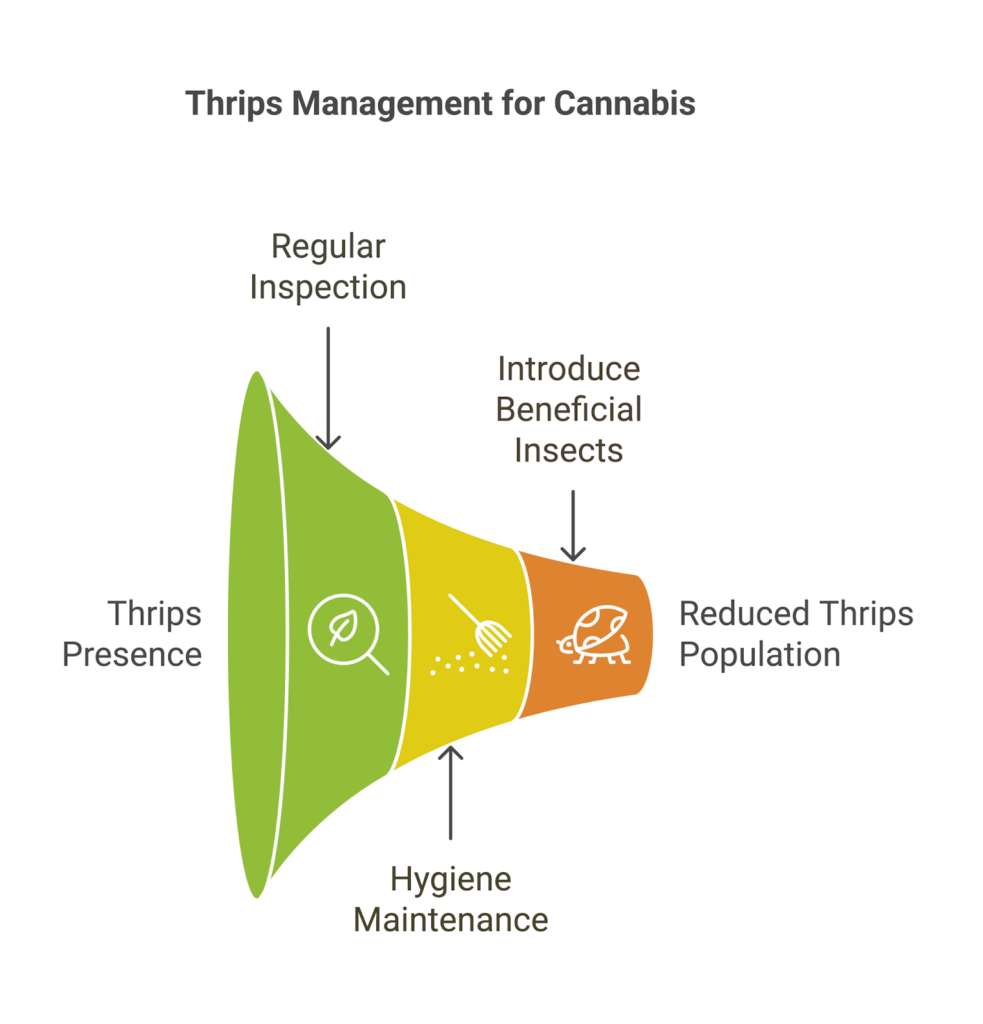
Prevention is your best bet when it comes to thrips—or any pest, really. By making your grow space less attractive, you’ll be one step ahead of an infestation.
Practical Tips to Stop Thrips Before They Spread
- Use Reflective Mulch
Thrips prefer dimmer environments. Reflective mulch bounces more light around, discouraging them from settling in. - Set Up Sticky Traps
Placing sticky traps around your grow site can catch adult thrips before they cause too much trouble—and serve as a handy warning signal. - Inspect New Plants Thoroughly
If you’re bringing in clones or potted plants from elsewhere, give them a good look. Thrips are notorious hitchhikers.
With these straightforward strategies, you’ll reduce the odds of a thrip population exploding in your garden.
Transitioning to Integrated Pest Management
Integrated pest management (IPM) combines multiple methods to tackle pests in a sustainable, long-term way. When you’re facing cannabis thrips, IPM usually includes:
- Cultural Controls
Maintaining a tidy grow room (cleaning tools, removing plant debris, discarding heavily infested plants) reduces safe spaces for thrips to multiply. - Biological Controls
Some insects—like predatory mites—feed on thrips, keeping their numbers in check. These beneficial bugs help restore balance without chemical sprays. - Targeted Treatments
Neem oil and insecticidal soaps can be applied to problem areas, controlling thrips while still being gentle on your plants.
It means not just squashing an active thrip infestation but also a healthier growing environment overall if you adopt an IPM philosophy.
What Are the Most Effective Ways to Eliminate Thrips?
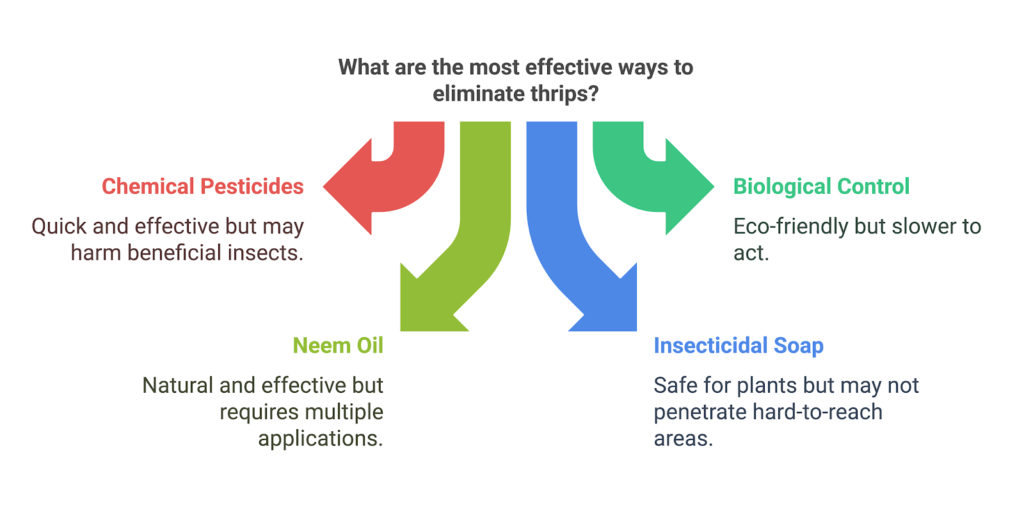
If you see thrips on your cannabis, time really does matter. The faster you can respond, the more likely it is that you can limit the damage.
Natural Solutions to Combat Thrips
- Beneficial Insects
Predatory mites and ladybugs are nature’s little warriors. Once released, they feed on thrips and help keep the population down. - Neem Oil
A tried-and-true natural pesticide, neem oil disrupts thrip development. It’s a popular choice for organic growers. - Insecticidal Soaps
These soaps knock out thrips upon contact and won’t harm your cannabis plants if used correctly.
By employing these eco-friendly methods, you’ll sidestep harsher chemicals while still protecting your prized cannabis crop.
Comparing Natural and Chemical Thrip Treatments
| Treatment Type | Benefits | Drawbacks |
| Natural (e.g., neem oil) | Gentle on plants and the environment | May need several applications |
| Chemical Insecticides | Fast and highly effective | Possible risks to plant health and soil |
Chemical treatments can offer a quick fix, but they’re usually best reserved for dire cases or when gentler options haven’t worked. Keeping chemicals as a last resort helps preserve your soil and the overall balance of your grow space.
Transitioning From Treatment to Prevention
Once you’ve managed to eliminate thrips, don’t forget to stick to preventative strategies. Tools like sticky traps and reflective mulch continue to be helpful even after your thrip problem is gone. Monitor plants regularly so you can act at the first hint of a new invasion.
How Do Thrip Management Strategies Improve Cannabis Harvests?
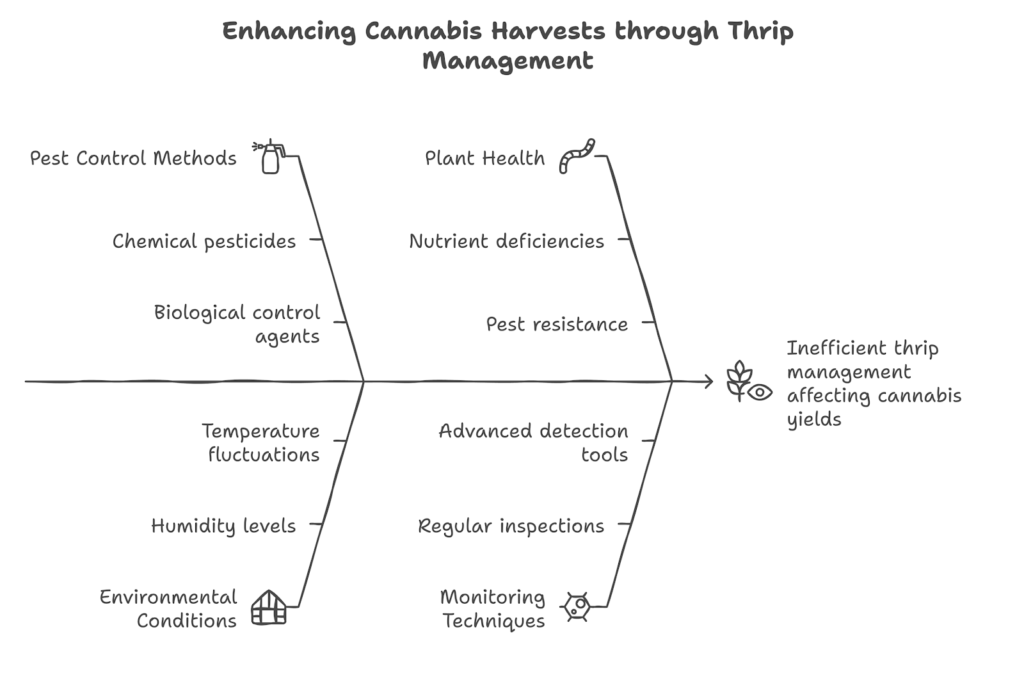
Good thrip control isn’t just about killing pests; it’s about nurturing vibrant, high-yield plants. By safeguarding your cannabis from thrips:
- Inspect Leaves and Stems Regularly
Early detection is half the battle. - Act Swiftly
Jump on infestations at the first sign to keep thrips from spreading far and wide. - Use a Mix of Methods
Combining natural solutions, cultural practices, and, if needed, chemical remedies ensures thrips stay under control.
Benefits of Predatory Insects in Cannabis Cultivation
- Environmental Safety
Predatory mites and other beneficial insects target thrips without harming your cannabis or good bugs. - Budget-Friendly
Once established, predatory insects can cut down on your need for extra sprays or treatments. - Adaptable
These insect allies can thrive in indoor, outdoor, or greenhouse environments.
With these biological reinforcements, your cannabis plants can flourish free from the stress of constant pest attacks.
Conclusion
Though cannabis thrips might be common, they’re by no means unbeatable. With a blend of preventive measures, thoughtful natural solutions, and an integrated pest management game plan, you can defend your garden from these leaf-munching intruders. Stay proactive—frequent scouting and immediate action are vital for keeping thrips in check. By taking these steps, you’ll set yourself up for a healthy, bountiful cannabis harvest without the headache of relentless pest issues.
Frequently Asked Questions
How can I identify thrips on my cannabis plants?
Look for tiny, winged insects and metallic or silvery streaks on your leaves. Thrips also stunt growth, so plants may appear weak.
Are natural methods effective against thrips?
Absolutely. Neem oil, insecticidal soaps, and introducing predatory insects can control thrips without harming your plants.
What’s the best way to prevent thrip infestations?
Use reflective mulch, deploy sticky traps, and thoroughly inspect any new plants you bring into your growing space. A watchful eye is your best defense!