Key Takeaways
- Cannabinoids created endogenously assist with immune responses and pain relief as well as synapse changes.
- An endocannabinoid system consists of a variety of elements, including cannabinoid receptors, endogenous ligands, and metabolic enzymes.
- Interventions aimed at this system might conceivably be employed to treat neurological, inflammatory, and autoimmune diseases.
- To be healthy, an equilibrium between body cannabinoids and introduced cannabinoids should be maintained.
Endogenous cannabinoids belong to the category of lipids, which perform the role of neurotransmitters and are manufactured by the body. These lipids act on the CB1 and CB2 receptor types. The role of these cannabinoids within the human body is highly modulatorial to functions like emotion and memory, where several factors are regulated by the end molecules, hence explaining the balance of the body. This article will provide a detailed analysis of endogenous cannabinoids along with the effects and body response to the cannabinoids.
What Are Endogenous Cannabinoids and How Do They Function
Endogenous cannabinoids, or endocannabinoids, are lipid-based neurotransmitters that are synthesized in the body.
Key Components of the Endocannabinoid System
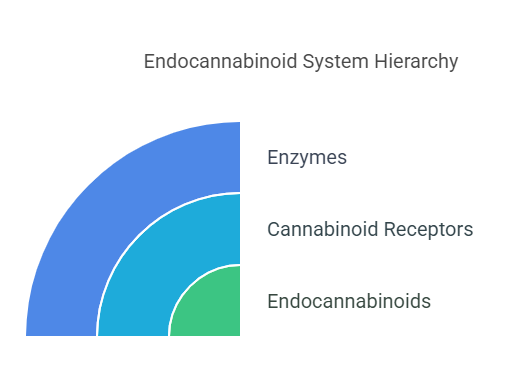
The endogenous cannabinoid system, also known as an ECS, is a complex network of biological structures that oversees multiple biological functions and helps maintain equilibrium in the system. It comprises three main parts.
- Endocannabinoids They are naturally existing bodies such as anandamide (AEA) and 2-AG, which act as biochemical intermediates during cell-to-cell communication
- Cannabinoid Receptors: Include CB1 receptors located in the brain and central nervous system and CB2 receptors sited to the immune and peripheral systems.
- Enzyme proteins, like FAAH (fatty acid amide hydrolase) and MAGL (monoacylglycerol lipase), create and metabolize endocannabinoids to keep their effects local and short.
Interaction with Cannabinoid Receptors
Endocannabinoids work as active agonists for G protein-coupled receptors and influence the auto-effector role of neurons and the body’s metabolism. They also positively enhance the different functional properties of the central nervous system. For instance, the activation of the CB-1 receptors would, as an extrapolation likely suppress neurotransmitter release and so inhibit synaptic activities.
How Are Endogenous Cannabinoids Synthesized and Metabolized
Endocannabinoids are synthesized in cell membranes and broken down by enzymes like FAAH.
Endocannabinoid Synthesis Pathways
In contrast to classical neurotransmitters, the newly formed endocannabinoids serve a different function, as they are only created when necessary. This begins with specific membrane phospholipids, which are converted into modified forms of arachidonic acid with the help of some enzymes.
The construction of the endogenous cannabinoid anandamide is aided by N-acyltransferase and NAPE-PLD. However, in the case of 2-AG instead, a DAG lipase is more appropriate
Arachidonic Acid as a Precursor
Both anandamide and 2AG possess arachidonic acid as a core building block, additionally classifying them as organic compounds. Other properties, such as availability and metabolism, may influence this compound, but its level significantly impacts these endocannabinoids.
What Role Do Endogenous Cannabinoids Play in Synaptic Plasticity
Endogenous cannabinoids possess regulatory functions that modulate numerous physiological aspects, such as synaptic plasticity.
Understanding Depolarization-Induced Suppression
The endocannabinoids DSE and DSI have push and pull abilities that suppress depolarized and stimulated neurons, known as postsynaptic neurons, from releasing additional neurotransmitters by binding presynaptic CB1 receptors.
Postsynaptic Neurons and Retrograde Signaling
Within postsynaptic neurons, endocannabinoids are classified as retrograde messengers, which means they move backward to present the presynaptic neurons. Such retrograde signaling is essential in regulating synaptic activity, especially the excitatory and inhibitory synapses.
Modulation of Glutamatergic and GABAergic Synapses
Endocannabinoids prevent overstimulation at glutamatergic synapses by suppressing the release of excitatory neurotransmitters such as glutamate receptors. Such overstimulation is equally tuned at GABAergic synapses, where they inhibit excessive inhibition through modulation of inhibition signaling.
How Do Endogenous Cannabinoids Affect the Central Nervous System
Endogenous cannabinoids play a role in modulating neuronal excitability, synaptic efficacy, and neurotransmitter release within the central nervous system.
CB1 Receptors and Neuronal Excitability
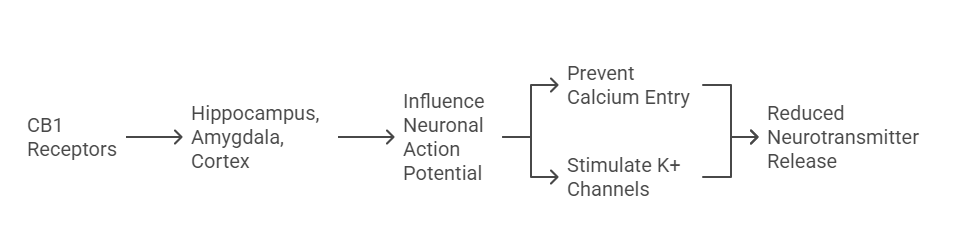
Regulation of Synaptic Strength and Transmission
Synaptic strength is disrupted by endocannabinoids by changing the chance of synaptic terminals releasing neurotransmitters. This regulation is critical for processes concerning learning and memory since it is foundational to long-term potentiation (LTP) and long-term depression (LTD).
Role in Brain Regions like the Hippocampus and Ventral Tegmental Area
Hippocampal endocannabinoid acts as a synapse potentiator and plays an integral role in spatial memory. Within the ventral tegmental area, it influences dopamine pathways that promote dopamine synthesis and influence motor control.
What Are the Peripheral Effects of Endogenous Cannabinoid Signaling
Endocannabinoid signaling plays a role in the perception of pain and addresses immune responses.
Endocannabinoids in Peripheral Nervous System
Endocannabinoids are essential constituents of the peripheral nervous system (PNS), as they help regulate quite several internal activities, movement, and sensing. Endocannabinoids help to relay information from the body’s limbs to the nervous system. These molecules ensure that the body can respond and adjust to different environmental changes to attain sound stability.
Interaction with Immune Cells
- Immune Modulation: Endocannabinoids are lobbyists of crosstalk with pro-inflammatory cytokines, suppressing the secretion of pro-inflammatory cytokines and allowing the secretion of anti-inflammatory molecules as they interact with the CB2 receptors.
- Role in Autoimmune Diseases: Understanding the endocannabinoid system in relation to the management of multiple sclerosis or rheumatoid arthritis implies that these conditions are more immune response disorders. Endocannabinoids modulate immune cell activity, such as symptoms, and hence disease progression can be prevented.
How Do Exogenous Cannabinoids Differ from Endogenous Ones
Exogenous marijuana contains external cannabinoids like THC, which are proven to result in longer effects when combined with endocannabinoids.
Comparison Between THC and Endocannabinoids
Anandamide is a great example of an endocannabinoid, as it is present in the body and only serves a localized role. On the other hand, exogenous cannabinoids that come from plants like THC serve to impact the body as a whole rather than serve a localized purpose. THC also easily loses stability with a higher affinity of CB1 receptors and acts longer and much stronger than the endocannabinoids would.
Synthetic Cannabinoids and Their Impact
Due to the stronger binding, synthetic cannabinoids bond far stronger to the cannabinoid receptors than endogenous cannabinoids do. As the synthetic cannabis attaches itself strongly, it sometimes leads to a danger of overdosage, which can result in anxiety, psychosis, or heart problems.
Emerging Research and Clinical Implications
- Targeting endocannabinoids would lead to better outcomes for patients suffering from epilepsy, Alzheimer’s disease, and Parkinson’s disease.
- Endocannabinoids are known to influence gut movement and gut inflammation. They may also be effective in the directed treatment of irritable bowel syndrome as well as a variety of intestinal disorders.
- Endocannabinoids facilitate the treatment of autoimmune diseases such as multiple sclerosis by altering immune cell functions. This means that the clinical purposes of this molecule could be in the form of managing persistent inflammation, repairing damaged tissues, and activating the CB2 receptor to activate rebuilding tissue after a prolonged response.
Conclusion
Research on bioactive substances has always been focused on single chemical compounds, but the breakthroughs regarding endogenous cannabinoids indicate there is a much broader scope. These bioactive substances support synaptic function and immune system activity, making them good agents for the treatment of various diseases. There should be a more collaborative effort in researching the endocannabinoid system, as this could greatly benefit the healthcare industry.
Frequently Asked Questions
What are endocannabinoids, and how do they function
Endocannabinoids are specialized liposoluble molecules synthesized and acting within the body that bind to pain, emotion, and immune system processes, among several important bodily needs.
How do endocannabinoids differ from THC
Endocannabinoids are produced naturally in the body and are localized, while THC is an exogenous cannabinoid originating from cannabis, and is more potent as well as exerting widespread effects.
Can targeting the endocannabinoid system help with chronic pain
Signals associated with endocannabinoids could potentially be turned on or influenced for the treatment of chronic pain or inflammation.
What is the role of FAAH in the endocannabinoid system
FAAH serves a significant function by metabolizing anandamide with the result of permanently ceasing any communication it is able to issue within a specified area and allowing only a minimal short-term effect.