Potassium helps your cannabis grow healthy, and notably, deficiencies would really impede development, yield, and the quality of your cannabis if it were deficient. Potassium stimulates the processes of photosynthesis and absorption of water and nutrients through the plant, generally keeping them in good health. This article will be a comprehensive guide on the identification, treatment, and prevention of cannabis potassium deficiency and on ensuring that your plants are healthy and productive at any growth stage.
Key Takeaways:
- Potassium is fundamental in plant growth, photosynthesis, and nutrient uptake, therefore essential in cannabis farming.
- The deficiency of potassium in cannabis shows yellowing or browning on the older leaves and stunted growth.
- This can be balanced with nutrients by adjusting pH levels or managing the growing medium.
What are the signs of cannabis potassium deficiency?
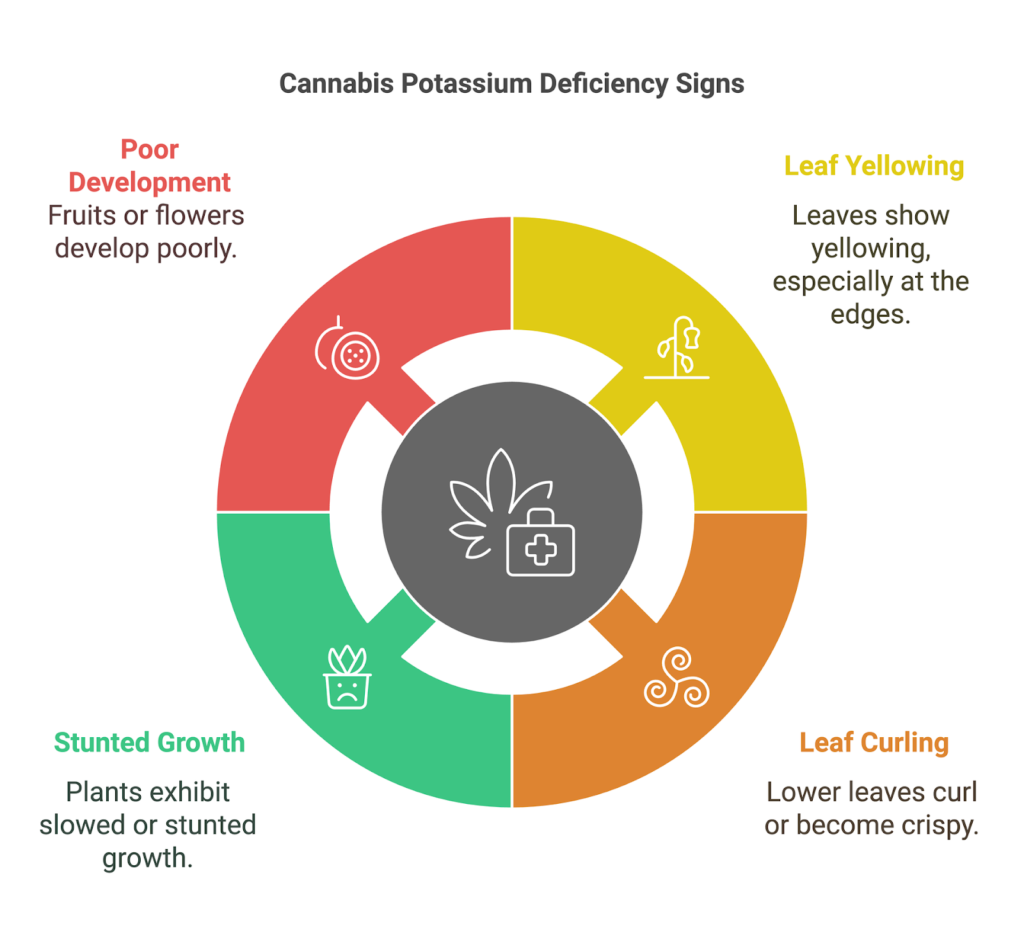
It generally starts at the older leaves and can manifest quite mildly initially. However, this can advance rapidly. Severe damage will thus be avoided when detected early.
How Do Cannabis Plants Display a Potassium Deficiency?
- Leaf Yellowing: The leaves appear yellowish along the edges in older leaves but gradually develop that color over the entire plant once the cannabis has depleted all the potassium.
- Browning Tips: If the leaves dry, turn brown, and look like nutrient burn, that is a symptom of severe deficiency.
- Curled Leaves: Leaf edges curl upward or downward; it is a sign of stress caused by less potassium.
- Slow Growth: Potassium deficiency prevents photosynthesis and nutrient transport and leads to slow general growth and bud development.
The other nutrients, like magnesium and phosphorus, cannot be absorbed by plants once the levels of potassium fall, leading to additional deficiencies. This further deteriorates the capacity of the plant to maintain photosynthesis and other processes. Prompt identification of such signs can safeguard plant health as well as result in optimal yields.
Why Does Potassium Matter to Cannabis Plants?
It helps the plant in photosynthesis, nutrient transport, and water regulation. It also aids the plant to be resistant to environmental stressors such as drought or pests in the cannabis plant. If the potassium is not present in the amount available in the soil, the plants cannot take in nutrients like nitrogen and magnesium that could have an effect on growth and flower production.
This information makes it quite crucial to ensure levels of potassium at each growing phase.
How to Fix Potassium Deficiency in Cannabis Plants?
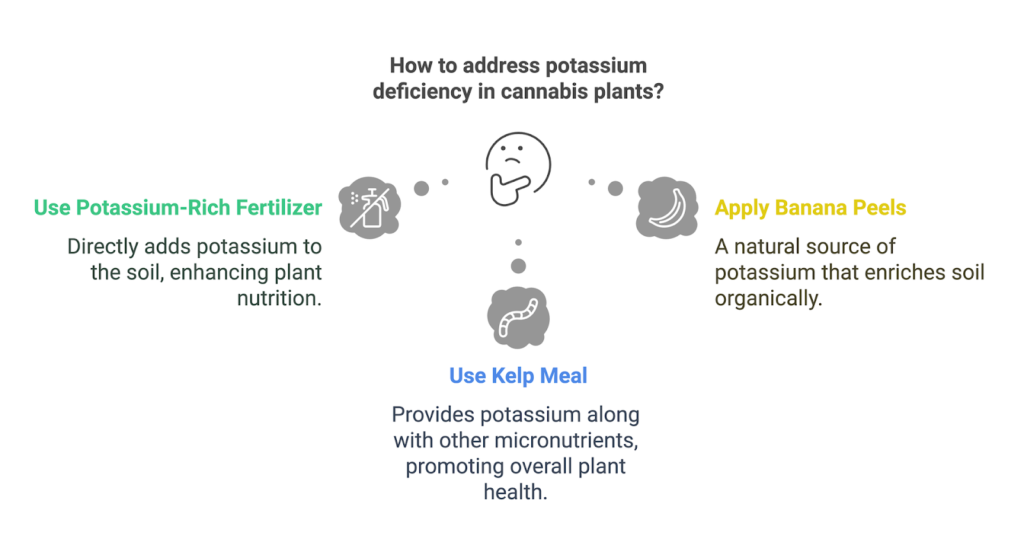
The correction of potassium deficiency in cannabis plants involves determining the cause and corrective measures. The growing medium may be affected by a poor pH level, low quality of fertilizers, or imbalance.
Correcting Issues in the Growing Medium
- Check pH Levels: Ensure the soil’s pH is between 6.0 and 7.0, while hydroponic systems should maintain a pH range of 5.5 to 6.5. Regular testing helps maintain optimal potassium availability.
- Add potassium sulfate, wood ash, or potassium chloride to naturally enhance the potassium levels. These additions also enhance the nutrient balance of the soil.
- Water Wisely: Overwatering makes nutrients wash away from the soil. Instead, water the plants to allow for effective absorption of nutrients.
Selecting the Right Fertilizers
- High Potassium Fertilizers: Utilize fertilizers containing high levels of potassium. The best options are potassium sulfate and liquid seaweed extract.
- Organic Sources: Organic gardeners can feed potassium through organic means using banana peels, compost, or bat guano.
Avoiding Potassium Overload
Excess potassium can cause nutrient imbalances, reducing the absorption of magnesium and iron. Fertilizers must be used prudently, with concentration levels monitored in the growing medium.
With these techniques, you will be able to maintain the potassium level for healthy growth with good quality yields.
How to Prevent Potassium Deficiency in Cannabis Plants?
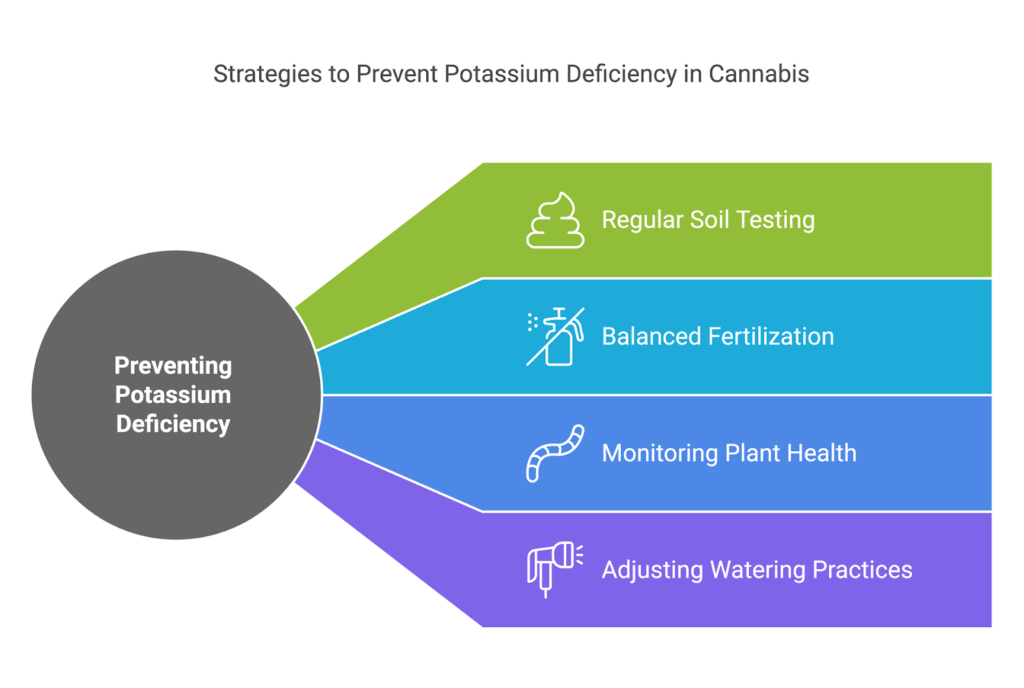
To avoid potassium deficiency, nutrient management should be uniform and plant health monitored closely. Balanced nutrient intake ensures that the plants get everything they need to grow well.
Balancing Nutrients
- Apply Targeted Fertilizers: Cannabis flowering-stage fertilizers generally have higher levels of potassium to facilitate healthy development of buds.
- Supplement with Potassium Occasionally: Add potassium sulfate or compost into the soil to maintain proper levels.
- Watch for Nutrient Burn: Nutrient burn is a result of over-fertilization and lower uptake of potassium. Maintain application rates to prevent overloading the soil.
Monitoring Plant Health
- Soil Analysis: The soil nutrient content must be checked at regular intervals so that potassium, among other nutrients, is at optimal levels for uptake.
- Inspect Leaves and Stems: Symptoms such as yellowing or browning of older leaves may suggest a potassium deficiency.
- Tailor the Feeding to Growth Stage: While cannabis requires more potassium when in flowering than when vegetative, nutrient regimens are to be adjusted.
Proactive management will ensure that nutrient deficiency is caught earlier and corrected before the manifestation of nutrient deficiencies on plant health.
How Potassium Affects Other Nutrients for Cannabis Plants?
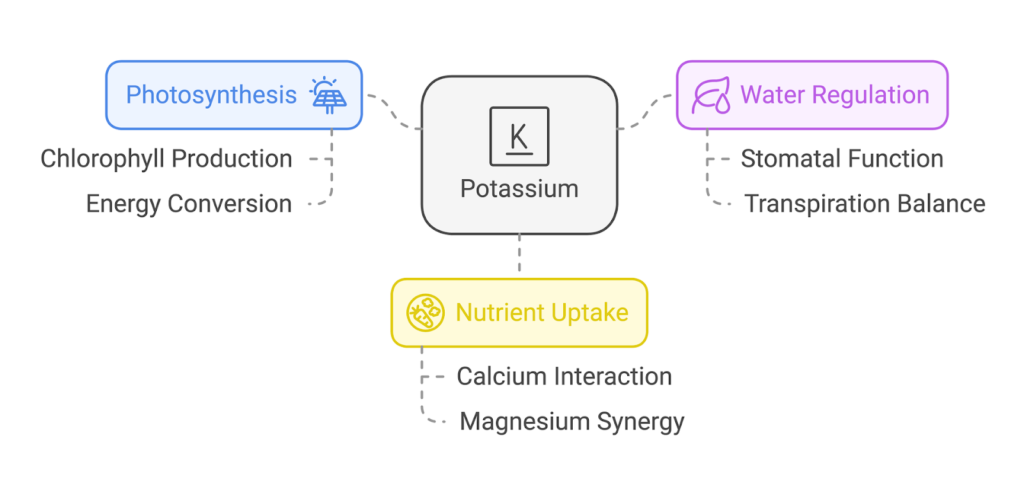
Potassium affects other nutrients because of close associations with uptake processes and general effects on plant growth and development.
Potassium and Phosphorus
- Collaborative Role: Potassium and phosphorus function in concert at flowering to facilitate energy transfer and bud formation.
- Imbalance Risks: Too little potassium will result in weak flower production, while too much phosphorus may prevent potassium from being absorbed.
Potassium and Nitrogen
- Growth Synergy: Nitrogen promotes vegetative growth, whereas potassium is responsible for nutrient transport and redistribution during flowering.
- Avoiding Excess Nitrogen: High nitrogen can interfere with potassium uptake, raising the danger of deficiency. Balanced feeding schedules are critical.
These interactions can help marijuana growers adjust their nutrient programs toward the production of healthier, more productive plants.
What is the Role of Potassium in the Growth of Cannabis?
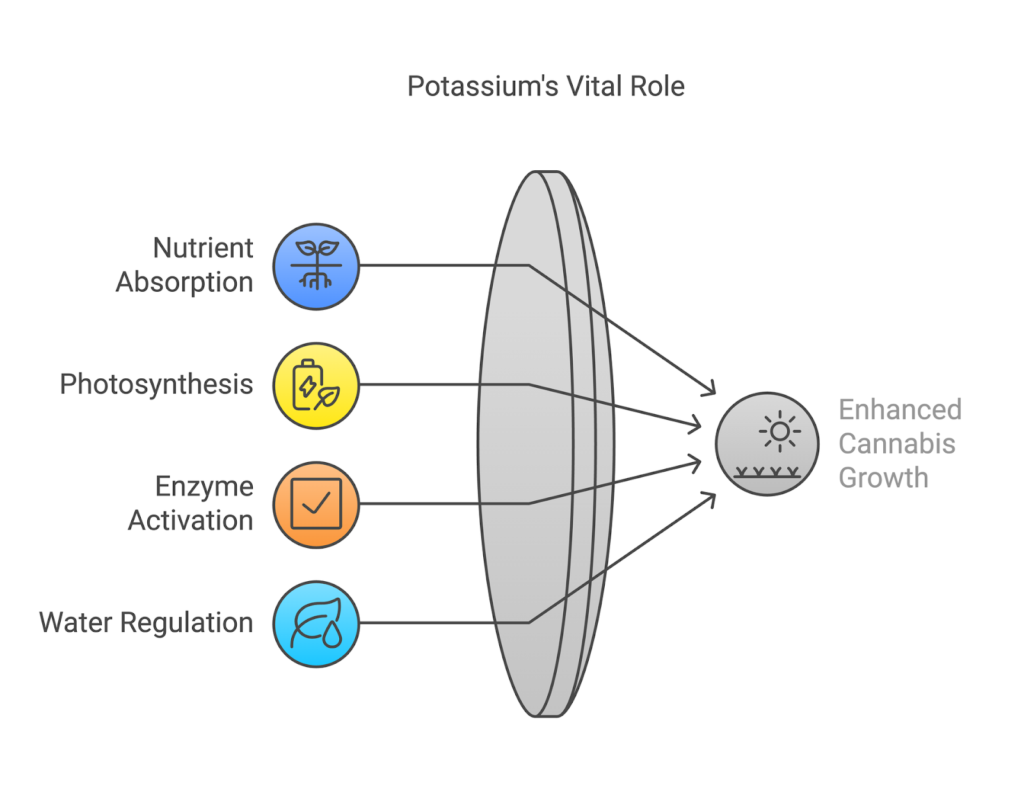
Potassium is essential for cannabis plants; it is involved in the completion of photosynthesis, nutrient mobility, and resistance to environmental stress. Without enough potassium, the plant cannot grow well and produce good quality buds.
Improving Bud Development
- Promotes Dense Flowers: Potassium promotes the development of thick, resinous buds, which improves yield and potency.
- Boosts Cannabinoid Production: Adequate potassium levels are essential for producing cannabinoids like THC and CBD.
Improving Overall Plant Health
- Strengthens Resistance: Potassium helps cannabis plants withstand drought, pests, and diseases.
- Optimizes Nutrient Absorption: Potassium ensures efficient uptake of other nutrients, improving overall plant health and vigor.
By maintaining proper potassium levels, cannabis growers can achieve robust plant growth and maximize yields.
Conclusion
Potassium deficiency greatly affects the growth, health, and yield of a cannabis plant. Its identification, during the initial stage, is of extreme importance. Once nutrient imbalances are rectified and the plant’s growth cycle reaches an optimum potassium level, then that becomes essential. Photosynthesis, transport of nutrients, and the formation of flowers can be ensured due to the contribution of potassium. A healthy plant would grow very rapidly and provide a large quantity of buds.
What are the early symptoms of potassium deficiency in cannabis plants?
If their leaves are yellowing, browning at the tips, and curled. These conditions often worsen if left unchecked.
How do I treat potassium deficiency in cannabis plants?
First, change the pH of your growing medium. Use fertilizers with a lot of potassium, and then water your plant appropriately. Test your soil from time to time to ensure nutrient equilibrium.
Is excessive potassium bad for the cannabis plant?
Yes, too much potassium causes nutrient burn and prevents the uptake of magnesium and iron, leading to imbalances.