Cultivating cannabis is both science and art. To grow well, you must know how to read your plants. The biggest challenge growers encounter today is the issue of underwatering cannabis. It’s usually sneaky for it to creep on the plants undetected while they lose more water than they absorb. It can repress growth, interfere with nutrient uptake, and affect yield potential when left unchecked. Let’s dig deeper into identifying symptoms and perfecting watering techniques that help your plants grow best.
Key Takeaways
- Decode the Symptoms: Droopy leaves, yellow splotches, and dry dirt often mean your plants are chronically under-watered.
- Tailored Watering Matters: Adjust your watering schedule according to environmental conditions and the plant’s growth stage.
- Root Health is Key: Proper drainage, sufficient water, and a suitable growing medium ensure the roots don’t become bound and growth is stunted.
What Does Cannabis Underwatering Look Like?
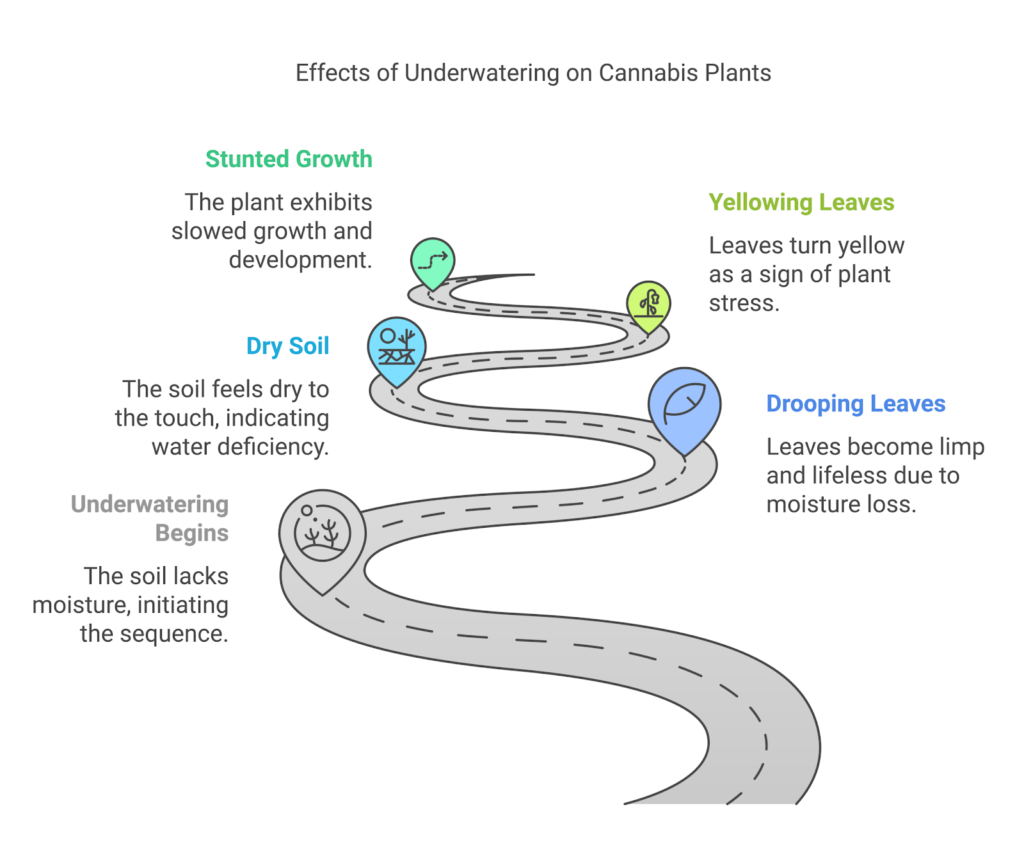
Healthy cannabis plants talk to you through their leaves, soil, and posture. When something is off, they’ll tell you if you know where to look. The symptoms of underwatering can often look like nutrient deficiencies or even overwatering, so it is really about paying attention.
Leaves Tell the Story
The first sign that your plant is dehydrated appears in its leaves:
- Droopy Leaves: When the plant fails to absorb water, its leaves become limp and droopy with no support.
- Yellow and Brown Spots: Yellowing or developing brown edges on the lower leaves are a result of losing moisture.
- Permanent Crispy Spots: In extreme dehydration, small, whole parts of the leaf may dry up completely, leaving them crispy and irrecoverable.
While drooping leaves are the classic symptom of underwatering, they can also be a symptom of overwatered cannabis plants. Always check the soil and growing medium before making any changes.
Soil: The Key Indicator
A good growing medium balances water retention with adequate drainage. With underwatering, evidence lies in the soil itself:
- Dry soil pulls away from the sides of the container, creating gaps.
- Dusty and Crumbly Texture: When touched, the soil feels bone dry and lacks sufficient moisture for nutrient absorption.
- Growth Stagnation: Roots struggle to develop in overly dry conditions, leading to stunted growth and nutrient deficiencies.
Regularly inspecting your potted cannabis plant’s soil ensures that issues like chronic underwatering don’t go unnoticed.
Why Is Underwatering So Harmful?
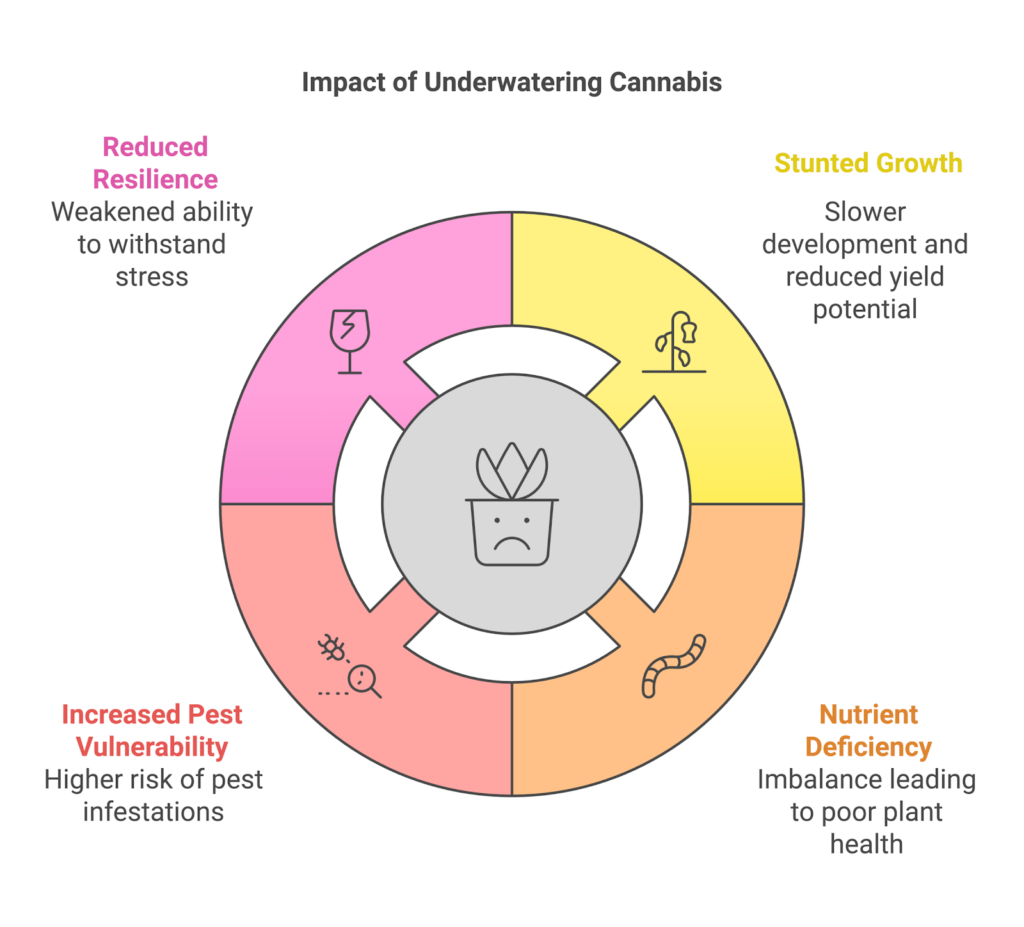
Underwatering is not just on the surface but goes deep into the root system and will affect the ability of the plant to absorb water and nutrients.
Stressed Roots
Roots are the foundation of a healthy cannabis plant. If the roots are not getting enough moisture:
- Roots become brittle and fragile due to dry conditions, which will break easily.
- Rootbound struggles: Plants become rootbound when they are kept in containers that are too small. When the hydration is not consistent, it becomes even harder for the plant.
- Oxygen Deprivation: Roots will be unable to take up nutrients or allow the plant to progress through the growth stages properly without adequate moisture.
Drainage and pot size can easily avoid these issues.
Nutrient uptake blocked
Water is not only hydration; it is the means of nutrient transportation. When a plant is underwatered:
- Locked Nutrients: The minerals are held captive in the soil, starving the plant of necessary nutrients.
- Symptoms of Deficiencies: Yellow leaves, brown patches, and slowed growth are all signs of nutrient deficiencies caused by dehydration.
- Flowering Impact: Underwatering during the flowering stage reduces the plant’s ability to support bud development, affecting yield and quality.
A consistent watering schedule ensures that plants absorb nutrients effectively, preventing unnecessary stress.
How Can You Prevent Cannabis Underwatering?
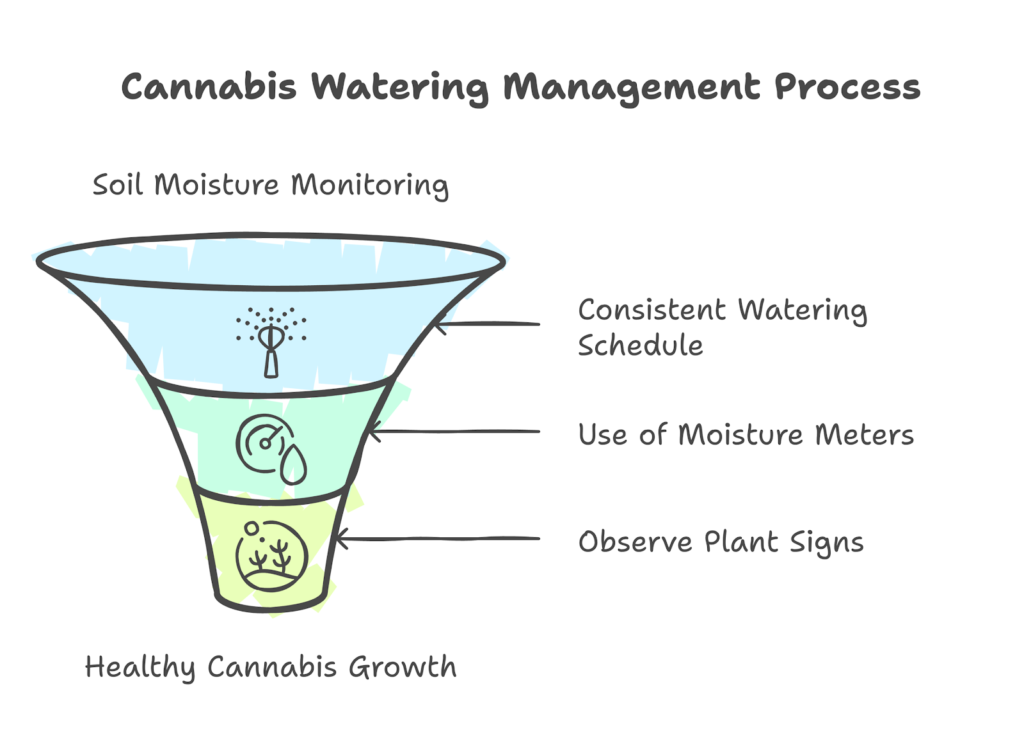
It is not complicated, but it requires attention to detail to prevent underwatering. That is, once you get familiar with your plant’s needs and environment, you can create a system that delivers just enough moisture without overwatering.
Mastering the Art of Watering Practices
Getting the watering frequency right is a skill every cannabis grower must develop: Hands-on whenever necessary
- Hands on: Test the soil by inserting your finger into the top inch. If it feels completely dry, it’s time to water.
- Change depending on environmental conditions: Hot, dry conditions mean the plants lose more water and probably need to be watered more often. In cooler, wetter climates, less frequent watering is required.
- Water Thoroughly: Prevent water from sitting on the surface of the growing medium. Permit excess to drain so that pooling does not occur.
Many growers find that it is possible to avoid both overwatering and underwatering if one creates a schedule that is adaptive to environmental conditions.
Get Your Equipment Right
Sometimes, it’s just a matter of the tools and materials you’re using:
- Container Size: A bigger container size will retain moisture better, but don’t forget that drainage holes can prevent waterlogging.
- Balanced Growing Medium: A mix of coco coir, perlite, and soil that holds water but doesn’t smother the roots.
- Monitor Water Quality: Tap water often has minerals that can interfere with nutrient uptake. Many growers prefer filtered or distilled water for better results.
Investing in the right setup lays a solid foundation for consistent growth and healthy plants.
Underwatering vs. Overwatering: How to Tell the Difference
It is essential to distinguish between underwatering and overwatering, as the symptoms overlap, but the remedies are opposite. Here’s a quick guide:
| Aspect | Underwatering | Overwatering |
| Soil Condition | Dry, crumbly, and shrunken | Waterlogged, heavy, and compact |
| Leaf Appearance | Drooping with yellow or brown patches | Drooping with curling edges; dark green leaves |
| Root Health | Brittle roots; slowed root development | Oxygen deprivation; risk of root rot |
| Primary Cause | Infrequent watering; insufficient moisture | Overwatering; poor drainage in potted plants |
Knowing these differences allows you to respond accurately without overcorrecting.
What is the role of environmental factors?
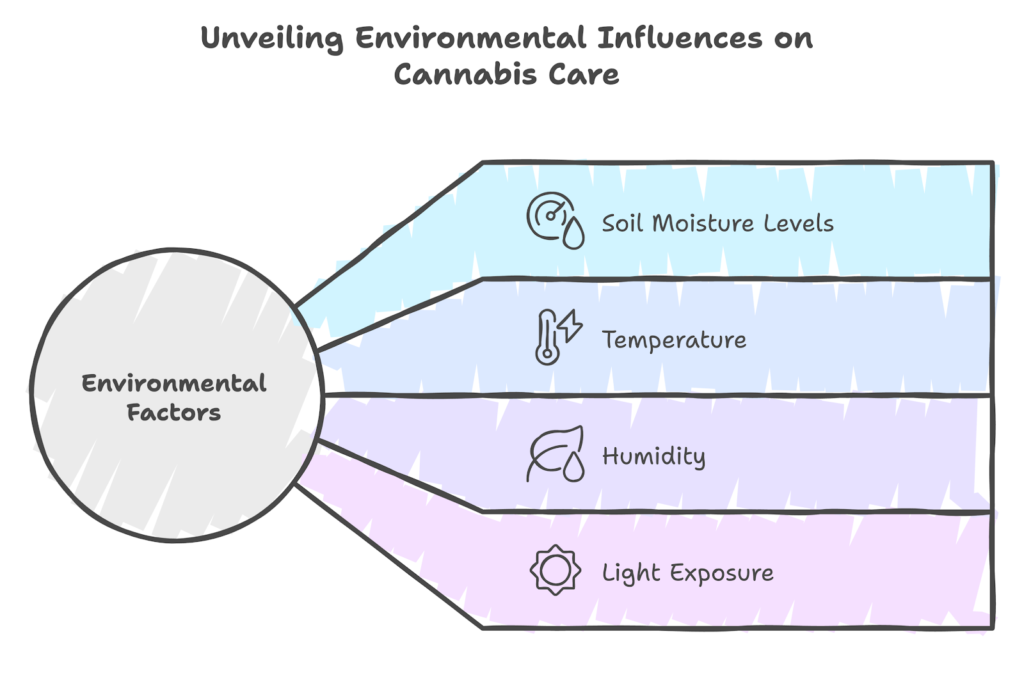
Cannabis plants are sensitive to their surroundings, and environmental conditions directly impact their hydration needs. Consider these factors:
- Low humidity dries leaves faster, hence the need for frequent watering.
- Temperature fluctuations. The soil dries faster when it is hot, especially under strong grow lights.
- Growth stage. Small seedlings require less water than flowering plants, which demand constant watering to develop properly.
Knowing this will help you control temperature and create the perfect environment for your plants.
Conclusion
Underwatering need not be the end of the world for your cannabis plants. So long as you pay attention to symptoms such as dry soil, yellow leaves, and sagging leaves, you can adjust your water schedule and grow under favorable conditions. Proper drainage, a balanced growing medium, and quality water will all support healthy root development and nutrient uptake. Under these circumstances, you can expect stronger-growing plants with healthy green leaves, and the quality yield will be much bigger.
Frequently Asked Questions
What Are the Symptoms of Underwatering in Cannabis Plant?
The symptoms are drooping leaves, yellow patches, dry soil, and stunted growth. You may also have brown patches appearing on the leaves of a plant.
How Often Should You Water Cannabis Plants?
Water frequency depends on conditions such as temperature, humidity, and light intensity. Check your soil regularly. Water when the soil feels dry an inch down.
How Do You Avoid Overwatering?
Use containers with adequate drainage, avoid watering too frequently, and monitor soil moisture levels to ensure you’re providing just enough water for your plants’ needs.