
When making edibles, using cannabis lecithin to get the best bang for your buck is no joke. An excellent emulsifier, usually soybean-based and sometimes from sunflowers and even egg yolks, it acts like a binder but amplifies the potency. Lecithin is a form of phospholipid used in cell membranes, baked goods for texture, and bioavailability in cannabis edible recipes. However, it is only fully utilized when you know how and why to add lecithin, how much lecithin you should use, and what works best.
Key Takeaways
- Lecithin helps bind the ingredients of your edible and ensures uniform distribution of the fats and cannabinoids in your recipe.
- Forms of lecithin: soy, sunflower, and powder, among others, provide different effects on texture, potency, and shelf life.
- Edibles have a lecithin high bioavailability. This means that the amount you receive from cannabis increases.
What Is Cannabis Lecithin?
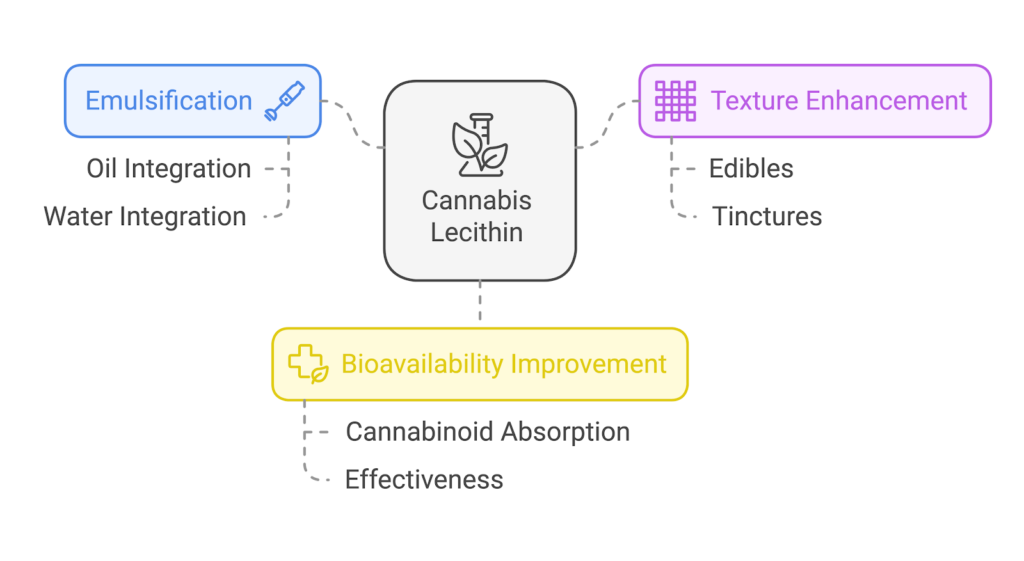
In basic terms, cannabis lecithin is simply lecithin—the emulsifying agent—enhanced with cannabinoids. Most manufacturers include either soy lecithin or sunflower lecithin to facilitate emulsification and binding of ingredients into a single product with fewer particles to break apart.
Combining lecithin with infused oil or cannabis butter creates a solution that makes it easier to distribute active compounds more evenly across your food items.
How Is Lecithin Extracted?
Some sources of natural lecithin include sunflowers, soybeans, and eggs. Phospholipids in this type of natural lecithin help the substance emulsify fats and liquids to ensure it has an even texture.
- Some of the lecithin today comes from chemical processes (often utilized in processed food).
- Sunflower lecithin is far more natural than most.
- Processing can result in liquid lecithin or lecithin powder.
One big reason users like using lecithin in edibles is because of the silky smooth nature of mixing it. This is especially true in vegan recipes or when baking with dough conditioner techniques.
Why Add Lecithin to Cannabis Edibles?
Besides helping edibles turn creamy, it also has something to do with potency. It is because of lecithin that fats (be it butter or oil) allow cannabinoids to bind to them in a way that you get the most efficient transfer of THC or CBD into your body.
Which Form of Lecithin Should I Use?
When you’re making edibles, the “right” form of lecithin often comes down to personal preference, dietary restrictions, and the texture you’re aiming for. Soy lecithin is commonly used in many baked goods, but sunflower lecithin can be a great alternative for those concerned about soy or who want a more natural lecithin option.
Comparison: Soy Lecithin vs. Sunflower Lecithin
Both soy and sunflower lecithin offer similar health benefits, but there are a few differences worth noting.
| Feature | Soy Lecithin | Sunflower Lecithin |
| Source | Soybeans | Sunflowers |
| Processing Method | Often chemically processed | Typically mechanically extracted |
| Dietary Concerns | May affect those avoiding soy or GMOs | Free of GMOs, hypoallergenic to many |
| Texture Impact | Works well in most recipes and processed foods | Often smoother, great for vegan recipes |
| Cost | Often cheaper | Usually more expensive |
When deciding, think about your dietary preferences, whether you have any allergies, and how you want your final edible recipe to taste.
How Much Lecithin Should You Use?
Figuring out how much lecithin is necessary depends on what you’re making. A good rule or a general rule of thumb is starting with about one teaspoon of lecithin per cup of oil or butter in your recipe.
- For dough conditioner in baked goods, you might add slightly more lecithin to improve texture.
- For high doses of cannabinoids, consider adding more lecithin to ensure better bioavailability.
- In most recipes, one teaspoon per cup works well.
Remember, adding lecithin to edibles too heavily can affect the texture. A little caution goes a long way because the goal is to make your edibles consistent without overpowering other ingredients.
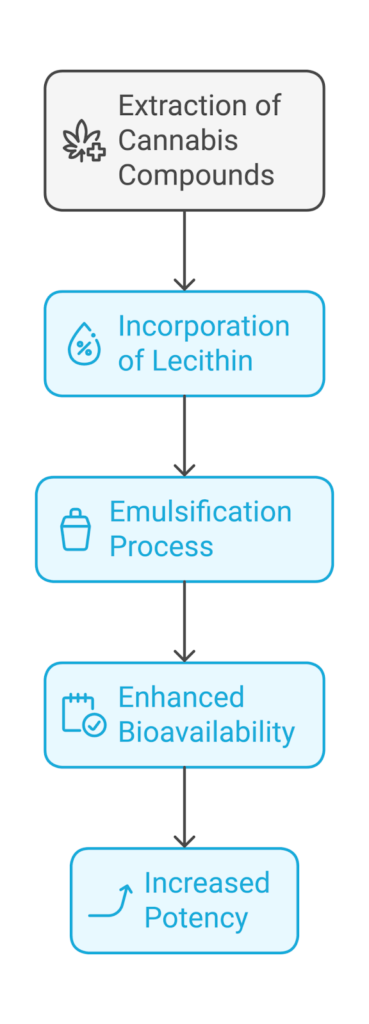
How Does Cannabis Lecithin Boost Potency?
Lecithin improves the potency of your cannabis edibles by enhancing how cannabinoids bond with fats—think butter, oil, or even avocados. When these compounds are better bonded, your body can absorb them more efficiently, which in turn can elevate the overall potency of your edible.
Improve Bioavailability
Bioavailability refers to the proportion of a nutrient or compound that’s actually absorbed and used by your body. In cannabis edibles, lecithin acts as an emulsifier to bring fats and cannabinoids together in a stable mixture.
- It helps cannabinoids cross cell membranes more easily.
- This support can also aid those dealing with digestive issues or conditions like ulcerative colitis.
- Better absorption can potentially help balance cholesterol levels, thanks to lecithin’s unique properties.
Improving bioavailability in your cannabis lecithin concoction ensures that your final product delivers a potent punch rather than being wasted by poor absorption.
Enhance Texture in Edible Recipes
While the main focus is potency, lecithin also helps bind ingredients in your edibles for a seamless texture.
- It prevents separation of fats from other ingredients.
- Acts like a binding agent to keep your mixture uniform.
- Gives baked goods a fluffier feel and smoother crumb.
By helping your entire recipe stay cohesive, lecithin can ensure consistent taste and dosage—plus, it just makes everything taste and feel better.
How to Incorporate Lecithin into Edibles?
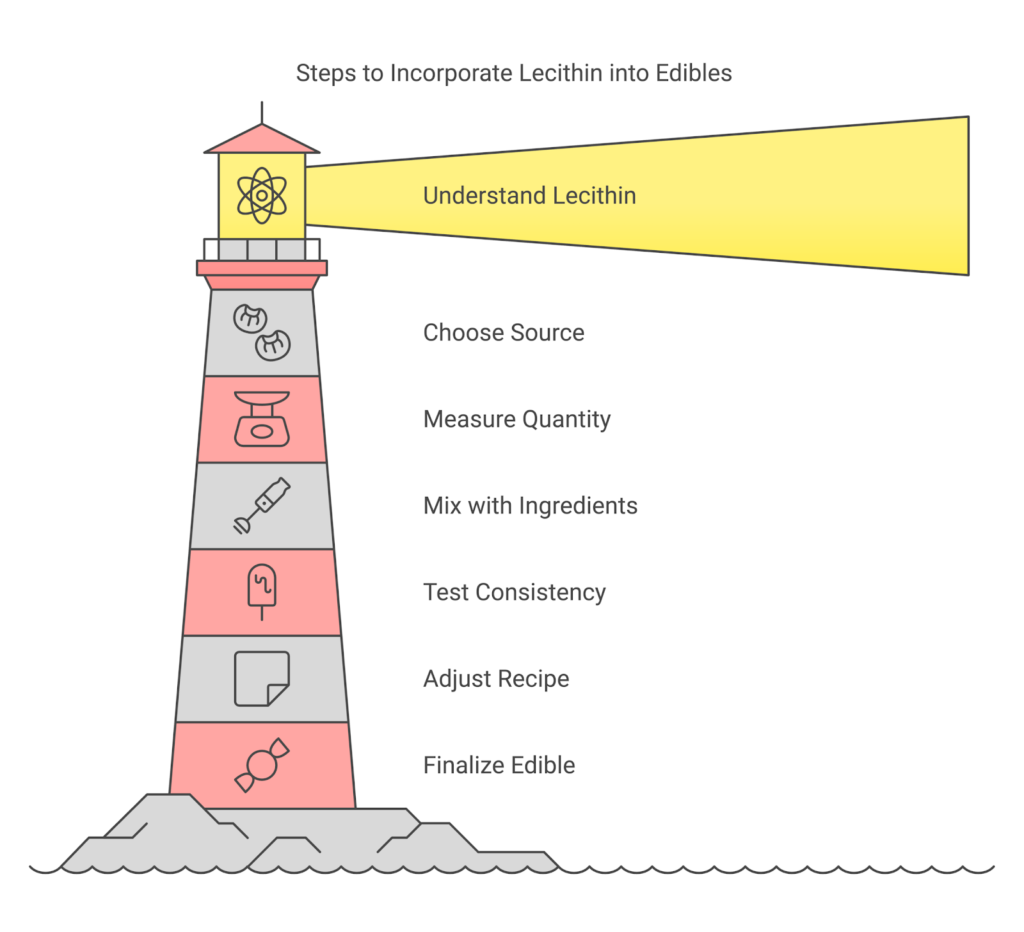
There are different forms of lecithin—liquid, granular, or lecithin powder—and each works a bit differently in edibles. Often, you’ll dissolve or blend it into your butter or oil first. Doing so allows the emulsifier to thoroughly blend with your cannabinoids before adding to the rest of your recipe.
Steps for Making Edibles with Lecithin
Here’s a straightforward approach to adding lecithin to edibles:
- Decarb Your Cannabis: Before you do anything else, decarb (or heat) your cannabis so that cannabinoids activate.
- Infuse Your Oil or Butter: Combine your decarbed cannabis with your chosen fat (oil, butter, or coconut oil) at a gentle heat.
- Add Lecithin: Stir in one teaspoon of lecithin per cup of fat; adjust if you need more lecithin for extra potency or a more robust binding effect.
- Strain the Mixture: Filter out the plant matter.
- Incorporate into Recipe: Add your lecithin-infused oil or butter to the rest of your ingredients to bind in your edible recipe.
You want to ensure you follow safe cooking practices. And it’s important to let your mixture cool properly if you’re storing it for later use.
Lecithin Storage and Shelf Life
One major perk is that lecithin can increase the shelf life of homemade edibles by stabilizing fats. For best results:
- Store your final product in an airtight container.
- Keep it in the fridge or freezer if you want to extend its use-by date.
- Always label and date your edibles to avoid confusion.
Having your mixture stored correctly can help keep the potency intact, which is super helpful if you like to plan your edibles in batches.
Conclusion
Lecithin is much more than a dough conditioner—it can increase the strength of your edibles, give them some needed texture, and even improve your digestion. So as long as you choose to use either soy or sunflower lecithin, the emulsifier has three beneficial effects: the bioavailability of cannabinoids improves, the final product is smooth, and it adds consistency and reliability to the edible experience. The next time you are making some cannabis edibles, think about tossing in a teaspoon of lecithin powder or a few drops of the liquid. You never know until you try—it may be just what your happy cooking adventure is missing.
Frequently Asked Questions
Does Lecithin Affect the Taste of My Edibles?
Lecithin is relatively flavorless and neutral in its taste. The effect of edibles would mostly be a matter of texture—the addition of something creamy and consistent.
Can Lecithin Lower Cholesterol?
Some research indicates that soy lecithin may help maintain healthy cholesterol. For more tailored health recommendations, contact a doctor.
Can I Use Egg Yolks or Avocados as a Substitute for Lecithin?
Egg yolks and avocados do contain phospholipids but are not as strong or consistent as commercial lecithin, which is refined for superior emulsifying properties.