Phosphorus shortages can have a big effect on the health and output of cannabis plants. Early detection of signs like red stems and dark green or yellow foliage helps prevent likely crop losses. Any gardener trying to provide a decent harvest has to understand the part phosphorous plays in plant development.
Phosphorous shortages can be brought on by overwatering, nutritional imbalances, and improper soil pH. If not handled, this shortfall might limit plant development and compromise floral quality. Knowing how to identify and address this issue will help you to ensure that your plants remain healthy and productive during their lifetime.
Farmers need to know the indicators of phosphorus shortage and how to handle them. Knowing this will help you to take better care for your cannabis plants and maintain the state of your garden.
Key Takeaways
- Red stems and dark or yellowing foliage are signs of phosphorus shortage.
- For plants to remain healthy, early detection and intervention are essential.
- Yields are increased and deficits are avoided with proper maintenance.
Recognizing Phosphorus Deficiency in Cannabis
For cannabis to grow and flourish, phosphorus is essential. Successful cultivation depends on identifying the signs and comprehending their significance for plant health.
Symptoms of a Phosphorus Deficit
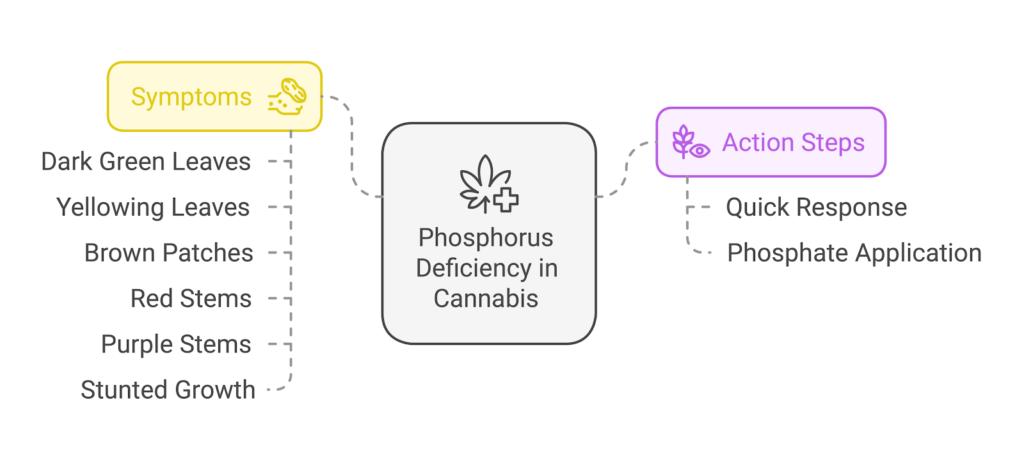
Cannabis plants with phosphorus deficiencies exhibit a number of warning indicators. These include dark green or yellowing leaves that could get brown patches. Other typical signs include red or purple stems and stunted development, particularly when plants are blossoming and need extra phosphate.
It’s critical to take quick action if you observe these signs in order to stop additional harm and promote plant recovery.
The Function of Phosphorus in Cannabis Growth
A number of physiological systems depend heavily on phosphorus. It is necessary for the transfer of energy within cells and is a crucial part of adenosine triphosphate (ATP). Additionally, phosphorus helps plants transform sunlight into useful energy, fosters the formation of flowers, and encourages strong root growth.
Strong roots, robust foliage, and an abundance of buds are all made possible by making sure your plants have access to enough phosphorus.
Phosphorus Deficiency Causes
A lack of phosphorus can be caused by a number of things, such as:
- Poor Soil Quality: Soils that are low in nutrients may not contain enough phosphorus to sustain plant growth.
- pH Imbalances: Phosphorus can be locked out of plants by an excessively acidic or alkaline soil condition.
- Overwatering or Nutrient Buildup: Phosphorus absorption may be hampered by excessive irrigation or fertilizer buildup.
To stay clear of these problems and preserve plant health, routine observation and modification are required.
Determining the Reasons for Phosphorus Deficiency
Phosphorus deficit in cannabis plants is caused by a number of important causes. Prevention and treatment begin with an understanding of these causes.
pH of the Soil and Availability of Nutrients
The pH of the soil has a significant impact on phosphorus availability. Cannabis thrives at a pH range of 6.0 to 7.0. Even if phosphorus is in the soil, it becomes less available to plants outside of this range. Phosphorus lockout is a condition that can significantly affect the absorption of nutrients.
Routine pH testing and corrections using sulfur (to drop pH) or lime (to raise pH) can facilitate the maintenance of ideal conditions for nutrition absorption.
Unbalanced Nutrients
Phosphorus uptake may be inhibited by other nutritional imbalances, such as an overabundance of potassium or nitrogen. When these components are overloaded, competition is created at the root level, which lowers the plant’s capacity to absorb phosphorus.
Such imbalances can be avoided by using balanced fertilizers and routinely checking nutrient levels.
The Impact of the Environment and Growing Media
Nutrient availability and retention are impacted by various growing media, including soil, hydroponics, and coco coir. While hydroponic systems enable fine nutrition management, poor soil quality may result in insufficient phosphorus.
Environmental factors like humidity and temperature also matter. Plants under stress from high temperatures may be less able to efficiently absorb nutrients. Better phosphorus uptake and general plant health are guaranteed when the ideal growing conditions are maintained.
The Function of Phosphorus in the Cannabis Growth Cycle
As cannabis grows, its phosphorus requirements change. Applying it according to each stage optimizes yield and encourages healthy development.
Stage of Vegetation and Development of Roots
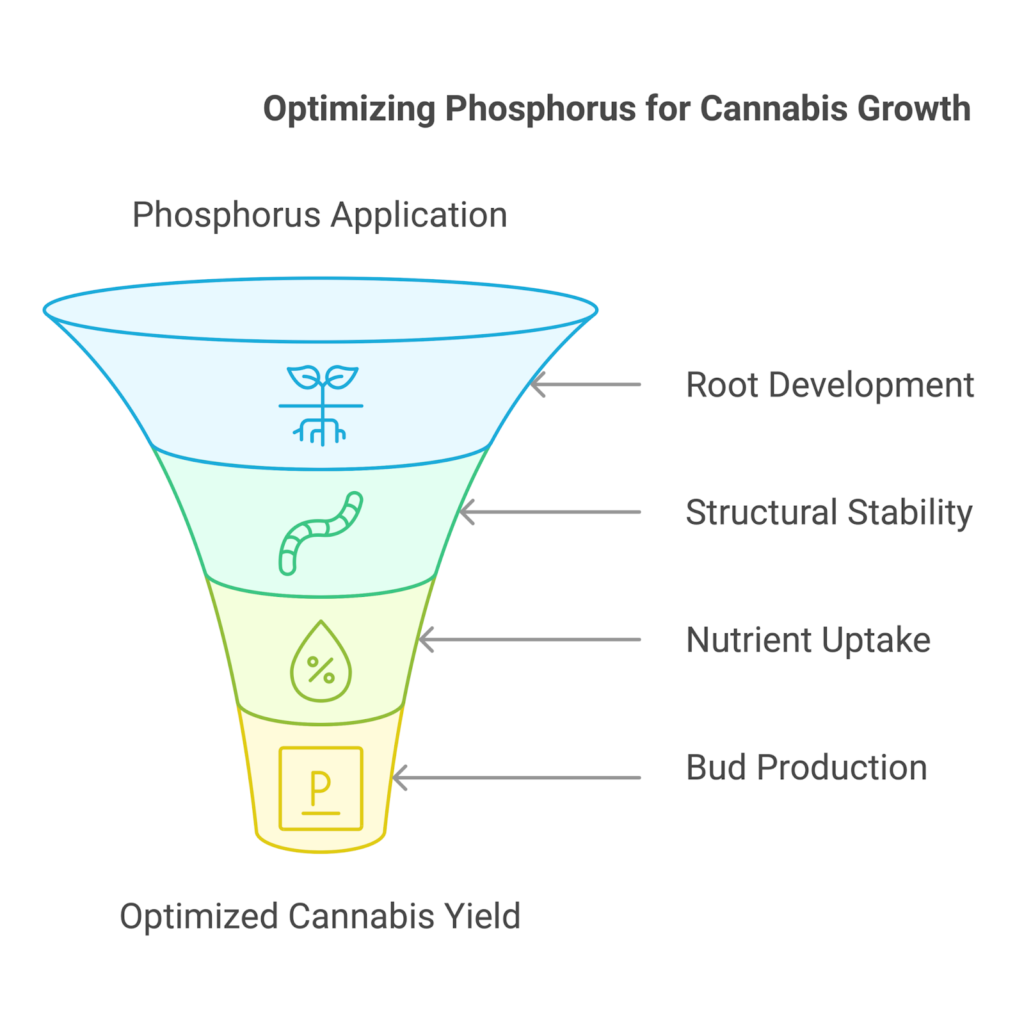
In the vegetative stage, phosphorus promotes rapid root development. Structural stability and nutrient uptake depend on healthy roots. During this stage, deficiencies may result in poor root systems, dark green foliage, and stunted growth.
Phosphorus levels should be kept between 2,000 and 7,500 ppm for robust roots. The right balance can be attained with the aid of fertilizers made specifically for vegetative development at each stage.
Stage of Flowering and Bud Development
Because it promotes strong bud production and improves floral quality, phosphorus is essential during the flowering stage. In order to support energy-intensive processes like blooming, plants need increased phosphorus levels during this period.
Reduced floral density and sluggish bud expansion may be the outcome of a deficiency during flowering. Plants are guaranteed to get the nutrients they require for optimal growth when bloom-specific fertilizers with high phosphorus levels are used.
How to Avoid and Handle Phosphorus Deficiency
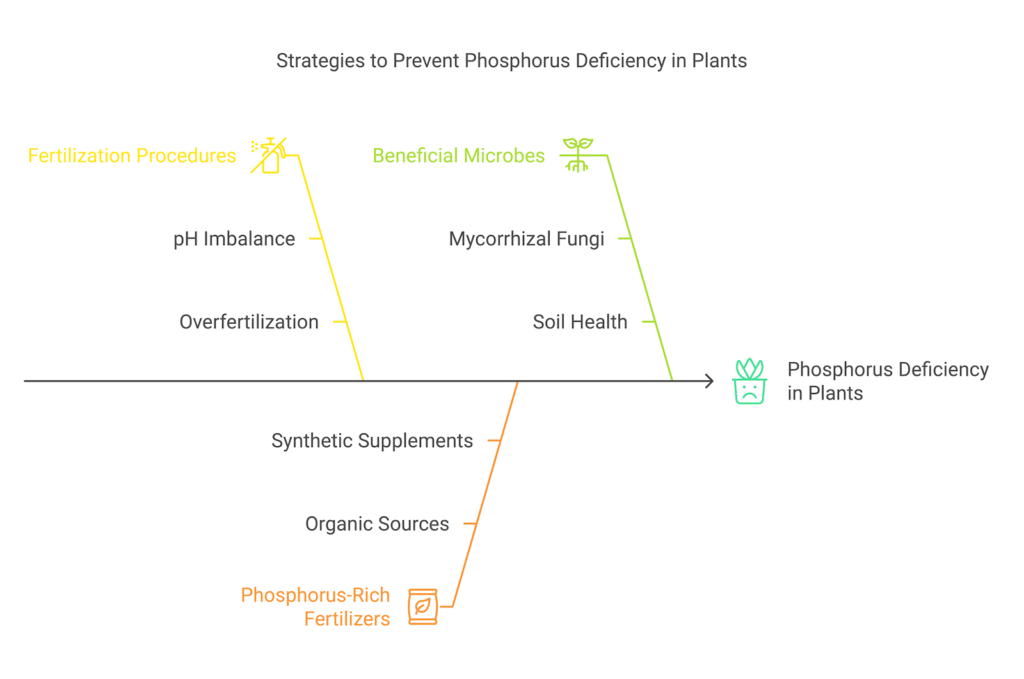
To keep plants healthy, a phosphorus deficit must be regularly addressed. Microbial treatments, phosphorus-rich nutrients, and fertilization techniques can all help lessen this problem.
Changing Fertilization Procedures and pH
Preventing a phosphorus shortage requires routine pH monitoring. The ideal pH range for soil is between 6.0 and 7.0. For any imbalances, use pH adjusters like sulfur or lime.
Additionally crucial is a well-rounded fertilization strategy that includes nutrients high in phosphorus. Refrain from overfertilizing, as this may result in nutritional lockup. Rather, adhere to the manufacturer’s instructions and modify feeding schedules in response to plant response.
Fertilizers Rich in Phosphorus
Good organic sources of phosphorus include bat guano and bone meal. These fertilizers ensure a consistent supply of nutrients throughout the growth cycle by releasing them gradually. Especially during flowering, they can be used as a top dressing or soil additive.
Use synthetic phosphorus supplements for quicker results. Although they offer a quick boost, these should be used sparingly to avoid overfertilization.
Improving the Absorption of Nutrients via Beneficial Microbes
Plant roots and mycorrhizal fungus develop symbiotic interactions that improve phosphorus uptake and general nutrient absorption. By adding these helpful microorganisms to your growing environment, you may enhance soil health and promote healthy plant growth.
Resolving Associated Developing Issues
Other nutritional problems may coexist with a phosphorus shortage. By identifying and resolving these issues, you can keep your plants robust and fruitful.
Finding Additional Nutrient Inadequacies
Symptoms like as purpling stems, curled edges, or yellowing leaves may point to deficits other than phosphorus. For instance, interveinal chlorosis, or yellowing between leaf veins, is brought on by a magnesium deficit.
A lack of potassium causes the tips and edges of leaves to turn brown.
Knowing these signs makes it easier to distinguish between shortcomings and implement the right fixes.
Optimizing Feeding Schedules and Nutrient Ratios
A well-balanced feeding program is vital for healthy cannabis plants. To identify any excesses or deficiencies, begin with nutritional testing. To prevent imbalances, modify the nitrogen, phosphorus, and potassium (N-P-K) ratios according to the plant’s growth stage.
Nitrogen-rich solutions should be given priority for vegetative growth. Switch to phosphorus-rich formulations during flowering to aid in bud development.
In conclusion
You can maintain the health and productivity of your cannabis plants by being aware of the causes, signs, and remedies for phosphorus shortage. A flourishing garden and excellent harvests are guaranteed by proactive care, environmental control, and proper fertilizer management.
Commonly Asked Questions
What symptoms might indicate a lack of phosphorus in cannabis?
Common symptoms include purpling stems or leaves, curled leaf edges, and yellowing between leaf veins. Usually, older leaves show these symptoms first.
How may a lack of phosphorus be made up for during flowering?
During the blossoming period, use bloom fertilizers that are high in phosphorus. Monitor plant response to prevent overfertilization and adjust soil pH to maintain adequate nitrogen absorption.
What are some typical sources of phosphorous for cannabis?
Common organic phosphorus sources include rock phosphate, fish meal, and bone meal. These choices offer sustained nutritional assistance.
What distinguishes phosphorus deficiency from poisoning?
While phosphorus toxicity can result in leaf burn or yellowing, phosphorus deficiency causes purpling stems and restricted development. One way to distinguish between the two circumstances is to test the pH of the soil.
How may phosphorus insufficiency be avoided?
Keep the pH in check and give them nutrients high in phosphorus. Keep an eye on the health of your plants and modify the feeding schedule as necessary.