
Key Takeaways
- Synthetic THC is a lab-created version of the THC in cannabis plants.
- It’s more accessible in areas where natural cannabis remains heavily regulated.
- It offers potential to help treat pain management and neurological disorders.
- Its legal status depends on the state.
When you think THC, you’d likely picture the psychoactive natural compound found in cannabis. But did you know there’s a lab version? Synthetic THC is scientifically designed to mimic natural THC. In this article, we dive into its benefits and uses, how it differs from its natural counterpart, and its future in medicine.
What is Synthetic THC?
Synthetic THC is a lab version of tetrahydrocannabinol (THC), the main psychoactive element in cannabis plant matter. While natural THC is extracted directly from hemp, synthetic THC is chemically produced and designed to mimic the psychoactive properties of the natural one. They are used in very small doses.
The most common forms approved by the U.S. Food and Drug Administration (FDA) for medical use are:
- Dronabinol sold as Marinol/ Syndros, to treat chemo-induced nausea and vomiting and induce appetite in people with HIV/AIDS. It’s usually taken in pill form.
- Nabilone brand name Cesamet, is mostly used for managing chemo-induced nausea and vomiting.
These offer a cleaner, regulated alternative to natural cannabis. Many synthetic cannabinoids are considered illegal. To evade legal consequences, some are falsely labeled as ‘not for human consumption.’
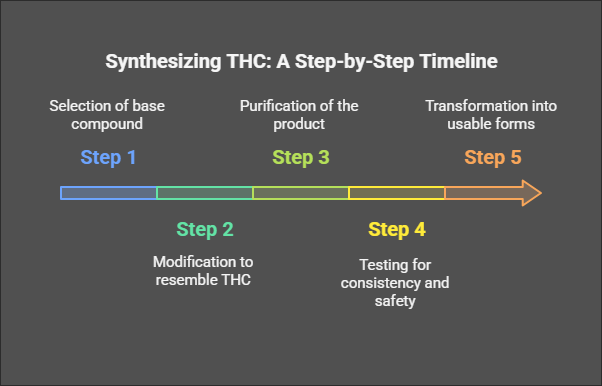
How is Synthetic THC Made?
The production of synthetic forms of THC involves complex chemical processes.
Step 1: Scientists begins with selecting a base compound, often a simple hydrocarbon or compound derived from petrochemicals or plant sources such as olivetol, that mimics parts of the THC molecular structure.
Step 2: Through a series of organic chemistry reactions, the base compound is modified to resemble THC’s tricyclic (three-ring)structure.
Step 3: The product obtained from the last stage is highly purified to eliminate any present byproducts and impurities.
Step 4: Testing for consistency, safety, and potency of the synthesized and purified THC.
Step 5: The final compound is transformed into usable forms, for instance, as capsules, oral solutions, or sprays.
Why Synthetic Cannabinoid Products?
Synthetic cannabinoids such as synthetic THC have multiple advantages including:
- Purity: Whereas normal cannabis is often rife with mold, pesticides, and other contaminants; synthetic THC is manufactured in highly controlled settings. This makes it tremendously valuable for medical patients that possess allergies to certain compounds or suffer from weakened immune systems.
- Consistency: Every batch undergoes rigorous quality control ensuring that THC is present in a precise concentration helping doctors prescribe the correct dose based on individual patient needs.
- Longer Shelf Life: Synthetic products have a longer shelf life unlike natural cannabis, which degrades and lose potency over time. This makes them more suitable for long-term storage, so patients always have a reliable supply.
Synthetic THC vs Natural THC
While both synthetic and natural THC aim to produce similar effects, their chemical structure bear no resemblance. Other significant differences are:
| Aspect | Synthetic THC | Natural THC |
| Source | Manufactured in controlled environments (labs). | Gotten from cannabis plant material. |
| Legal Status | Legal in many regions as pharmaceutical drugs with prescriptions. | Varies widely; legal in some places for medical or recreational use. |
| Consistency | Provides precise dosing and predictable effects. | Can vary based on strain, growing conditions, and processing methods. |
| Potency | Often designed to mimic or exceed natural THC potency. | Depends on the cannabis strain (ranges from low to very high THC content). |
| Contaminants | Free from natural contaminants like mold or pesticides when properly manufactured. | May contain contaminants if not grown or processed under strict conditions. |
| Usage Methods | Typically taken as pills, oral solutions, or sprays. | Smoked, vaped, consumed as edibles, oils, or tinctures. |
| Medical Applications | Approved for specific conditions like nausea, appetite stimulation, and pain. | Used for a wide range of medical conditions but with less standardization. |
| Receptor Interaction | Specifically designed to target CB1 and CB2 receptors in the endocannabinoid system. | Naturally interacts with the endocannabinoid system. |
| Cost | Often more expensive due to production processes. | Costs vary depending on legality, source, and quality. |
| Research Status | Extensively studied in clinical settings. | Increasingly studied, but research is limited in some regions due to legality. |
| Accessibility | Available by prescription in many countries. | Limited to legal markets for medical or recreational cannabis. |
| Public Perception | Viewed as more clinical and standardized. | Perceived as more natural and holistic. |

Medical Applications of Synthetic THC
The medical applications of synthetic cannabinoid uses include:
Pain Management
Although there are traditional treatments to chronic pain, the side effects that accompany them could be severe. Synthetic THC reduces pain perception by interacting with the body’s cannabinoid receptors. This is useful for conditions like arthritis, fibromyalgia, and neuropathic pain. However, more research is needed to fully understand its efficacy and safety.
Neurological Disorders
Researchers are digging deep into its effects for epilepsy, and even multiple sclerosis. Synthetic cannabinoids are neuroprotective and may be of tremendous assistance in lowering seizures and enhancing mobility. It is a good area of research, but, benefits versus risks is always a concern.
Cancer Treatment
Some studies suggest taking synthetic cannabinoids may help alleviate symptoms like nausea and loss of appetite, which are common side effects of chemotherapy. Continuous research is also being conducted to see if it can be used to inhibit tumor growth. Despite these findings being on the preliminary side, there is potential for synthetic THC to create many new doors in oncology.
Common Myths About Synthetic THC
The misconceptions about synthetic THC include:
Myth 1: Synthetic THC isn’t as effective as natural THC. This is not true. Thorough studies and tests have shown that synthetic THC products prepared in a pharmaceutical laboratory are indeed effective, and most importantly, they give patients consistent outcomes.
Myth 2: Only people who lack access to natural cannabis use synthetic THC. This isn’t true. Many patients choose synthetic THC because it offers precise dosing and is legal in many places where natural cannabis isn’t.
Myth 3: Synthetic THC has no medical value. Synthetic THC has been approved to treat a range of medical conditions, from chemotherapy-induced nausea to appetite loss in chronic illnesses.
Legal and Regulatory Challenges
Unlike its organic version, this man-made cannabinoid occupies a gray zone of legality within the law. Many jurisdictions are a few steps behind the ever-evolving world of these substances. The Psychoactive Substances Act criminalizes the production and supply of these drugs due to their health risks. A handful of nations continue to impose blanket bans, while some permit limited use, but with highly defined restrictions. Always check local laws.
Regulatory Challenges
The biggest regulatory hurdle is their ever-changing chemical makeup. Manufacturers often tweak formulas to sidestep laws, which makes it hard for regulators to keep up. Inadequate understanding over the protracted impact of such drugs adds an additional layer of complication while attempting to develop meaningful regulations.
Safety and Precautions
To safely indulge in synthetic THC:
- Begin with a low dose to gauge your body’s response.
- Avoid mixing with other drugs.
- Pay close attention to how your body reacts. If you experience any severe symptoms, such as acute kidney injury or elevated blood pressure, immediately seek medical attention.
- Avoid regular use.
The Future of Synthetic THC
Scientists are constantly exploring new ways to harness synthetic THC’s potential. One area of focus is developing synthetic cannabinoids that can target specific receptors in the brain, potentially leading to more effective treatments for various medical conditions. Researchers are also working on creating synthetic THC variants with fewer side effects, making them safer for long-term use. These innovations could transform how we approach pain management, neurological disorders, and even mental health conditions.
Public Perception
Public understanding of synthetic THC is still evolving. Many remain skeptical due to the fear of adverse health effects. However, education campaigns are crucial in changing these perceptions. By providing accurate information about synthetic THC, the public make informed decisions. It’s important to address misconceptions and highlight the differences between synthetic THC and other synthetic cannabinoids.
Consumer Awareness and Safety
Some things you should look out for and avoid as a consumer include:
- Unknown Ingredients: Unlike regulated cannabis products, these may contain harmful chemicals.
- Health Risks: Immediately stop using if you notice any severe side effects.
- Lack of Testing: Many synthetic products are not tested for safety or efficacy.
You need to stay informed and cautious.
Conclusion
Synthetic THC has carved a unique space in the world of medicine and science. Ranging from chemotherapy-caused nausea to chronic pain relief, its effects are strong, and its uses showcase its ability of improving lives under the right guidance. While it might hold promise, it’s definitely something to approach responsibly.
Frequently Asked Questions
What is synthetic THC?
A manmade chemical compound that generates effects identical to those induced by THC which occurs naturally in marijuana.
How is it different from natural THC?
Natural THC can be extracted from cannabis plant matter but synthetic ones are grown in the lab with controlled temperatures ensuring consistent potency and purity which is useful for medical purposes.
What are its benefits?
Synthetic THC provides controlled dosing, lacks plant-derived contaminants, is often more accessible in regions where cannabis remains illegal and is also used to treat nausea, chronic pain, and appetite loss.
What are the medical uses?
This synthetic cannabis can be used to manage chemotherapy-induced nausea and vomiting, stimulate appetite in patients with HIV/AIDS and treat chronic pain.
How are these synthetic cannabinoids used?
As oral solutions, capsules or sprays.
Does this form of synthetic marijuana have any adverse effects?
Continuous consumption without supervision of a physician can lead to increased heart rate, seizures, substance use disorders, acute kidney injury, paranoia, and hallucinations.
Are synthetic forms of THC legal?
Pharmaceutical synthetic forms are legally sold in many countries when prescribed by a doctor. However, unregulated synthetic cannabinoids are illegal in most regions due to their risks.