
Key Takeaways:
- Synthetic cannabinoids are psychoactive in nature and come in various chemical structures.
- These organic substances bind with cannabinoid receptors in the brain and act as THC, only with more potency and erratic natures.
- Although they have a negative reputation, ongoing studies have found therapeutic benefits of cannabinoids in the treatment of pain and in the case of neurological disorders.
- Additional action is required on regulation, education, and research to help address the evident problem surrounding synthetic cannabinoids.
Synthetic cannabinoids are the most powerful psychoactive substances, which can be seen to have different effects than THC. Tetrahydrocannabinol, or THC, is the component that synthetic cannabinoids aim to replace in cannabis. There is a lot of useful information emerging on how drugs that have psychoactive properties work at cannabinoid receptors. This article seeks to explore synthetic cannabinoids and the way they work on the human brain.
What Are Synthetic Cannabinoids
Synthetic cannabinoids are man-made chemicals designed to mimic the effects of THC, the psychoactive cannabis compound.
Key Chemicals in Synthetic Cannabis
As for fake weed or spice, which are synthetic cannabis, they can be constructed to have a close resemblance to THC and thus have the same effect on the brain. The factor that differentiates them from the organic ones is the structure of the chemicals within it.
Differences Between Synthetic Cannabinoids and Natural Cannabis
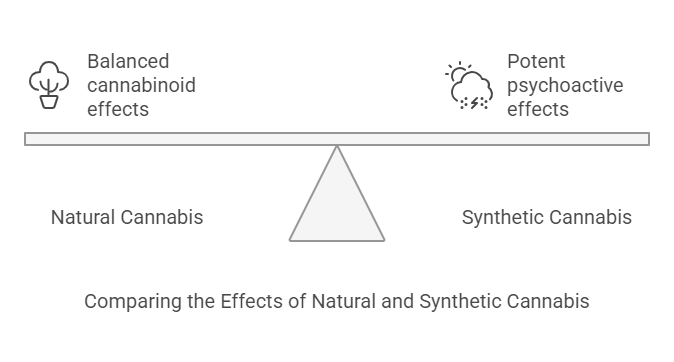
Both natural and synthetic cannabis possess cannabis receptors within the brain. Although natural weed includes a combination of THC and other cannabinoids, certain synthetic compounds possess a far more robust and less predictable form. While THC tends to give normal users a hard time, natural cannabis tends to be comprised, in totality, of a group of cannabinoids. As synthetic cannabinoids tend to have much more potent psychoactive effects, these properties can be quite dangerous.
How Do Synthetic Cannabinoids Work in the Human Brain
Synthetic cannabinoids mimic THC but with far more intensity against the cannabinoid receptors present in the brain.
Interaction with Cannabinoid Receptors
Synthetic cannabinoids work similarly to cannabis by binding to the CB1 and CB2 cannabinoid receptors present in the body. These receptors affect aspects like a person’s emotions, memory, and motor skills. Synthetic forms of cannabinoids are much more effective in binding with the receptors than natural cannabinoids, leading to various unexplored effects.
How Synthetic Cannabinoids Mimic THC
THC is a forward-binding constituent that directly affects the user by altering or shrinking their emotions; it binds to the same cannabinoid receptors, allowing an artificial form of cannabis to mimic it. In comparison to real cannabis, synthetic marijuana’s direct binding causes receptors to feel enhanced sensations, causing negative mental and physical repercussions.
Understanding the Mechanisms Behind the Psychoactive Effects
The effects of many synthetic cannabinoids depend on the ingredients’ concentration and chemical configuration. These substances alter the perception and modify the mood by changing the neurotransmitters in the brain. Therefore, synthetic cannabis can have a strong effect on being restless, hallucinating, and feeling paranoid instead of the calmer sensation that cannabis provides.
What Are the Potential Positive Uses of Synthetic Cannabinoids
Although they may be risky for human consumption, some synthetic cannabinoids have been reported to bear the effects of cannabis, especially in controlling pain or dealing with some brain ailments.
Research on Therapeutic Applications
Some studies indicate that certain synthetic cannabinoids could be effective in reducing pain, swelling, and other symptoms seen in certain neurological disorders. These agents could aid as augmentation therapies for some patients who do not respond clinically to standard pharmacotherapy.
Synthetic Cannabinoids in Pain Management
Chronic pain, fibromyalgia, and multiple sclerosis, among other diseases, have led to the development of synthetic cannabinoid receptors (CB1 and CB2) for pain management purposes. Some synthetic cannabinoids may relieve pain and discomfort in the course of clinical trials and may also benefit those patients who have little or no access to other medication types.
Synthetic Cannabinoids for Neurological Conditions
Recent claims suggest a correlation between most synthetic cannabinoid use and certain neurological conditions such as epilepsy and some neurodegenerative diseases. As these medicines might assist in regulating the brain, patients with such conditions may expect a decreased frequency of seizures or alleviation of symptoms of Parkinson’s disease [1].
Why Are Synthetic Cannabinoid Products Dangerous
Taking synthetic cannabinoids can cause adverse health effects like increased blood pressure, damage to kidneys, and failure of other organs. The unpredictability of different synthetic cannabinoid chemicals has toxic ingredients, increasing the chances of experiencing severe chest pain, acute kidney injury, and even sustained agonizing pain.
Known and Unknown Health Risks
There are a variety of medical syndromes that can arise from the intake of synthetic cannabinoids. For example, withdrawal symptoms, mental health syndromes, and organ malfunction are all familiar side effects, but the wide array of effects that can be produced are not known, showing how widespread the effects are. That, combined with unpredictability, makes them a hazard for intake during therapy.
What Are the Differences Between Synthetic Cannabinoids and Natural Cannabis
While both synthetic and natural cannabis work on cannabinoid receptors, synthetic cannabinoids are more potent.
Chemical Composition and Their Effects on Cannabinoid Receptors
The distinction between synthesized cannabis and natural cannabis is mainly on the chemical structure of the products. Whereas THC in natural cannabis tends to attach to the cannabinoid receptors at a certain orientation, synthetic cannabis is capable of attaching with only one or even multiple sites and at a greater intensity.
Psychoactive Properties of Synthetic THC vs. Natural Cannabis
A natural cannabis plant has an even distribution of THC and other cannabinoids. However, synthetic THC can be overly powerful when consumed alone, leading to uncontrolled feelings of happiness, confusion, and anxiety. Using synthetic THC can have even greater impacts on a patient’s mental health as compared to cannabinoids. If used alone, these will affect one’s mental health to a greater extent.
Natural Cannabis’ Potential for Medical Use
While synthetic cannabinoids are associated with significant risks, natural cannabis substances have shown to be helpful for users who are suffering from a specific illness. Medical cannabis gases have been employed to assist with conditions ranging from cancer-induced vomiting and nausea, which are well tolerated because of their more even composition.
Why Do People Use Synthetic Cannabinoids Despite the Risks
Given the perception that they are a legal substitute for marijuana and their lower cost, synthetic cannabinoids are rather popular.
A large number of people are willing to try using synthetic cannabinoids primarily due to their ready availability and their relatively low cost when compared to other illegal substances. They are widely advertised as marijuana substitutes and can be purchased from gas stations or over the Internet.
A significant number of their users ignore the inherent dangers posed by synthetic cannabinoids as they are purchased and sold under the labels “herbal incense,” “herbal incense blend,” or “kush.”
Utilization of such cannabinoids has come to be closely linked with the product name, such as Spice and K2. These designer drugs are sold, claiming to be legal functional alternatives to cannabis, which has led to them being abused like marijuana, especially among adolescents [2].
What Should Be Done to Address the Growing Public Health Concern
The main approaches to resolving the public health issue regarding the use of synthetic cannabinoids include strengthening legislation, raising awareness of the public, and conducting more studies on the subject.
The Need for Better Regulation and Public Awareness
The rise of the public health problem can be alleviated by reviewing the regulation structure enforced on synthetic cannabinoids. The government must place restrictions on the use of such substances and supervise how they are utilized. Furthermore, raising public awareness about the use of synthetic compounds in specific populations can help offset the negative consequences.
Future Studies and Clinical Toxicology Research
The work on synthetic compounds is crucial for creating more safe alternatives, which is why studies continue to be conducted. Additionally, clinical toxicology research should be able to provide answers to questions about the risks linked with a variety of synthetic substances, allowing the community and practitioners more accurate information.
Conclusion
Synthetic cannabinoids are a multifarious drug class with potential in both the pharma industry and the health risks they pose. These drugs can be life-threatening. The abuse that is now rampant with these drugs is alarming, and ongoing research might find some beneficial uses for it. Caution and scientific study of each compound are extremely necessary in modern care for the masses.
Frequently Asked Questions
What are synthetic cannabinoids made of
Synthetic cannabinoids are the products produced by mixing other compounds to obtain similar effects; in this case, THC is derived from cannabis.
Can synthetic cannabinoids cause overdoses?
Yes, synthetic cannabinoids can enable an overdose, which can lead to elevated blood pressure, chest pain, bewilderment, and, in exceptional extreme cases, death.
What are the risks of using synthetic cannabinoids
The risks comprise severe mental disorders, hypertension, acute kidney failure, and other health problems. They can culminate into substance abuse problems with time.
Are synthetic cannabinoids safer than natural cannabis
The value of synthetic cannabinoids is unmeasurable to that of natural cannabis because it can be laced and isn’t as predictable, which can put the user at major health risks.
References
- Kumar, U. (2024). Cannabinoids: Role in Neurological Diseases and Psychiatric Disorders. International Journal of Molecular Sciences, 26(1), 152. https://doi.org/10.3390/ijms26010152
- Basavarajappa, B. S., & Subbanna, S. (2019). Potential mechanisms underlying the deleterious effects of synthetic cannabinoids found in spice/K2 products. Brain Sciences, 9(1), 14. https://doi.org/10.3390/brainsci9010014