
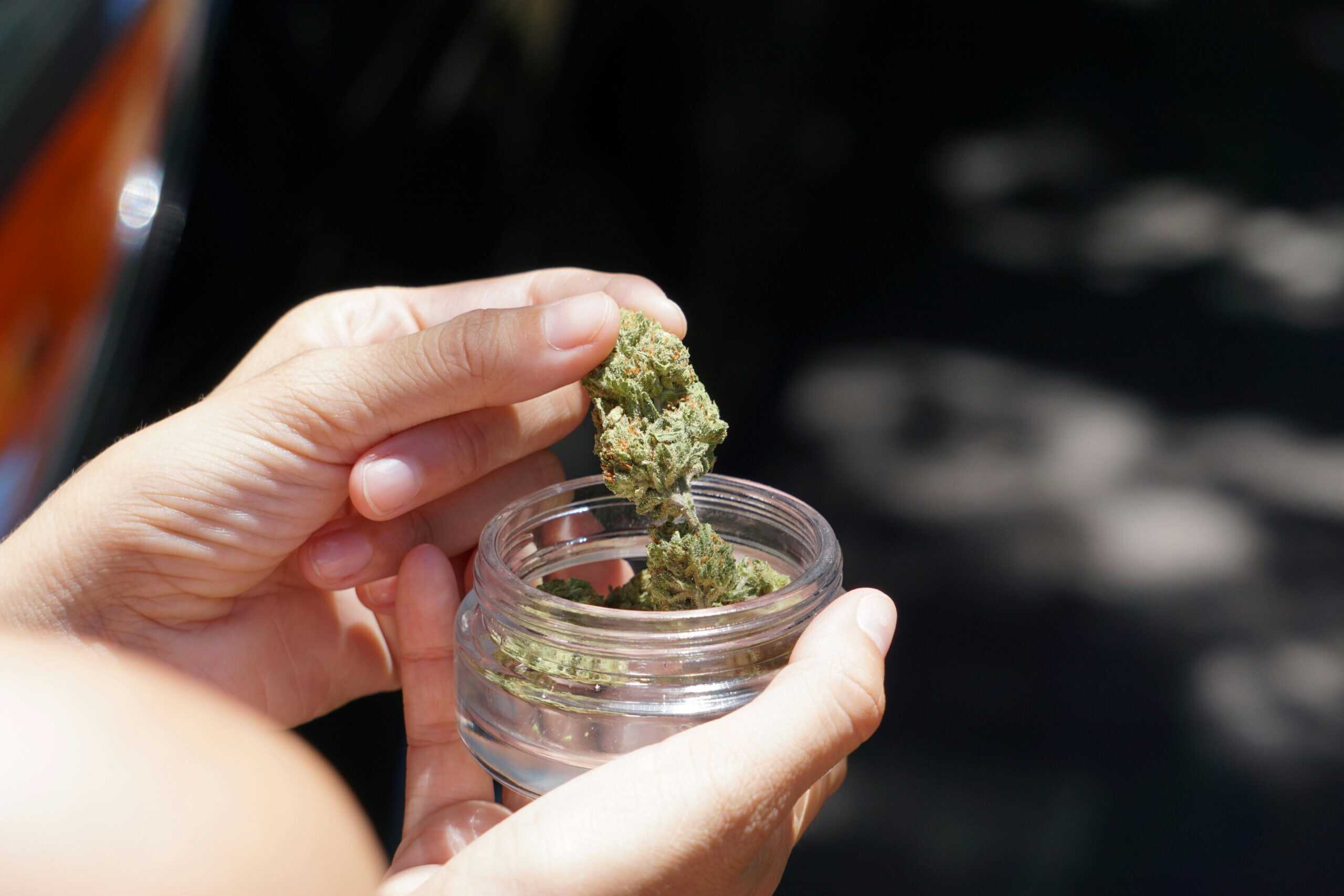
Many people have heard of the terpenes that give cannabis its primary aroma, but few realize that some strains hide a subtle but powerful blend of cannabis bisabolol—which is also found in plants like German chamomile and candeia – a sweet, fragrant floral scent emanates. It has long been used in a variety of cosmetic products, and experts are now taking a closer look at its potential health benefits, which may include suppressing inflammation, fighting microbes and even boosting stem cells protection
Key Takeaways
- Sweet floral and citrus aromas: Cannabis bisabolol provides the mild fragrance found in mild cosmetic fragrances and some marijuana strains.
- Extensive therapeutic properties: Research indicates that it may have anti-inflammatory properties, which may help with common skin infections and fungal issues
- Sedative and potentially protective effects: Some studies show its sedative properties for anxiety, pain relief, and even possible benefits against certain cancer cells
What Is Cannabis Bisabolol?

At its core, cannabis bisabolol is a naturally occurring terpene found in relatively high concentrations in selected cannabis strains. It’s known for its sweet and floral aromas: think chamomile tea meets gentle citrus. You may have seen it in various cosmetics or perfumes, as it not only smells good but can also provide overall skin and wellness benefits
Alpha and Beta Bisabolol
When you see references to alpha bisabolol (α-bisabolol) or beta bisabolol (β-bisabolol), don’t let the terminology throw you. Both share many functional similarities, though α-bisabolol is more commonly used in cosmetics.
A few important points:
- α-bisabolol: Generally praised for its anti-inflammatory properties.
- β-bisabolol: Displays an ability to slow the growth of certain fungal infections.
- Relaxation potential: Both variants have been cited for their calming effects, helping ease anxiety in aromatherapy or cannabis products.
Regardless of which type you see, it’s clear that bisabolol, in either form, is a compelling compound worthy of more scientific exploration.
Origins and Sources
While chamomile is perhaps the most famous bisabolol producer, the candeia tree in Brazil is another key source, and certain cannabis cultivars are increasingly recognized for containing high levels.
- German chamomile: A classic source, used in teas, essential oils, and skincare.
- Candeia tree (Brazil): Known for especially concentrated levels of bisabolol.
- Select cannabis strains: Pink Kush and a few others stand out for their gentle floral twist.
Keep in mind that each origin can influence the terpene’s nuanced scent and overall effects, whether that’s through skincare or cannabis use.
How Does Cannabis Bisabolol Work in the Body?
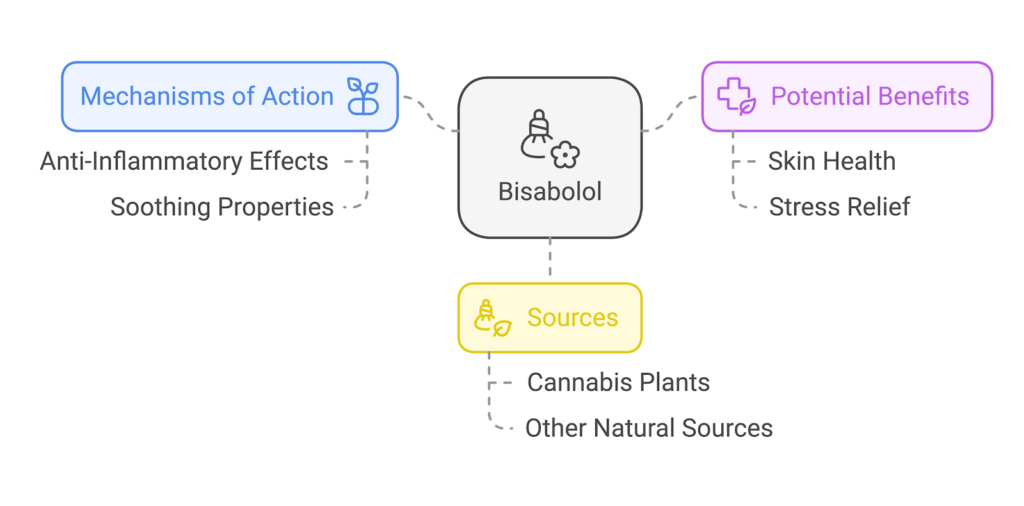
You might be curious if bisabolol has more to offer than just a pleasant smell. Turns out, the answer is yes. Laboratory studies—both on living organisms and in test tubes—reveal that bisabolol shows anti-inflammatory, antioxidant, and pain-relieving potential. It appears to help reduce inflammation by modulating certain biological pathways, suggesting benefits for anyone looking to calm irritated skin or address everyday aches.
Anti-Inflammatory, Antimicrobial, and More
Another interesting discovery is that bisabolol may fight off certain bacterial and fungal infections. While further research in humans is needed, early findings in animal models look promising. For people seeking gentler, plant-based solutions for skin woes, bisabolol could be an ingredient to keep on the radar.
- Soothing inflammation: Calms redness and irritation, possibly preventing future flare-ups.
- Antimicrobial capability: Shows the potential to inhibit common fungal invaders.
- Antioxidant action: May help protect cells from damage caused by unstable molecules (free radicals).
In short, these attributes hint at a broad range of uses in skincare and beyond, particularly for easing inflammation or safeguarding skin health.
Additional Health Benefits
Studies point to several other possibilities that extend past the realm of skin health:
- Anxiety relief: The soft, calming fragrance of bisabolol may promote a sense of relaxation.
- Potential cancer support: Early research suggests it might discourage the growth of certain cancer cells.
- Enhanced absorption: It could help active ingredients penetrate the skin more effectively.
Keep an eye on emerging science around bisabolol for an even deeper understanding of how it may aid the body.
Which Cannabis Strains Contain High Levels of Bisabolol?
For those who enjoy exploring different terpenes, a few cannabis strains stand out for their bisabolol content. Pink Kush is often mentioned, but there are others with a similarly sweet, floral profile that can create a laid-back vibe.
Strains to Try
Strain choices vary by personal preference, and availability can differ by region or dispensary. Even so, these cultivars are known for distinct floral notes:
- Pink Kush: Celebrated for robust bisabolol levels and a sweet, flowery aroma.
- ACDC: Valued for mellow relaxation and moderate bisabolol content.
- Harle-Tsu: Popular for its balanced cannabinoid ratios and gentle, botanical scent.
If you’re after a more calming cannabis experience, these might be worth a closer look.
Comparison with Other Terpenes
Terpenes don’t just deliver aromas; they may also interact with cannabinoids and each other to shape the effects of cannabis. Below is a brief comparison chart:
| Terpene | Primary Aroma | Key Benefits | Common Strains |
| Bisabolol | Sweet Floral, Citrus | Anti-Inflammatory, Soothing | Pink Kush, ACDC |
| Limonene | Bright Citrus | Mood Enhancement, Stress Relief | Super Lemon Haze |
| Myrcene | Earthy, Musky | Sedative, Pain Reduction | Granddaddy Purple |
| Linalool | Floral, Lavender | Calming, Eases Anxiety | Amnesia Haze |
Exploring strains known for high bisabolol content can open doors to new sensory and therapeutic experiences in cannabis.
How Can You Incorporate Cannabis Bisabolol into Your Routine?
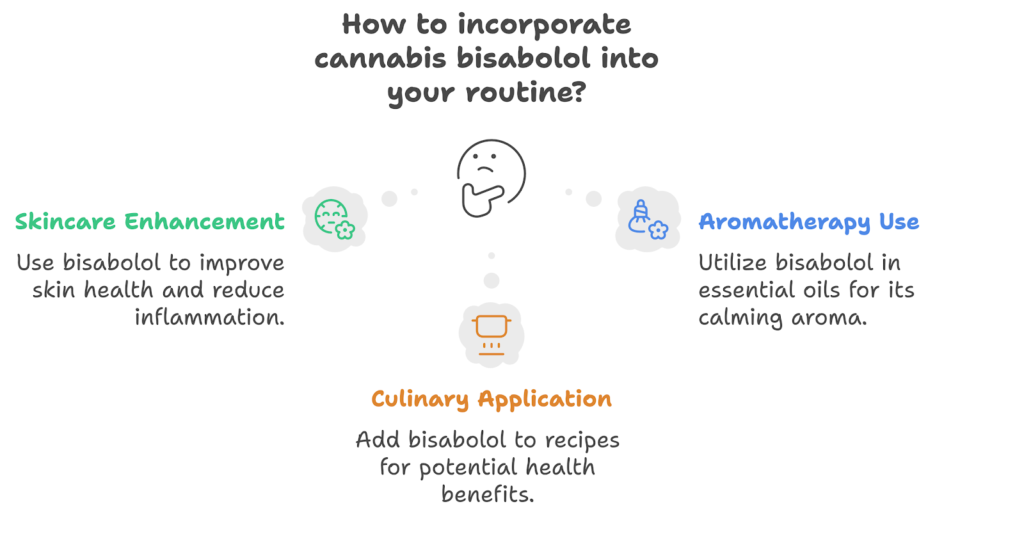
When it comes to using bisabolol, you have choices. Inhaling it through cannabis flower or concentrates is one route, but plenty of skincare lines also spotlight its soothing qualities. That means you might never need to light up if you prefer external applications.
Topical Formulations and Cosmetics
Many lotions, creams, and serums harness bisabolol for its anti-inflammatory and antioxidant benefits. These formulas can be especially appealing if you’re hoping to calm irritated skin or combat minor fungal issues.
Consider the following:
- Look at labels: Products that list bisabolol or α-bisabolol explicitly.
- Seek synergy: Blends including essential oils or cannabinoids may magnify therapeutic effects.
- Focus on target issues: Some creams pinpoint redness, while others are designed for chronic irritation.
Such products typically offer a gentler alternative to harsher chemicals and may help keep skin feeling supple and relaxed.
Considerations for Safety and Research
Although evidence around bisabolol is exciting, we’re still waiting on additional human-centric studies to confirm its full potential. Keep in mind:
- More data needed: Future clinical trials will deepen our grasp of bisabolol’s strengths in various contexts.
- Professional guidance: If you aim to address serious health conditions—like cancer or persistent inflammation—consult a medical professional.
- Allergy checks: Always do a patch test or talk to a healthcare provider before trying new topicals or supplements.
As more insights arise, expect bisabolol to gain an even bigger spotlight in the world of plant-derived remedies.
Conclusion
Though cannabis bisabolol may fly under the radar compared to more famous terpenes, it’s quickly becoming a star in its own right. With a sweet floral scent, potential anti-inflammatory effects, and intriguing antimicrobial properties, bisabolol could be a versatile ingredient in everything from soothing lotions to selective cannabis strains. As researchers continue to unravel its mysteries; especially its possible neuroprotective and anxiety-reducing qualities, bisabolol stands poised to become a mainstay for those seeking a gentler but effective way to enhance their wellness journey.
Frequently Asked Questions
Does bisabolol only come from cannabis?
Not at all. German chamomile and the candeia tree are prime sources of this terpene. Cannabis simply offers another avenue for enjoying bisabolol’s soothing and anti-inflammatory perks.
Can bisabolol help with common fungal infections?
Yes, early findings suggest bisabolol can inhibit the growth of certain fungi. Still, it’s essential to see a healthcare provider for proper assessment and treatment if you suspect you have a serious infection.
Does bisabolol show promise for cancer treatment?
Preliminary research, including some animal and test-tube studies, indicates that bisabolol may help curb the growth of certain cancer cells. More detailed human trials are needed before it can be confirmed as part of a comprehensive treatment strategy.