
Key Takeaways
- Cannabis microemulsions are designed for faster absorption and quicker onset times.
- They can be used transdermally, orally, and topically.
- They can potentially treat neurological disorders and eye conditions.
Cannabis microemulsions offer quicker onset times and enhanced bioavailability compared to traditional marijuana forms. As research progresses, so do their applications. In this article, we delve into everything about microemulsions.
What is a Microemulsion?
A cannabis microemulsion is a stable, water-compatible blend of cannabis extracts, water, and surfactants, designed to improve the bioavailability and uniformity of cannabinoids. Unlike regular emulsions, microemulsions remain uniform and stable over time. This makes them ideal for delivering hydrophobic cannabinoids more efficiently.
Microemulsions keep their consistency over time, unlike traditional emulsions like lotions or salad dressings that separate. Why? Because microemulsions have droplets smaller than 100 nanometers, allowing for better absorption and stability.
Key Components
Microemulsions consist of three main parts:
- Oil Phase: Cannabinoids like CBD or THC
- Water Phase: eg Distilled water
- Surfactants: Substances like Tween 80 or ethanol which balance the mixture and allow it deliver cannabinoids effectively.
During the formation of microemulsions, the continuous phase is important in keeping the mixture stable. What is the continuous phase? This is the main ingredient that surrounds and holds everything together; the mixture’s base. Depending on what the product is used for, like a drink, cream, or spray, the continuous phase can be chosen to suit the purpose. For cannabis drinks, the continuous phase is water so that the cannabinoids can mix well and be easy to drink.
Types of Microemulsions:
- Oil-in-Water (O/W): Water is the continuous phase, and oil droplets are dispersed within it.
- Water-in-Oil (W/O): Oil is the continuous phase, and water droplets are dispersed within it.
- Bicontinuous: Both oil and water are interconnected with no clear dominant continuous phase.
The Science of Microemulsions in Cannabis
Cannabis extracts, specifically their active compounds, cannabinoids such as THC and CBD don’t mix well with water. This makes it difficult for the body to absorb them efficiently, leading to slower onset times and inconsistent effects.
How Microemulsion Solves These Issues
Cannabinoids are broken down by microemulsion technology, which uses surfactants to increase their surface area and make them water soluble. This enhances bloodstream absorption, leading to quicker and more consistent effects. In order to achieve this, nanotechnology is essential in producing particles that are small enough to pass through digestive barriers.
Benefits of Microemulsions in Cannabis Products
Enhanced Bioavailability
Microemulsions allow for easier entry of cannabinoids into the bloodstream which equals enjoying marijuana products at their full potency.
Faster Onset of Effects
Unlike traditional edibles, which can take up to two hours to take effect, microemulsion-based products work within minutes, providing quicker relief or recreational effects.
Consistent Dosing
The uniform distribution of cannabinoids in microemulsions ensures that each dose delivers the same amount of active ingredient, eliminating guesswork for users.
Versatility in Product Applications
Microemulsion-based cannabis products include edibles, beverages, tinctures, and topicals. Their water-soluble nature makes them especially popular in cannabis-infused drinks.
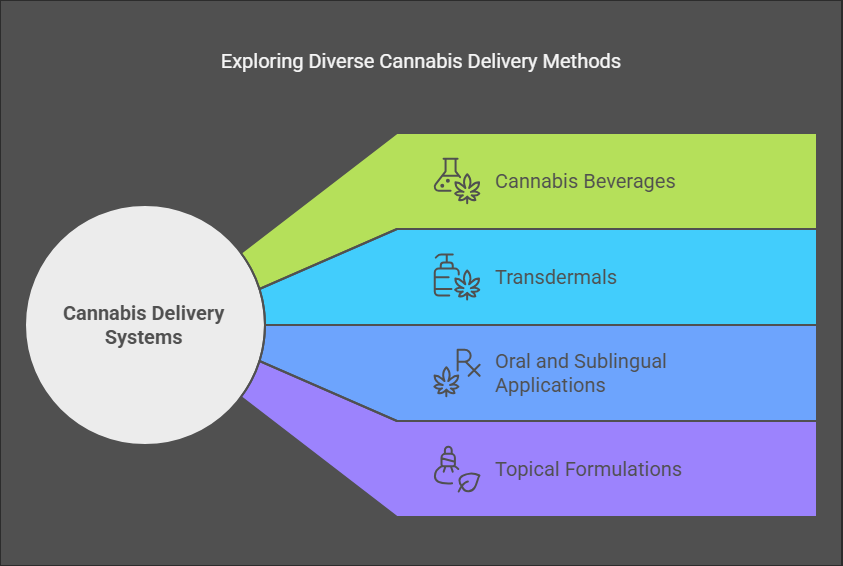
Different Delivery Systems and Intended Use
Below are the various uses of microemulsion. Your choice will depend on the desired effect or preference of onset times.
Cannabis Beverage Industry
Microemulsions make cannabis-infused drinks fast-acting, consistent, and water-soluble. Cannabinoids like THC and CBD typically don’t mix well with water. Microemulsion technology breaks cannabinoids into tiny, stable droplets that blend seamlessly into liquids. This ensures every sip is evenly dosed and allows effects to kick in within minutes, providing a smoother, more predictable experience.
Transdermals
Microemulsions make transdermal cannabis delivery more effective and accessible. These are designed to penetrate the skin’s natural barriers, allowing for direct entry into the bloodstream. This is ideal for patients seeking consistent and controlled dosing. They are especially promising for managing chronic conditions, offering steady relief without a need for frequent dosing.
Oral and Sublingual Applications
By increasing the cannabinoids absorbed into the bloodstream, microemulsions are excellent for oral and sublingual cannabis delivery. Applying microemulsions sublingually, or under the tongue, is especially useful for managing acute symptoms and providing quick relief.
Topical Formulations and Their Benefits
Topical microemulsions deliver cannabinoids directly to targeted areas like sore muscles or arthritic joints. This approach provides localized relief by helping cannabinoids penetrate the skin more effectively. Users love the non-greasy feel and fast absorption of these formulations, which are a significant improvement over traditional topicals.

Applications of Microemulsions in Medicine
What are some areas cannabis microemulsions can be used medically?
Neurological Treatments
Microemulsions hold promise for neurological disorders. These disorders often demand novel treatments due to their complex nature. Because of their therapeutic effects on the nervous system, microemulsions can enhance the delivery of cannabinoids. Better treatment of symptoms like seizures and spasticity results from improved delivery. Additionally, they enable faster onset times and more consistent dosage, perfect for patients suffering from diseases like multiple sclerosis or epilepsy.
Pain Management
Cannabis microemulsions can also make a great difference in pain management. They can provide localized relief without the side effects often seen with oral meds. They ensure that the cannabinoids penetrate deeply into tissues, offering relief for chronic pain conditions like arthritis and neuropathy. Patients can benefit from its pain-relieving and anti-inflammatory properties.
Eye Conditions
The protective barriers of the eye make treating conditions notoriously challenging. Better penetration and absorption in ocular tissues are made possible by microemulsions’ tiny droplet size. This lowers inflammation and intraocular pressure, two common problems associated with a variety of eye conditions. When compared to conventional techniques, microemulsions may result in more effective treatments with fewer adverse effects.
Microemulsions vs Traditional Cannabis
Microemulsions differ from traditional cannabis in several ways including the interaction with the central nervous system (CNS) and cannabinoid receptors. These differences include:
| Aspect | Traditional Cannabis | Microemulsions |
| Absorption and Bioavailability | Cannabinoids are hydrophobic and absorbed slowly, with significant loss during digestion. | Cannabinoids are broken into tiny, water-compatible droplets, allowing faster and more efficient absorption. |
| Onset Time | Takes 30 minutes to 2 hours due to digestion and first-pass metabolism. | Effects are felt within 10–20 minutes due to quicker entry into the bloodstream. |
| Interaction with Cannabinoid Receptors | Targets CB1 and CB2 receptors, but with inconsistent absorption, effects may vary. | Delivers cannabinoids efficiently, ensuring consistent activation of receptors and predictable effects. |
| Consistency and Precision | Dosing can be uneven, leading to unpredictable potency and effects. | Provides precise dosing with even cannabinoid distribution, offering a reliable experience. |
| CNS Benefits | Slower onset and inconsistent absorption may delay or diminish therapeutic effects. | Faster delivery and enhanced absorption provide quicker relief and more predictable therapeutic effects. |
Challenges in Microemulsion Development
Below are some challenges that are experienced during the development of microemulsions:
Stability Issues
Despite their great potential, microemulsions have certain stability issues. It can be challenging to maintain the mixture’s stability over time, and phase separation(the splitting of the water and oil components) is a frequent problem. Researchers are investigating co-surfactants and advanced surfactants to address this. These substances help keep everything together by reducing the surface tension between the oil and water. By experimenting with different surfactant combinations, they can improve stability. Some formulations even use polymers to help stabilize the mixture further, ensuring a consistent product.
Enhancing Bioavailability
Only a small portion of cannabinoids actually enter the bloodstream due to their low bioavailability. Microemulsions help by breaking cannabis oil into tiny droplets, which increases the surface area for absorption. However, making this work requires careful formulation. Even smaller droplets are being produced using methods like nanoemulsion, which further increases absorption rates. Researchers hope to improve the therapeutic effects of cannabis by adjusting the size and makeup of these droplets.
Regulatory Hurdles
The regulations around cannabis products are complicated and vary a lot from one region to another. Developing microemulsion products that meet all these rules can be a major challenge. To overcome these obstacles, many in the industry are working closely with regulatory bodies to ensure they meet the necessary guidelines. This involves thorough testing to confirm the safety and effectiveness of microemulsion products, as well as clear communication with regulators to make sure standards align.
Conclusion
We’re only beginning to explore the cannabis industry with all of its innovations. Microemulsions, with their improved stability and bioavailability, are paving the way for more potent cannabis products. There’s a wide range of products including creams, edibles, or even beverages. As the cannabis industry continues to evolve, we can expect to see even more creative solutions that make cannabis products more accessible and effective.
Frequently Asked Questions
What is a microemulsion?
A stable, transparent blend of oil, water, and surfactants that improves the absorption and potency of cannabinoids.
Are microemulsions better than regular cannabis products?
Microemulsions are better because they help the body absorb cannabis more easily. They also make sure the cannabis stays stable and works better, whether it’s used on the skin or taken in other ways.
Can microemulsions be used medically?
Absolutely. Microemulsions offer precise dosing and faster relief, making them ideal for medical cannabis users.
What cannabis products use microemulsion technology?
Water-soluble CBD drops, THC beverages, edibles, and topicals.
Why are microemulsions more expensive?
The production process involves advanced technology and expertise, which increases manufacturing costs.
How quickly do microemulsion-based products take effect?
Most products take effect within minutes, significantly faster than traditional edibles or oils.