

Key Takeaways
- Crop rotation maintains soil quality and fertility within your cannabis garden.
- It minimizes the need for chemicals by breaking pest and disease cycles.
- Effective rotation strategies lead to better weed management in cannabis fields.
- It offers cannabis growers environmental and economic benefits.
Crop rotation is a game-changer in cannabis cultivation. Think of it like giving the soil a well-deserved break to recharge and perform even better. This article dives into how this simple yet effective practice can transform your cannabis-growing experience.
What is crop rotation?
Crop rotation in cannabis cultivation refers to alternating cannabis plants with different crop species in the same growing area across planting cycles. This technique helps prevent soil exhaustion, breaks pest and disease cycles, and improves soil fertility.
While practicing rotation of crops, growers plant crops with varying nutrient needs or root structures, such as legumes to fix nitrogen, which builds soil fertility and biodiversity. Rotation also reduces the risk of cannabis-specific pests and pathogens. For cannabis growers, this means more robust plants and a better yield.
Historical Context of Crop Rotation Practices
Crop rotation has, in fact, been around for a while. Farmers from ancient civilizations, like the Romans[1] and Chinese [2], figured out that rotating crops improved their harvests. Although they lacked the science we have today, they still experienced the benefits of rotating crops. Today, it is a global staple in sustainable agriculture, even in growing cannabis.
Benefits of Crop Rotation in Growing Cannabis
The key benefits are
- Pest and Disease Management: Rotating interrupts pest and disease cycles. Many pests and harmful bacteria thrive when a single crop is planted repeatedly since they adapt to the predictable environment.
- Improved Soil Health: Continuous cultivation can strip the soil of nitrogen, phosphorus, and potassium. Rotating crops with nitrogen-fixing plants like legumes helps naturally replenish these. This lessens dependence on chemical fertilizers, improves soil structure, and retains soil moisture and air. Healthy soil equals healthy cannabis plants.
- Enhanced Yields: Better soils and smaller pests mean that the energy of the cannabis plants can be directed towards intense growth, and seed production. Crop rotation ensures a steady supply of nutrients and reduces competition with weeds, resulting in larger and more potent yields[3].
How Does Rotating Crops Boost Cannabis Yields?
Crop rotation boosts cannabis yields by:
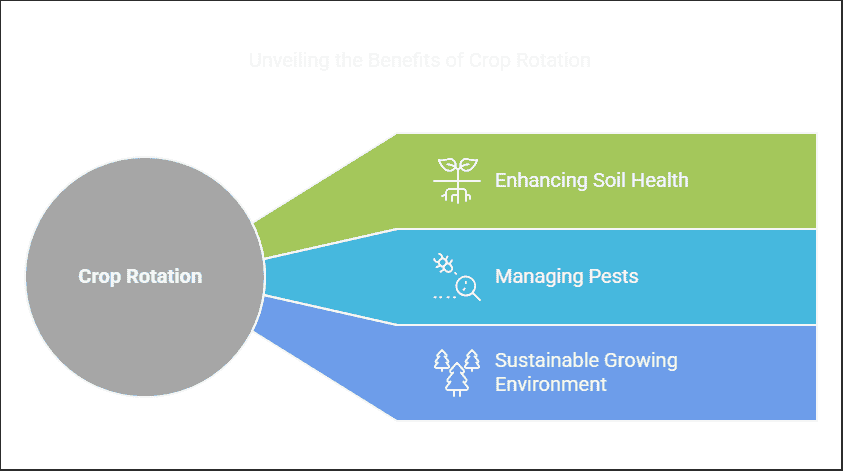
Enhancing Soil Fertility
Rotation allows the soil a chance to rest, break up compacted areas, and restore its fertility. Some crops act as natural fertilizers by adding organic matter. Additionally, rotation naturally replenishes key nutrients, without the need for chemical fertilizers, and makes the soil healthier over time. This also encourages beneficial insects that keep pests and diseases in check, boosting cannabis yields.
Managing Pests, Diseases, and Weeds
By rotating, pests are left without their preferred food source, helping to reduce their population over time. Rotating crops also helps prevent disease by breaking the chains of pathogens that affect specific plants. For weed control, rotate with competitive plants or use cover crops.
Maximizing Cannabis Yields and Quality
Rotation also helps optimize plant growth conditions. By providing a variety of nutrients and balancing soil pH levels, rotation creates the ideal environment for cannabis plants to thrive. This produces healthier plants and higher-quality yields. Moreover, rotating crops reduces the reliance on chemical fertilizers, resulting in abundant, flavorful, and potent cannabis.
Impacts of Crop Rotation
The rotation of crops in cannabis cultivation has various impacts. These include:
Enhanced Soil Fertility
Crop rotation helps reduce the environmental impact of cannabis farming by improving soil health and minimizing the need for chemical inputs. This practice also promotes biodiversity and reduces carbon emissions, benefitting both growers and the planet.
Economic Advantages
By lowering the need for fertilizers and pesticides, crop rotation helps farmers save on costs. It also provides stable yields, allowing growers to explore diverse markets, reducing financial risks, and boosting potential revenue.
Sustainability in Cannabis Cultivation
Rotation supports sustainable cannabis farming by reducing dependence on chemical products while increasing soil fertility. Include industrial hemp plants in rotations to improve soil quality and lower carbon emissions.
What Should You Consider When Rotating Crops?
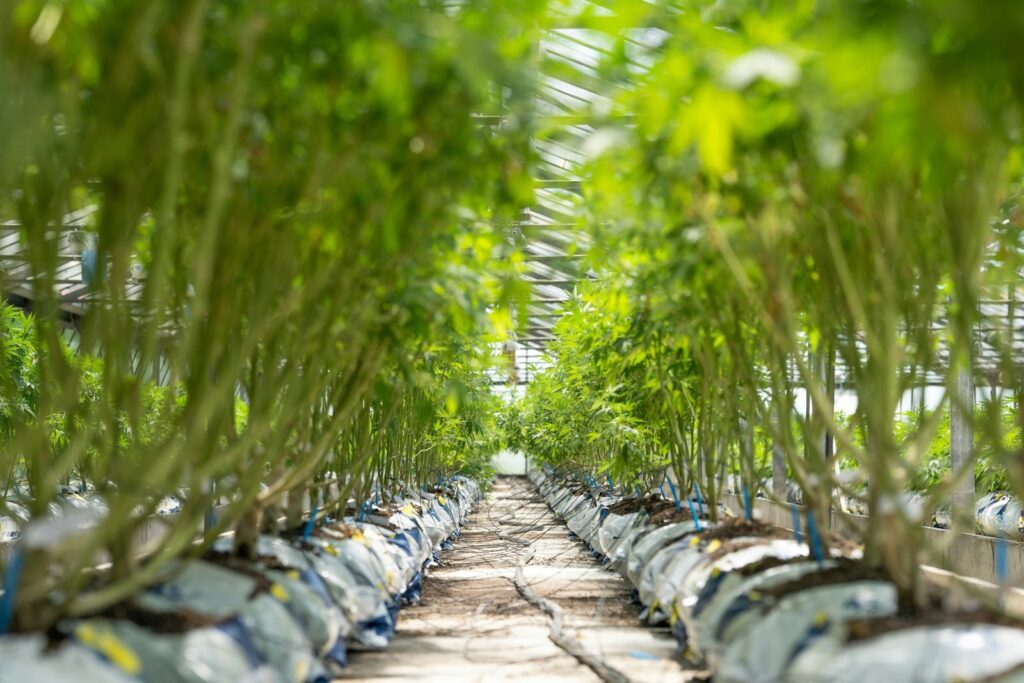
Below are some considerations to follow through as you rotate crops in your cannabis garden:
Planning Your Crop Rotation Cycle
Getting started with crop rotation begins with a solid plan. Divide your growing area into sections and assign different crops to each section for every growing season. For cannabis, think about rotating with crops like clover, beans, or grasses, which can boost soil fertility and structure.
Understanding Crop Families
Crop rotation works best when you alternate plants from different families. This prevents pests and diseases specific to a single plant family from taking hold. Cannabis belongs to the Cannabaceae family, so rotating it with crops like legumes or grasses, which belong to different families.
Integrating Cover Crops
Cover crops (green manure) are ideal for rotating crops. Effective cover crop management practices are crucial for improving soil health, weed suppression, nutrient cycling, and overall sustainability in cannabis gardening.
Scaling for Different Grow Setups
Crop rotation can be adjusted to best suit your needs regardless of whether you grow small scale or in large scale. For smaller setups, consider intercropping (growing complementary plants alongside cannabis in the same space). For larger farms, divide fields into zones and rotate crops on a seasonal basis to optimize soil health and yields.
Challenges in Crop Rotation for Cannabis
Below are a couple of challenges and how to overcome them:
Space Limitations
Crop rotation can be tricky in a small space. Try out container gardening, where you rotate crops in separate pots or beds. Another option is intercropping, which is growing different crops together in one area.
Crop Selection
Some plants might compete for resources, while others won’t do much for your soil. It’s all about experimenting and researching to find the best match for your cannabis.
Time and Resource Management
Crop rotation requires a bit of planning and extra effort, which can be a challenge. To make it easier, you can use crop rotation planning tools or consult with experts in cannabis farming to streamline the process.
If you face any challenges, consider using shorter rotation cycles or rotating only a part of your field. You can also plant fast-growing cover crops during the off-season, to maintain soil health without the need for extra time.
Best Practices for Sustainable Crop Rotation
Here are some best practices:
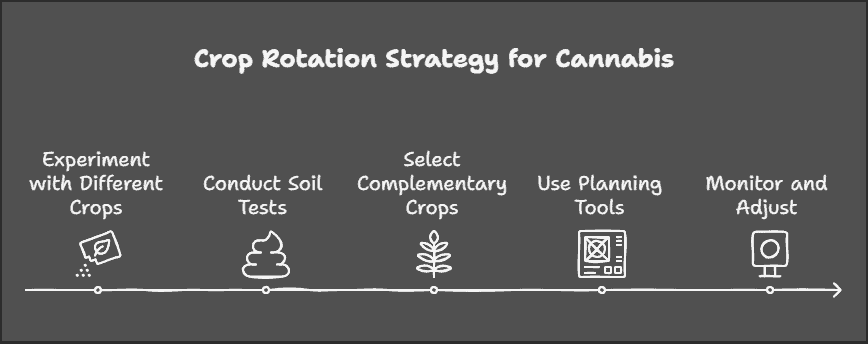
- Plan your rotation strategy. Conduct soil tests and experiment with various crops at a little corner.
- Select compatible crops considering the specific needs of your soil.
- Regularly rotate your plants to avoid depleting the soil of nutrients and to reduce the risk of pests and diseases.
- Monitor your crops regularly and adjust your rotation strategy when necessary.
Conclusion
Crop rotation is a proven practice with substantial benefits. It ensures good soil maintenance, pest and disease risk reduction, and healthier plant development leading to maximized production. Whether you’re a seasoned grower or beginner, it leads to healthier cannabis plants and more robust harvests.
Frequently Asked Questions
What is crop rotation?
It is changing the type of plants grown in your cannabis garden over time. This helps keep the soil healthy, reduces pests, and improves yields.
How does crop rotation help with soil health?
Rotation boosts soil health by adding different nutrients back into the soil, improving its structure, and encouraging helpful microorganisms to grow.
Can crop rotation help control cannabis pests?
Yes, by breaking the life cycles of pests, making it harder for them to thrive.
Does crop rotation affect weed growth in cannabis fields?
Rotating your crops disrupts the growth patterns of weeds, reducing their numbers.
What is the economic benefit?
It saves you money, as there’s a reduced need for chemical fertilizers and pesticides. Also, improved crop yields are profitable for the cultivator.
Are there any challenges?
Some challenges include planning the right sequence of crops, managing different crop needs, and adjusting to seasonal changes.
References
- Crop Rotations Have Been Around Since Roman Times (n.d.). College of Agricultural Sciences https://agsci.oregonstate.edu/sites/agscid7/files/coarec/attachments/may_2013_article.pdf
- Legume-Cereal Crop Rotation Systems In China. (2016). Nova Publishers https://www.novapublishers.com/wp-content/uploads/2019/01/Legume-Cereal-Crop-Rotation-Systems-in-China.pdf
- Soil fertility, Biodiversity and Pest Management. (2012). ResearchGate https://www.researchgate.net/publication/287626679_Soil_Fertility_Biodiversity_and_Pest_Management