

Cannabis overwatering isn’t just a rookie mistake; it’s a challenge even seasoned growers face. Too much water can suffocate roots, slow growth, and invite root rot. By spotting the early signs and making targeted changes, you can steer your plants back to health and vitality.
Key Takeaways:
- Learn the key symptoms of overwatering like drooping leaves and yellowing foliage.
- Discover simple fixes to tackle waterlogged soil and support recovery.
- Implement proactive habits to prevent overwatering from happening again.
What Are the Signs of Overwatered Cannabis Plants?
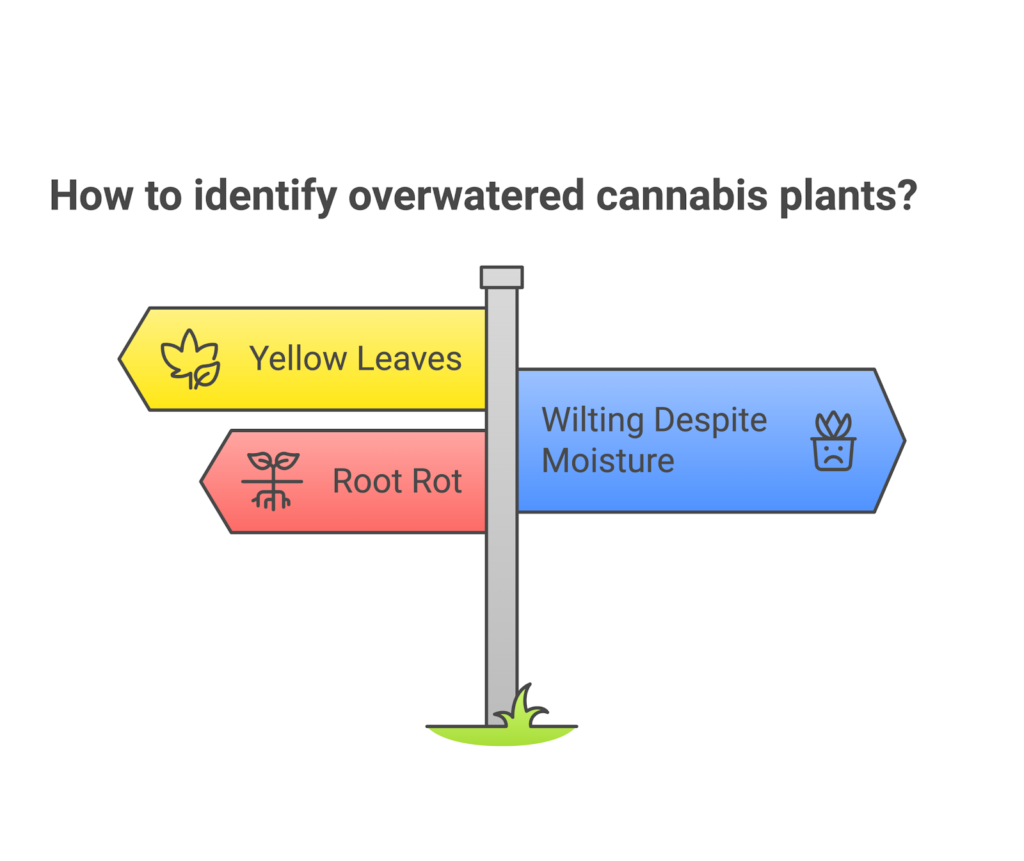
Knowing what to look for is half the battle. Overwatered cannabis plants often suffer in silence until the problem becomes more visible—but by then, damage may already be done.
Visible Clues That Shout Overwatering
Your plants may be silently begging for help if you notice:
- Leaves drooping unnaturally, like they’re weighed down.
- Yellow or pale leaves hinting at nutrient deficiencies.
- Soil that smells bad, feels constantly soggy, or looks compacted.
Spotting these clues early can make the difference between saving and losing your plants.
Root Problems and the Role of Excess Water
Roots need oxygen to thrive, but too much water drowns them. This can cause:
- Root rot—a slimy, foul-smelling condition that’s a plant killer.
- Stunted root development, limiting nutrient absorption.
- Fungal growth and pest issues, like fungus gnats.
Healthy roots are essential for a thriving plant’s life cycle. They’re also the first to suffer when excess moisture persists.
Why Letting Soil Dry Matters
Cannabis thrives on a balance. Soil that stays moist for too long spells trouble. Here’s how to keep it in check:
- Test moisture with your finger—soil should feel slightly dry before watering.
- Use pots with adequate drainage holes to ensure water doesn’t pool.
- Choose a well-draining soil mix to prevent waterlogged conditions.
Drying out the soil properly gives roots a chance to absorb oxygen and recover.
How Can You Fix Overwatered Cannabis Plants?
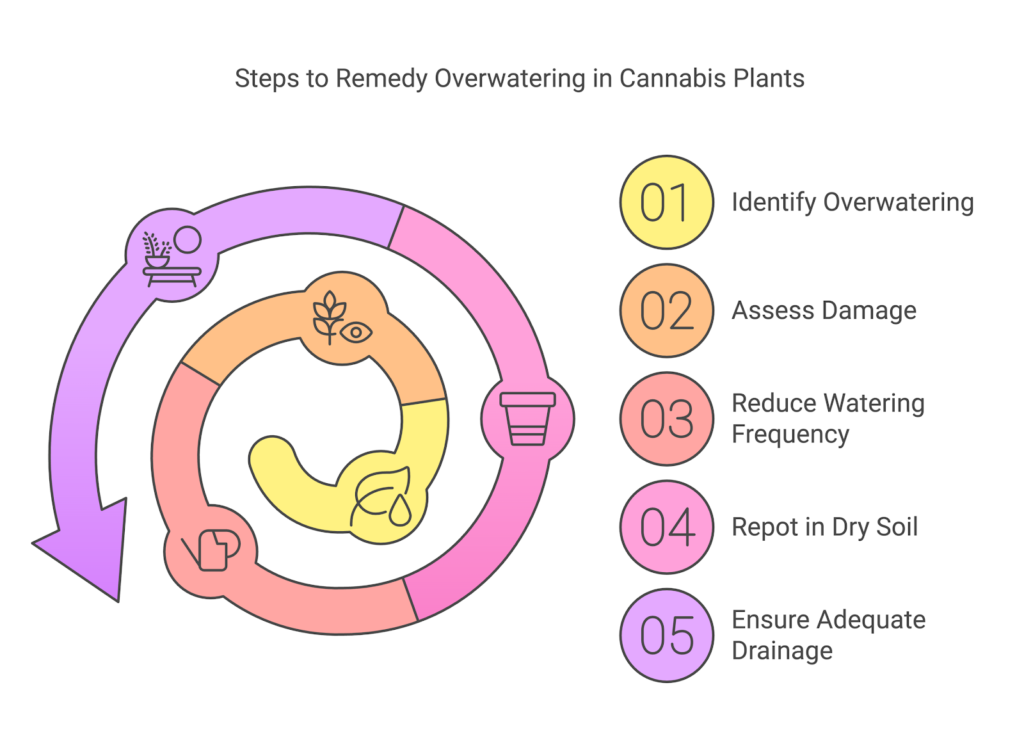
Fixing overwatered plants takes patience and strategy. Fortunately, cannabis plants can be resilient when given the right care.
First Step: Press Pause
Stop watering immediately. Let the soil naturally dry out before doing anything else. Watering cannabis plants without proper checks will only worsen the situation.
Helping Roots Recover
Boosting root health is the quickest way to help your plants bounce back:
- Ensure pots have proper drainage holes to prevent stagnant water.
- Repot in fresh, aerated soil if the current medium stays waterlogged.
- Gently loosen compacted soil to promote airflow and root expansion.
Healthy roots can better absorb water and nutrients, setting the stage for recovery.
Improving Drainage with Simple Tweaks
Overwatered plants often signal poor drainage. Here’s how to fix it:
- Mix perlite or sand into your soil to enhance drainage.
- Switch to fabric pots or containers that encourage water evaporation.
- Raise pots slightly off the ground to allow for better air circulation.
These small changes can have a big impact on your plant’s long-term health.
How Can You Prevent Overwatering in Cannabis Cultivation?
The best fix for overwatering is to avoid it in the first place. Prevention starts with understanding your plant’s needs at different growth stages.
Creating a Watering Schedule That Works
Many growers struggle with how often to water cannabis plants. The answer depends on factors like plant size, the growth stage, and environmental conditions. Here are a few rules of thumb:
- Water less frequently for small plants or during cooler temperatures.
- During the flowering stage, check moisture more often, but don’t overdo it.
- Always allow soil to dry out between watering sessions.
Frequent watering can do more harm than good. Focus on watering practices tailored to your specific plants.
Using the Right Growing Medium
Not all growing mediums are created equal. Some retain more moisture than others, so choose wisely:
- Coco Coir: Retains just the right amount of water while promoting drainage.
- Soil Mixes: Opt for well-draining soil to prevent excessive moisture buildup.
- Potted Plants: Always check that pots provide proper drainage to avoid waterlogging.
Matching your growing medium to your plant’s needs can prevent many overwatering problems.
Why Drainage Holes Are Non-Negotiable
Pots without proper drainage are a recipe for disaster. Without them:
- Excessive moisture can accumulate, leading to root suffocation.
- Water stagnates, causing nutrient uptake to falter.
Investing in pots with adequate drainage holes ensures your plants can absorb water and nutrients effectively.
What Are the Long-Term Effects of Overwatering on Cannabis Plants?
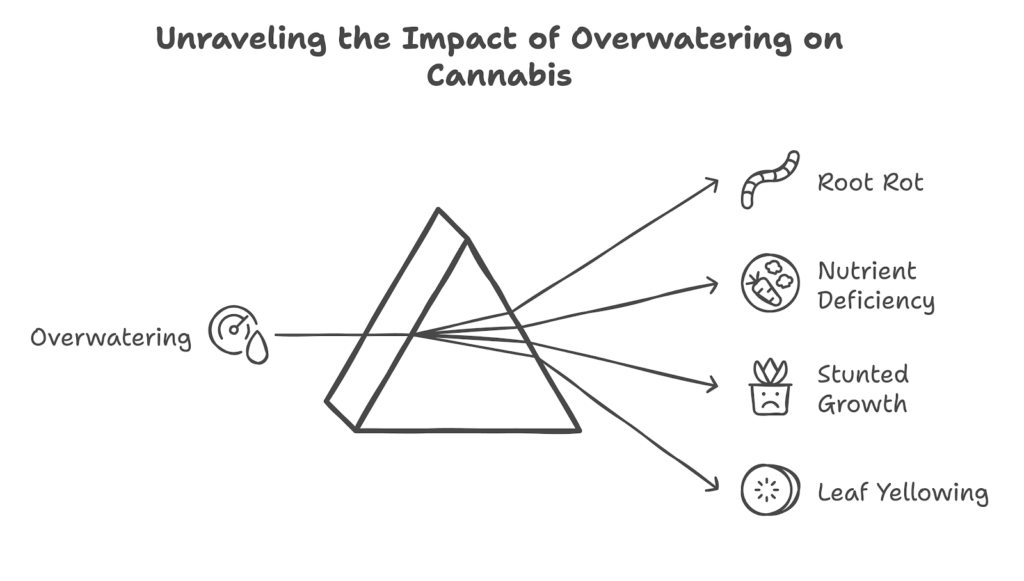
Chronic overwatering doesn’t just cause immediate problems; it can have lasting impacts on growth, yield, and overall health.
How Overwatering Disrupts Nutrient Absorption
Plants rely on their roots to absorb essential nutrients. Waterlogged soil hampers this process, leading to:
- Nutrient deficiencies, such as yellowing or curling leaves.
- Slow growth and a lack of vigor.
- Signs of nutrient burn if excessive moisture locks nutrients in the soil.
Addressing these imbalances early is key to restoring plant health.
Overwatering vs. Proper Watering: A Quick Comparison
| Aspect | Overwatering | Proper Watering |
| Root Development | Weak, prone to rot | Strong and healthy |
| Soil Moisture | Constantly soggy | Balanced and breathable |
| Plant Health | Drooping, yellowing leaves | Vibrant, upright foliage |
| Growth Speed | Stagnant | Optimal |
Encouraging Long-Term Resilience
To avoid falling into overwatering traps again, try these tips:
- Monitor soil moisture regularly with tools like hygrometers.
- Water only when the top layer of soil feels dry.
- Use growing practices that encourage roots to absorb water efficiently.
Conclusion
Overwatering cannabis plants is a common issue, but it’s far from insurmountable. By spotting the warning signs, making immediate corrections, and adopting preventive measures, you can rescue your plants and set them up for a thriving future. Whether you’re growing small plants or managing larger operations, the key is balancing water, soil, and air for healthy root development and robust growth.
Frequently Asked Questions
How Do You Recognize Overwatered Plants?
Drooping leaves, yellowing foliage, and persistently soggy soil are clear signs. Check soil moisture levels before adjusting your watering habits.
What’s the Quickest Way to Save Overwatered Plants?
Stop watering immediately and focus on drying out the soil. Improve drainage by adding perlite to the soil and ensuring pots have adequate drainage holes.
Can Overwatering Be Avoided with Proper Practices?
Absolutely. Use well-draining soil, monitor moisture levels, and water only when needed. A consistent schedule tailored to your plant’s growth stage can help prevent overwatering.