Key Takeaways
- Harvest timing impacts your weed’s potency and flavor.
- The harvest window is typically 2-3 weeks long.
- Environmental factors, cannabis strain, and plant health affect this window.
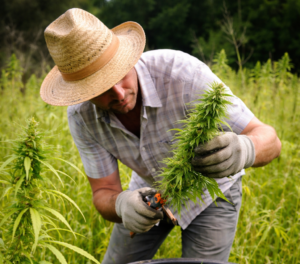
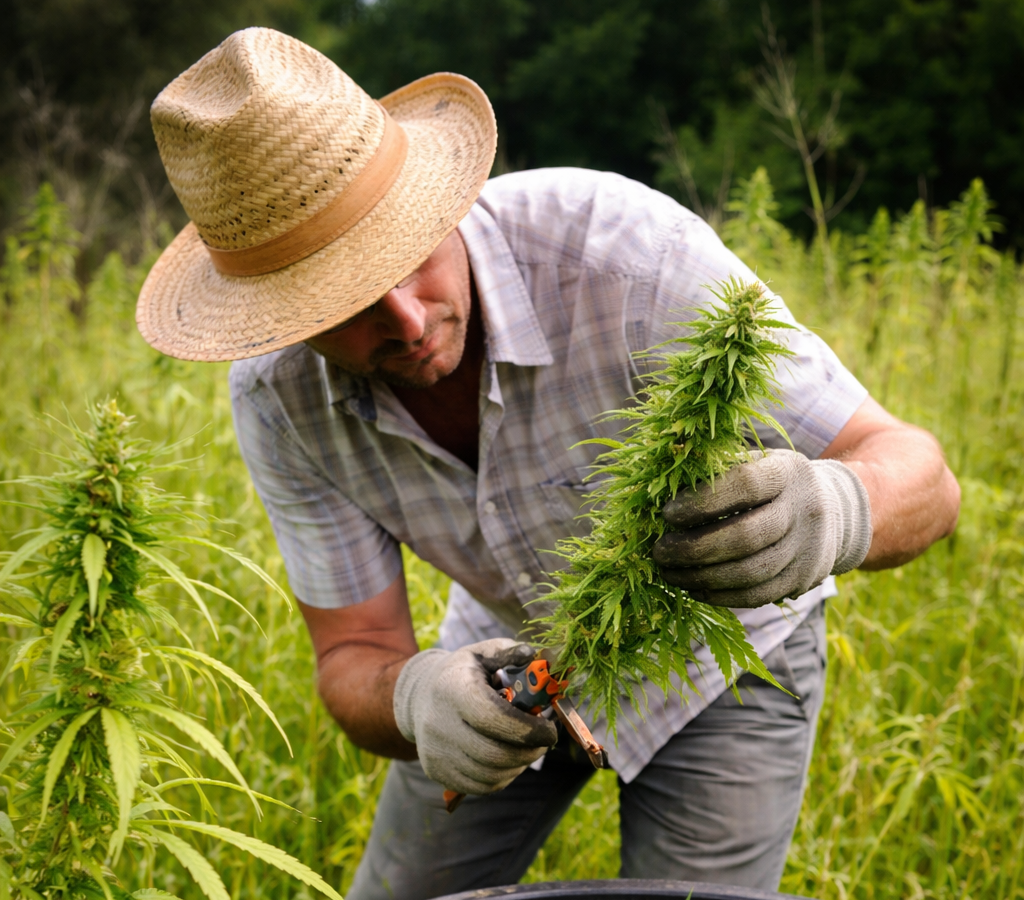
Timing is everything in cannabis cultivation, and the harvest window plays a critical role in determining the quality, potency, and overall yield of your crop. Harvesting too early or too late can drastically impact the cannabinoid and terpene profiles of your plants, leading to less-than-ideal results. Understanding how to identify the perfect harvest window and how to make the most of it ensures you reap the full rewards of your hard work. In this guide, we’ll explore the science behind the harvest window and provide tips for maximizing your yield.
What is a Harvest Window?
Harvest window in cannabis cultivation is the optimal period for cannabis harvesting to achieve the desired potency, flavor, and effects. This window depends on the strain and growing conditions.
The harvest window greatly affects your final product’s quality. Harvesting too early means the buds might not have reached full potency. On the flip side, waiting too long equals a decline in THC levels, in turn affecting the potency.
How to Identify the Optimal Harvest Period
Check the pistils when they turn dark amber, it is a sign you’re nearing the right harvest date. Also, examine the trichomes. Milky and amber trichomes indicate peak readiness.
Key Indicators of the Harvest Window
Some things to look out for include:
- Trichome Color
- When most trichomes transition from clear to cloudy, THC levels are at their peak.
- Amber-colored trichomes indicate more sedative effects due to THC degradation into CBN.
- Pistil Changes
- The hair-like structures (pistils) on the buds change from white to orange, brown, or red.
- When about 70–90% of the pistils darken and curl inward, the plant is usually ready for harvest.
- Bud Appearance
- Mature buds are dense, swollen, and coated with sticky resin.
- The calyxes (small flower structures) swell significantly as the plant nears harvest.
- Leaf Signals
- Fan leaves may yellow and drop off as the plant redirects energy to the buds during late flowering.
The harvest window is typically 1–2 weeks. For uplifting, energetic effects, harvest early during this period, while for relaxing, sedative effects harvest much later.
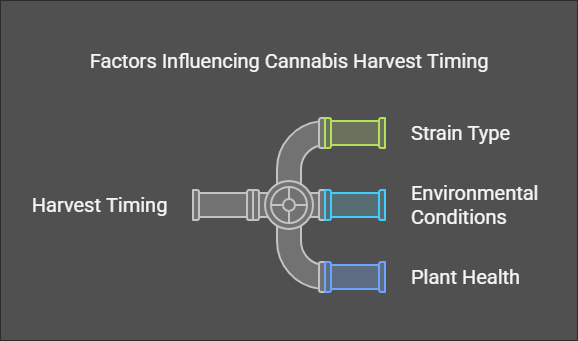
Factors Influencing the Harvest Window
These include:
- Strain Type: Growing cannabis involves understanding the unique growth cycles of different strains. Indica flowers quicker than Sativa.
- Temperature, humidity, and light: these affect how quickly your plants mature.
- Plant Health: Unhealthy ones require earlier harvesting to prevent further issues.
Techniques for Monitoring Cannabis Maturity
To know when to harvest cannabis buds, inspect:
- Trichomes are the specialized gland structures of cannabis plants filled with cannabinoids and terpenes, which turn color with ripeness. Clear trichomes gradually turn milky and then amber, indicating peak potency. Most growers harvest when trichomes are milky, with a few amber ones for the best combination of potency and flavor.
- Pistil Color: Pistils are the hair-like structures on cannabis buds. These start off white and straight, then darken and get more curled as the plant ages. Harvest when 70-90% pistils are dark and curly. However, don’t rely solely on pistil color as this varies with different strains.
Tools to Assess Maturity
To accurately assess cannabis maturity, you need:
- A magnifying glass or Jeweler’s Loupe to closely examine trichomes and pistils.
- A digital microscope for a more detailed view of the trichomes,
- Detailed notes on everything plant developments.
Environmental Factors Affecting the Harvest Window
Some environmental factors that affect the harvest window are
- Temperature and Humidity
Plants share a temperature dependence, thus helping them in their metabolism and absorbing nutrients. Inadequate heat might translate to inadequate growth of the plants, and the same can happen on the cooler side. Humidity also matters. Too much moisture can lead to mold and mildew, while too little can dry out the plants.
- Light Conditions
Light affects how the plant photosynthesizes and develops. Natural sunlight provides a full spectrum of light, which is great for outdoor grows. However, indoor setups require artificial lights that mimic the sun. More light speeds up the growth process, but too much can stress the plants. Finding the right balance is essential for a successful harvest.
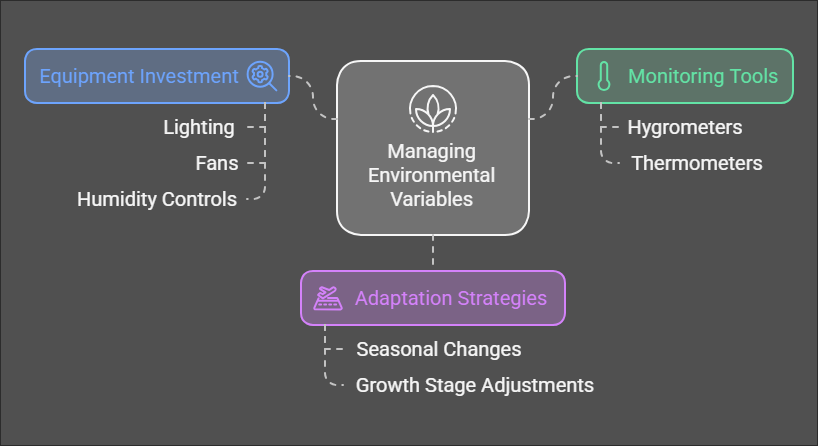
Managing Environmental Variables
Here are some tips:
- Use hygrometers and thermometers to monitor environmental conditions.
- Be ready to change your setup depending on the season or the plant’s growth stage.
- Invest in equipment such as good lights, fans, and humidity controls.
Maximizing Yield Through Proper Harvest Timing
If you harvest too early, you might end up with small and less potent buds. On the flip side, waiting too long can lead to a decrease in THC levels, flavor and aroma.
To hit that sweet spot, closely monitor the trichomes and pistils. Trichomes should appear milky, with some turning amber. Meanwhile, the pistils should have turned darker.
Common Harvest Mistakes
A few common ones are:
- Failing to monitor trichome color leads to harvesting at the wrong time.
- Overlooking Pistil Color: Not all strains show the same changes, but generally, pistils darken before harvest.
- Each cannabis strain has its own timeline, so it’s important to observe the plant itself rather than stick to a schedule.
Strategies for Consistent High-Quality Harvests
You can achieve consistent quality harvest through:
- Tailoring your nutrient delivery to each stage of growth can greatly enhance plant health and yield.
- Monitoring and ensuring optimal temperature and humidity levels to prevent mold and other issues.
- Regularly checking your plants helps catch any issues early, allowing for timely interventions.
Tailoring Harvest Timing for Desired Effects
Different harvest times produce cannabis with varying effects, and timing is crucial for maximizing potency and flavor.
Early Harvest for Energizing Effects
Harvesting when the trichomes are mostly clear and milky equals an energizing and stimulating weed. At this stage, THC is low, while CBD levels are high, which causes a cerebral and creative high. This cannabis is ideal for daytime use or for those sensitive to THC’s more intense effects.
Peak Harvest for Balanced Highs
During the peak period, THC levels are the highest when the trichomes are mostly milky with some amber. This equals a balanced high that is both cerebral and physical, making it popular for both recreational and medicinal use. The balanced effects make it suitable for a wide range of users, offering a potent high without being overwhelming. This is the most common harvest time as it strikes a balance between potency and yield, ensuring a high-quality harvest.
Late Harvest for Relaxing Effects
If you’re looking for a more pain-relieving cannabis that has calming properties, then try a late-harvest strain. At this stage, THC begins to convert into the cannabinoid CBN which is known to be less psychoactive. Late-harvest cannabis is calming and sleep-inducing, making it perfect for nighttime use.
The Science Behind Cannabis Harvest Timing
Cannabis contains distinct attributes that primarily come from its chemical constituents, which are known as cannabinoids. They form during the flowering stage when trichomes, begin producing THC, CBD, and other cannabinoids. As the plant matures, these trichomes change color, signaling the right harvest time.
If harvested at the correct time it can improve terpenes, which helps in the flavor and aroma. They can be a solid guide for when to harvest.
Scientific Methods to Determine the Harvest Window
The most popular is using a magnifying glass or microscope to examine the color trichome. Clear ones indicate immaturity, whereas being cloudy or milky suggests that cannabinoid production is at its peak. Amber trichomes suggest a more sedative effect due to the conversion of THC to CBN.
Also, farmers check the pistils, which become reddish-brown as they mature from white. More advanced methods involve lab tests of cannabinoid and terpene profiles informing growers when to harvest by indicating accurate THC, CBD, and aromatic compound concentrations.
Harvest Strategies for Different Strains
Different cannabis strains have varying harvest windows.
- Indica vs. Sativa Harvest Considerations
Indica and Sativa strains have distinct growth patterns and maturation timelines. Indicas mature faster, often ready for harvest in about 8 weeks of flowering. They have denser buds, which might require careful drying to avoid mold. In contrast, Sativas can take 12 weeks or longer to flower completely. Their buds are more fluffy and less dense which could change the durations for drying and curing.
- Hybrid Strain Harvesting Techniques
Being a mix of Indica and Sativa, hybrids vary greatly in their harvest needs. The key is to monitor the specific traits of the hybrid strain. A hybrid leaning towards Indica might mature faster, while a Sativa-dominant hybrid could experience longer flowering times. Closely check trichome development and pistil color to determine the optimal time to harvest marijuana for maximum potency and yield.
Customizing Harvest Timing for Unique Strains
Every strain has its unique characteristics, and some might not fit neatly into the Indica or Sativa categories. Customizing harvest timing for these unique strains involves a bit of trial and error. Keep notes on each grow cycle, and observe the plant under specific conditions to help fine-tune harvest timing.
Conclusion
Choose the appropriate period to harvest your cannabis plants to get the best out of the plants in the cannabis industry. It is important to remember the desired effect and potency on the color of the pistils, for example, clipping on trichome and possible analytical lab tests. Remember, when you perfect this aspect of the cannabis growing process, all your endeavors in cannabis growing will be worth it.
Frequently Asked Questions
When is the best time to harvest cannabis plants?
When the trichomes have turned from clear to a milky white color, this indicates peak potency. The pistils should be mostly amber or brown.
What happens if I harvest cannabis too early?
Harvesting early equals lower yields and less potent buds. The cannabinoids and terpenes may not have fully developed, causing a weaker effect and reduced flavor.
Can I harvest cannabis late?
Sure, you can, but THC content will start decreasing with an increase in CBN which will produce sedative and weaker effects.
How do environmental factors affect the harvest window?
The rate of cannabis plants’ growth is influenced by temperature and light, so their levels should always be optimal.