Ever stood in front of a dizzying array of cannabis products, scratching your head about what those labels mean? One key detail that can guide you is the cannabinoid ratio, which describes how much of each major compound—like THC and CBD—is present. When you understand this ratio, you’re better equipped to choose options that match your desired psychoactive effects, therapeutic benefits, and personal comfort level. Whether you’re exploring medicinal cannabis for chronic pain relief or visiting a recreational market for a relaxed weekend, getting familiar with how THC and CBD intertwine can be a game-changer.
Key Takeaways
- A well-chosen cbd thc ratio can influence whether you experience soothing relief or a strong buzz.
- High potency cannabis with mostly THC could heighten intoxicating effects, especially if you’re one of those infrequent cannabis users.
- Balancing CBD and THC might help manage conditions like neuropathic pain without overwhelming adverse effects.
What’s the Big Deal About CBD:THC Ratios?
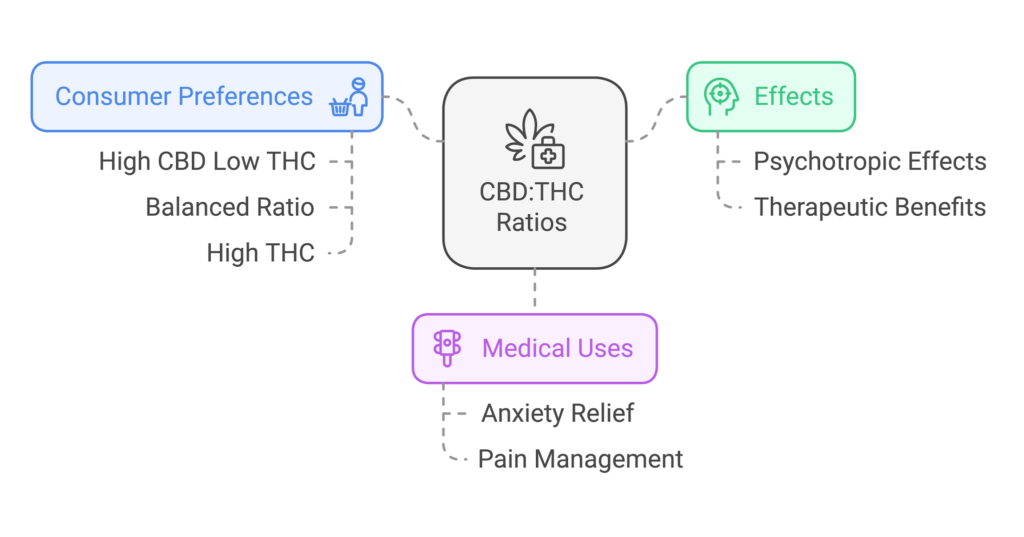
Ever wonder why one cannabis strain leaves you more relaxed, while another leads to a burst of euphoria? It often boils down to CBD concentrations and THC levels, which together form the cbd:thc ratio. For many folks, especially those in medical cannabis programs, the ratio can be as vital as the dosage.
The Role of THC and CBD in Your Body
Your human body has a built-in system—known as the endocannabinoid system—that interacts with cannabinoids like THC and CBD. THC binds to specific receptors to deliver intoxicating effects, while CBD can act as a buffer by offering antipsychotic properties and dampening thc elicited paranoid symptoms.
Before deciding on how much THC you need, keep in mind:
- THC dominant ratio might offer stronger psychoactive effects but may elevate the risk of memory impairment.
- A more balanced ratio can provide both therapeutic thc and relaxing CBD, minimizing potential pitfalls like acute intoxication.
Sometimes, medicinal cannabis products are formulated with specific cbd to thc amounts for those with chronic pain or neuropathic pain. A best cbd thc ratio will vary from person to person, which is why some trial and error could be your best ally.
The Impact of Ratios on Different Users
Not everyone experiences cannabis use the same way. Infrequent cannabis users might be more prone to poor tolerance, especially when trying high potency cannabis with a lopsided thc ratio. On the flip side, seasoned folks might seek out stronger thc and cbd concentrations to achieve the relief or euphoria they prefer.
Here’s why the ratio matters across user types:
- First-timers often lean toward low thc products to avoid acute intoxication effects.
- People with established cannabis use routines might step up to stronger ratios without as many surprises.
- Certain medical conditions, like chronic pain, can benefit from a middle-ground approach that delivers a significant effect on pain management.
A moderate ratio that balances THC’s therapeutic effects with CBD’s protective qualities can be quite beneficial if you want to sidestep extremes.
Can the Right Cannabinoid Ratio Help with Chronic Pain?
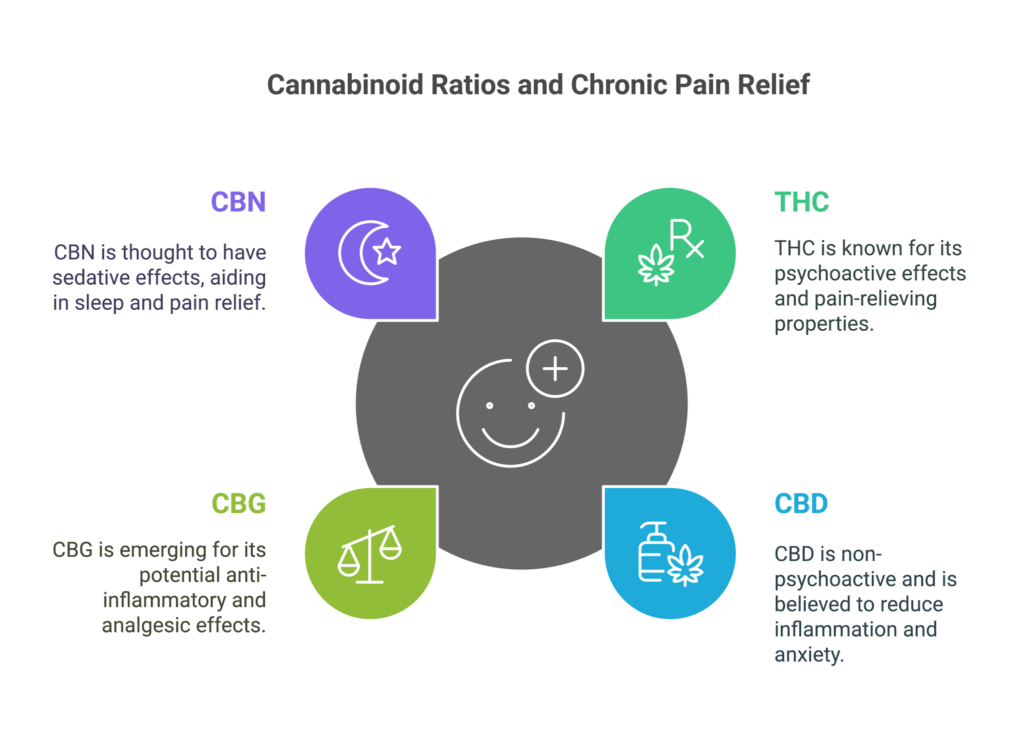
Maybe you’ve been dealing with persistent discomfort or have heard about medical marijuana for chronic pain relief. Well, you’re not alone. Many individuals are curious about whether a certain ratio of cbd and thc can offer more comprehensive, longer-lasting relief than traditional methods.
Potential Therapeutic Benefits of Balanced Ratios
Though cannabis plants contain a range of cannabis compounds, THC and CBD often take center stage, especially in studies on pain relief. Research, including the odd randomised controlled trial, hints that combining the two compounds might deliver an entourage effect. This synergy could produce a significant effect on alleviating pain, reducing inflammation, and improving day-to-day comfort.
Keep in mind that results vary. Still, potential upsides for a balanced cbd to thc ratio might include:
- Reduced intensity of psychotic symptoms or THC elicited paranoid symptoms
- Decreased likelihood of hippocampal dependent memory impairment
- Fewer adverse effects for those cautious about acute intoxication or poor tolerance
- Tailored therapeutic benefits when dealing with neuropathic pain
Remember, though, that cannabis use disorder remains a risk if misused, so moderation and self-awareness are key.
How to Figure Out the Best CBD:THC Ratio for Pain
While some folks jump straight into high cbd strains, others find that they need a little THC in the mix to really tackle chronic pain. Consider the following steps if you’re in search of that sweet spot:
- Start Low: If you’re unsure, go for a low thc option to gauge how your body reacts.
- Track Symptom Relief: Keep tabs on whether your pain diminishes and how quickly it happens.
- Monitor Side Effects: Look out for any intoxicating effects or increased memory impairment.
- Adjust Gradually: Slowly ramp up the THC content if you’re not seeing the desired relief, or shift the ratio to boost CBD if your side effects become bothersome.
Some individuals also speak with healthcare professionals, especially those who hold a medical marijuana card, to get formal advice on the best cbd approach.
What About the Risk of Cannabis Use Disorder with Various Ratios?
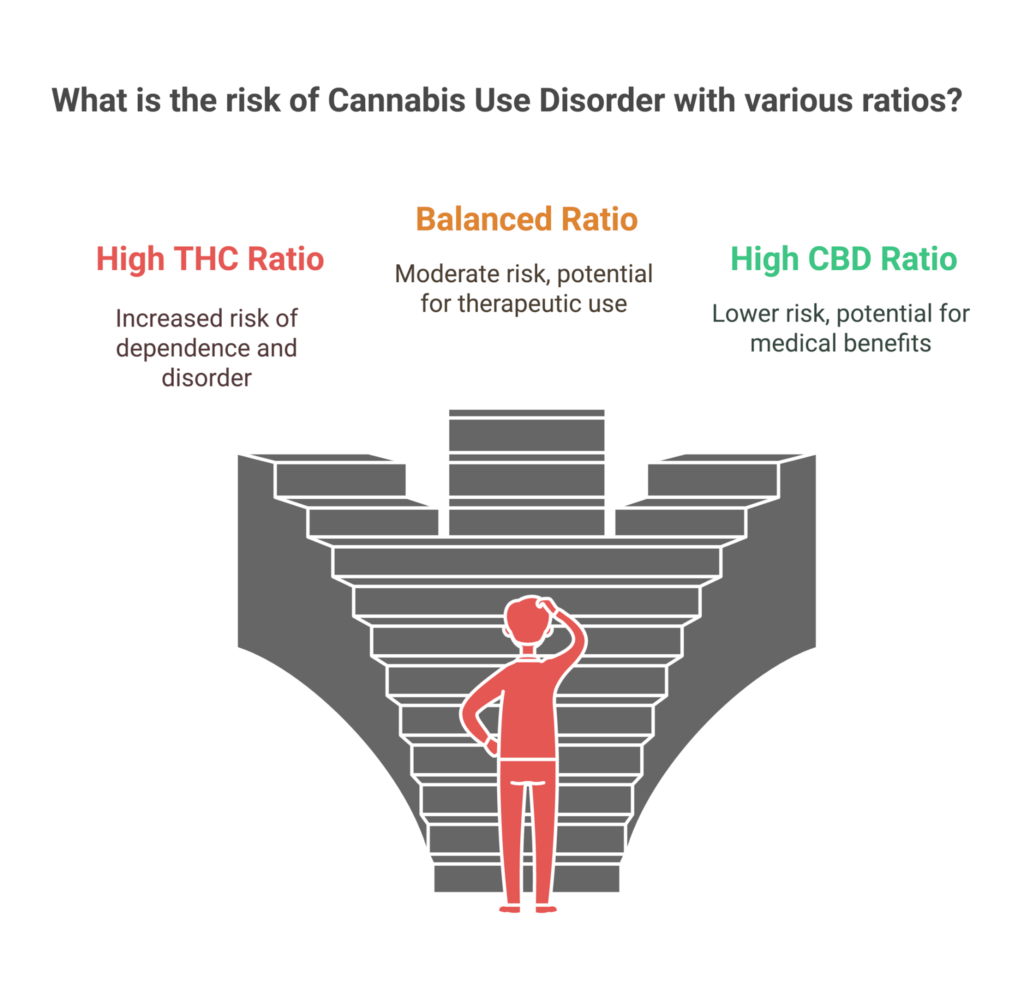
While medical cannabis products and recreational market offerings can provide relief and enjoyment, there’s always a flip side. High thc content, particularly in markets like washington’s recreational cannabis market, might raise the risk of developing cannabis use disorder, especially if you’re susceptible to addictive tendencies.
Spotting High-Risk Situations
Certain factors can place individuals at a higher risk, such as prolonged use of high thc strains or relying on products with minimal CBD. Synthetic cannabinoids can be even trickier, as they often deviate from natural thc and cbd concentrations, making them unpredictable.
- Using smoked cannabis or vaporized cannabis multiple times a day to cope with stress
- Ignoring adverse effects like elevated heart rate, persistent anxiety, or thc elicited paranoid symptoms
- Consistently chasing the strongest thc ratio available, even when it leads to acute intoxication
A little caution goes a long way. Some folks find that maintaining a more balanced cbd:thc ratio helps them avoid ramping up tolerance too quickly.
Strategies to Prevent Overuse
If you sense your cannabis use is edging toward overindulgence, there are ways to nip it in the bud. For starters, consider mixing in a high cbd product now and then to moderate the intoxicating effects. You can also consult a doctor about potential therapies or alternative approaches if you’re struggling with pain management or anxiety but fear spiraling into unhealthy use.
A bit of forethought and an open mind can protect you from pitfalls, ensuring that you gain the medical benefits you need without slipping into dependency.
How Do You Nail Down the Perfect CBD to THC Ratio?
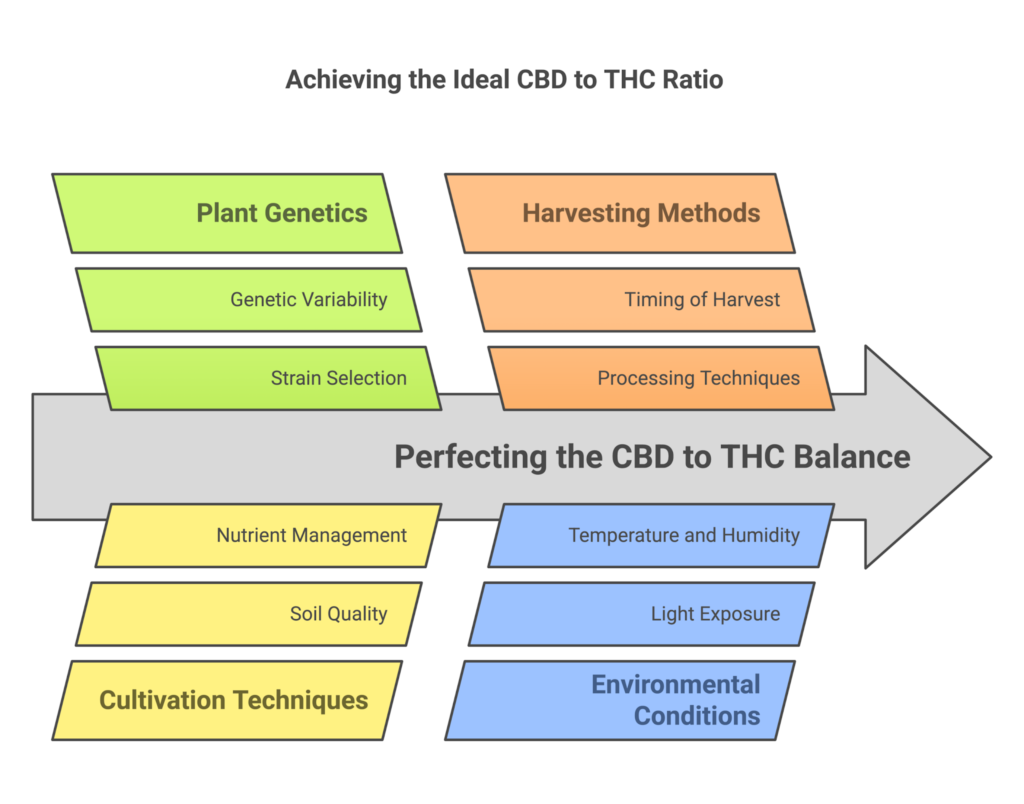
Finding the ideal ratio is part art, part science. You have unique chemistry—so your ideal cannabis approach may differ drastically from your neighbor’s. Some individuals swear by an almost 1:1 cbd thc ratio, whereas others need a smidge more THC to unlock therapeutic benefits or handle chronic pain relief.
Trying Different Ratios and Observing Results
Trial and observation might be your best friend here. Begin with a mild ratio, take note of the significant effect (or lack thereof), and adjust. Below is a small chart highlighting popular cannabis strain ratios and their usual effects.
| Ratio (CBD:THC) | Typical Effect | Who Might Enjoy It |
| 1:1 | Balanced ratio of sedation & euphoria | Folks seeking moderate relief & mild euphoria |
| 2:1 | More CBD, gentler high, calmer sensation | Individuals with chronic pain or anxiety |
| 1:2 | Noticeable THC buzz, some relaxation | Those who want mood elevation plus mild relief |
| 20:1 | High CBD, barely psychoactive | People needing day-to-day therapeutic effects |
This table merely scratches the surface of the many different ratios out there. You’ll likely discover that small tweaks can produce a significant difference in how your body and mind respond.
Checking in with Professionals
If the options are overwhelming, consider seeking a licensed practitioner’s guidance. Specialists versed in medical cannabis can offer statistical analysis from various studies or even share anecdotal experiences that might help pin down a suitable ratio for issues like chronic pain or neuropathic pain. They can also help steer you clear of synthetic cannabinoids if that’s not appropriate for your situation.
Adding a professional’s insight to your personal observations can be the magic formula in figuring out your ultimate cbd to thc pairing.
Conclusion
Choosing the right cannabinoid ratio doesn’t have to feel like decoding a secret map. By understanding the interplay between thc and cbd, you can select products that provide pain relief, a gentle mood lift, or more potent intoxicating effects—all while minimizing potential adverse effects. Keep an eye on how your body reacts, stay aware of your goals (medical or recreational), and don’t hesitate to experiment within reason. With this knowledge, you can navigate cannabis markets—be it washington’s recreational cannabis market or a local dispensary—and find the ratio that suits you best.
Frequently Asked Questions
Do High THC Levels Always Cause Paranoia?
Not always, but a thc dominant ratio can sometimes lead to thc elicited paranoid symptoms, especially if you’re prone to anxiety or have poor tolerance. Balancing with CBD may help mitigate these psychotic symptoms.
Can I Use CBD-Heavy Strains for Everyday Pain Management?
Yes, many medical cannabis users rely on strains with high cbd content to combat chronic pain without strong intoxicating effects. However, the best cbd thc ratio depends on individual needs and body chemistry.
Is Synthetic Cannabis Safer Than Natural Strains?
Often, synthetic cannabinoids lack the natural balance of thc and cbd concentrations found in real cannabis plants, making their effects unpredictable and sometimes more intense. This unpredictability may increase the risk of cannabis use disorder or other harmful outcomes.