

If you’re looking to extract rosin from cannabis flowers without using harsh solvents, you’ve probably heard about the wonders of a cannabis heat press. This rosin press technique allows you to squeeze out potent concentrates using only heat and pressure, yielding clean results without extra chemicals. With so many different types of presses you might wonder where to begin. You’ve come to the right place, because this guide will teach you how to use a rosin heat press effectively so you can make your own rosin press routine smooth, quick, and efficient.
Key Takeaways
- You don’t need harsh solvents to achieve premium concentrates—just a reliable heat press.
- Understanding pressure, temperature, and plant material quality is key to optimal results.
- Even heat distribution and gentle pressure can help you avoid mistakes and maintain safety.
What Is a Cannabis Heat Press and Why Should You Use One?

A cannabis heat press is a specialized press machine designed to extract rosin from cannabis by applying precise temperature and pressure.
You’ll find that a rosin press typically comes with dual heated platens, a timer controller, and a sturdy frame to handle pressure. It provides you with an extraction process that doesn’t rely on harsh solvents, preserving the original profile of your starting material.
Types of Rosin Presses to Consider
There are several different types of presses on the market, each featuring its own mechanism and force capacity.
- Manual Press: Often uses a bottle jack or handle to apply pressure. It’s compact, cost-effective, and easy to control, making it great if you’re just starting.
- Hydraulic Presses: Equipped with a hydraulic cylinder to generate higher pressure. These can be semi-professional and offer industrial strength force for commercial operations.
- Pneumatic Presses: Use an air compressor to push the plates together. Pneumatic rosin presses are popular for consistent pressure control.
- Electric Rosin Presses: Rely on built-in motors to apply force, eliminating the need for an external pump or air compressor.
Always compare your options, ensuring you find a press that is equipped with the right features—like digital displays, dual heated platens, and a trusted warranty.
Key Components of Your Heat Press Setup
Your press line depends on a few essential accessories:
- Heat Plate and Timer Controller: The heat plate provides the heat, while the timer helps you track the extraction duration.
- Parchment Paper: Prevents rosin from sticking to the plates and makes it easier to carefully remove the concentrate afterward.
- Press Machine Frame: Provides the stability and structure to handle higher pressure and maintain even heat distribution.
Keep everything organized and clean to ensure you achieve optimal results. A neat workspace also makes the process safer for you and anyone else involved.
Safety and Maintenance Tips
Before you start pressing, think about safety and long-term care:
- Heat-Resistant Gloves: Since you’ll be dealing with heat, make sure your hands are protected.
- Regular Equipment Checks: Inspect for wear on your pneumatic presses or the hydraulic cylinder seals in hydraulic presses.
- Proper Cleaning: Wipe off any residual rosin from the plates after every use.
Sticking to a maintenance routine ensures your press stays in top shape. Plus, regular upkeep extends the life of your machine and helps you avoid accidents caused by faulty equipment.
How Do You Prepare Your Plant Material for Extraction?

When selecting cannabis flower, bubble hash, or dry sift, focus on freshness and minimal contamination. The quality of your plant material heavily affects the final rosin’s taste and potency. By preparing your flower carefully, you can help the rosin extraction process go more smoothly and achieve a better yield.
Choosing the Right Starting Material
It’s essential to pick the right cannabis flower or concentrate form:
- Fresh, Resin-Rich Flower: Look for strains with a good resin production.
- Moisture Content: Too dry, and you might lose flavor; too wet, and you risk uneven results.
- Quality Assessment: Avoid moldy or sub-par material, as it can affect taste and safety.
Spend a moment ensuring your flower or other forms like dry sift are of decent quality.
Handling Bubble Hash and Dry Sift
If you’re working with bubble hash or dry sift:
- Keep them stored in a cool, dry area.
- Use parchment paper to line your press plates for a more seamless press.
- Pre pressing the hash into thin pucks can help with even heat distribution.
These steps can simplify your rosin press procedure while preserving those precious terpenes. Carefully remove and package the end product to keep it fresh for later use.
How Do You Actually Press Rosin with a Cannabis Heat Press?
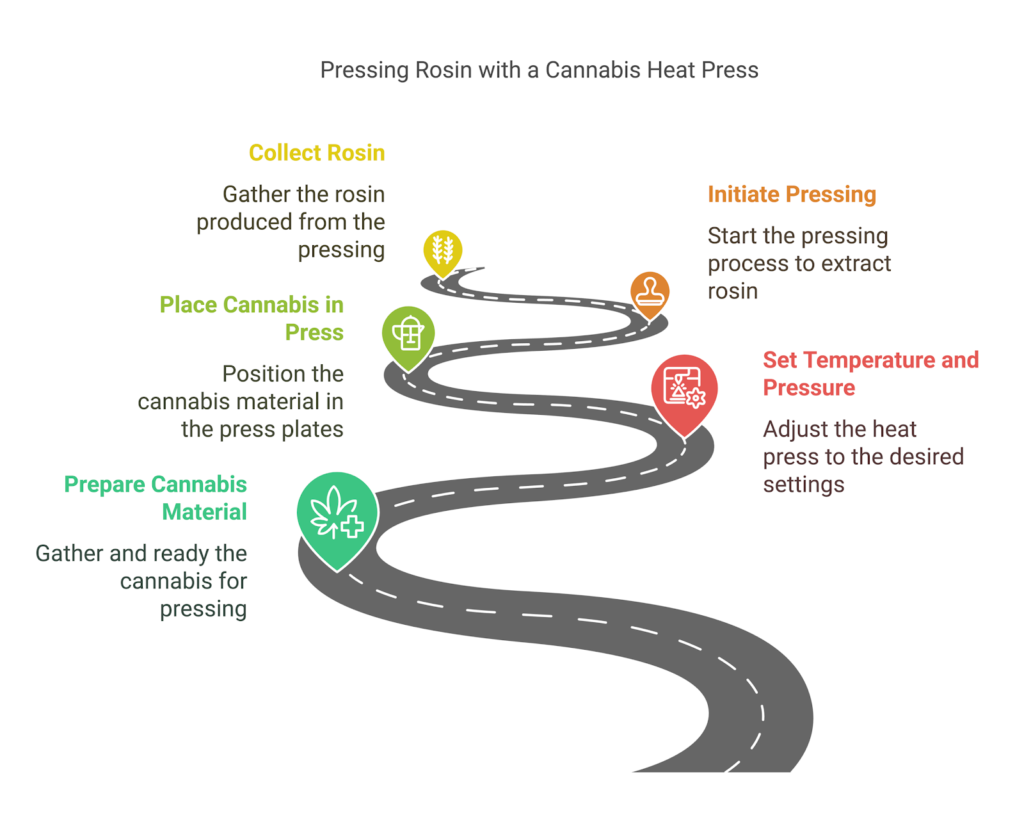
You use carefully controlled temperature and gentle pressure to squeeze out rosin without damaging the cannabinoids or terpenes.
Step-by-Step Extraction Process
Here is a basic guide you can adapt to your own rosin press setup:
- Preheat the Plates: Set the desired temperature on your timer controller. Most rosin extraction hovers between 160°F and 220°F.
- Load the Material: Place your cannabis flower or hash into a rosin bag or wrap it in parchment paper.
- Position on the Press: Center your starting material between the plates for even heat distribution.
- Apply Pressure Slowly: Use a bottle jack (for a manual press), a hydraulic cylinder (for hydraulic presses), or an air compressor (for pneumatic presses).
- Press for Set Duration: Watch the timer controller. Pressing times usually range from 30 seconds to two minutes.
- Carefully Remove the Rosin: Once the timer goes off, slowly release the pressure and peel away the parchment paper.
Always monitor temperature and pressure to avoid burning your rosin. If you see scorching or discoloration, lower the heat or shorten the press time.
Controlling Pressure and Temperature
Balancing pressure and temperature is key to extracting the best rosin:
- Lower Temperature, Longer Press: Helps preserve terpenes.
- Higher Pressure, Quick Press: Extracts more quickly but can risk unwanted plant material in your rosin.
Use digital displays and a timer controller to dial in your settings. Experiment to find the sweet spot that delivers the flavor and consistency you prefer.
If you’re running commercial operations, consider investing in industrial strength equipment that can maintain consistent temperature and pressure across long production runs. A robust press is equipped to handle constant use without performance issues.
Comparison Chart: Different Types of Rosin Presses
| Press Type | Mechanism | Force/Pressure Range | Ideal For |
| Manual Rosin Press | Bottle jack or hand-operated | Gentle to moderate | Home users, small batches |
| Hydraulic Rosin Press | Hydraulic cylinder + pump | Moderate to high | Small-scale commercial, serious hobbyists |
| Pneumatic Rosin Presses | Air compressor-driven | Variable, easy to control | Medium commercial, frequent rosin pressing |
| Electric Rosin Presses | Motorized pressure | Consistent, can be high | Commercial operations seeking automation |
How Can You Optimize Your Yield for Commercial Operations?

You focus on consistent pressure, reliable heat distribution, and upgrading to the best equipment available. If you’re expanding or planning a new pre launch of rosin products, you want to guarantee repeatable quality for your customers. Ensuring your press can handle higher pressure and manage even heat distribution is key.
Upgrading Your Equipment
When you’re ready to push your production further:
- Industrial Strength Press: Look for a machine equipped with strong frames and powerful hydraulic presses or pneumatic rosin.
- Digital Displays and Precision Controls: Aim for consistent temperature and pressure readouts.
- Trusted Warranty: Ensures you’re covered for any mechanical issues.
A robust, high-quality rosin heat press can help you handle bulk orders without compromising on product integrity.
Sustaining Quality and Consistency
Maintaining product quality in commercial operations is crucial:
- Regular Cleaning: Keep plates free of residue after each press.
- Monitoring Temperature Fluctuations: Even a small shift in temperature can affect rosin texture and taste.
- Staff Training: Make sure employees know how to operate and maintain the press machine safely.
By adopting these measures, you’ll be able to achieve the consistent yield that customers expect from your brand.
Why a Trusted Warranty Matters
A trusted warranty gives you peace of mind:
- Replacement Parts Availability: Quick fixes in case of breakdown.
- Customer Support: Guidance from experts familiar with your press line model.
- Long-Term Reliability: Ensures your investment remains profitable over time.
Having a warranty for your rosin press means you can focus on scaling your business without worrying about unexpected machine failures.
Conclusion
A cannabis heat press offers an incredible way to obtain clean concentrates from flower and other starting materials without relying on solvents. By mastering temperature, pressure, and technique, you can produce rosin that retains its natural flavors and aromas. Follow these tips, keep learning, and you’ll be pressing top-grade rosin in no time.
Frequently Asked Questions
Can I Use Any Kind of Cannabis Flower in a Rosin Press?
Yes, you can press virtually any cannabis flower. However, strains with better resin content produce more rosin. High-quality material leads to a better yield, flavor, and consistency.
Is a Manual Press Good Enough for Small Batches?
Absolutely. Manual rosin presses can handle small-scale operations just fine. They’re compact and cost-effective, making them perfect if you only need a few grams at a time.
What’s the Best Pressure and Temperature for Rosin Extraction?
It varies based on your preference and material. Start around 160°F–220°F, applying gentle pressure for 30–90 seconds, and adjust until you find the sweet spot for your specific starting material.