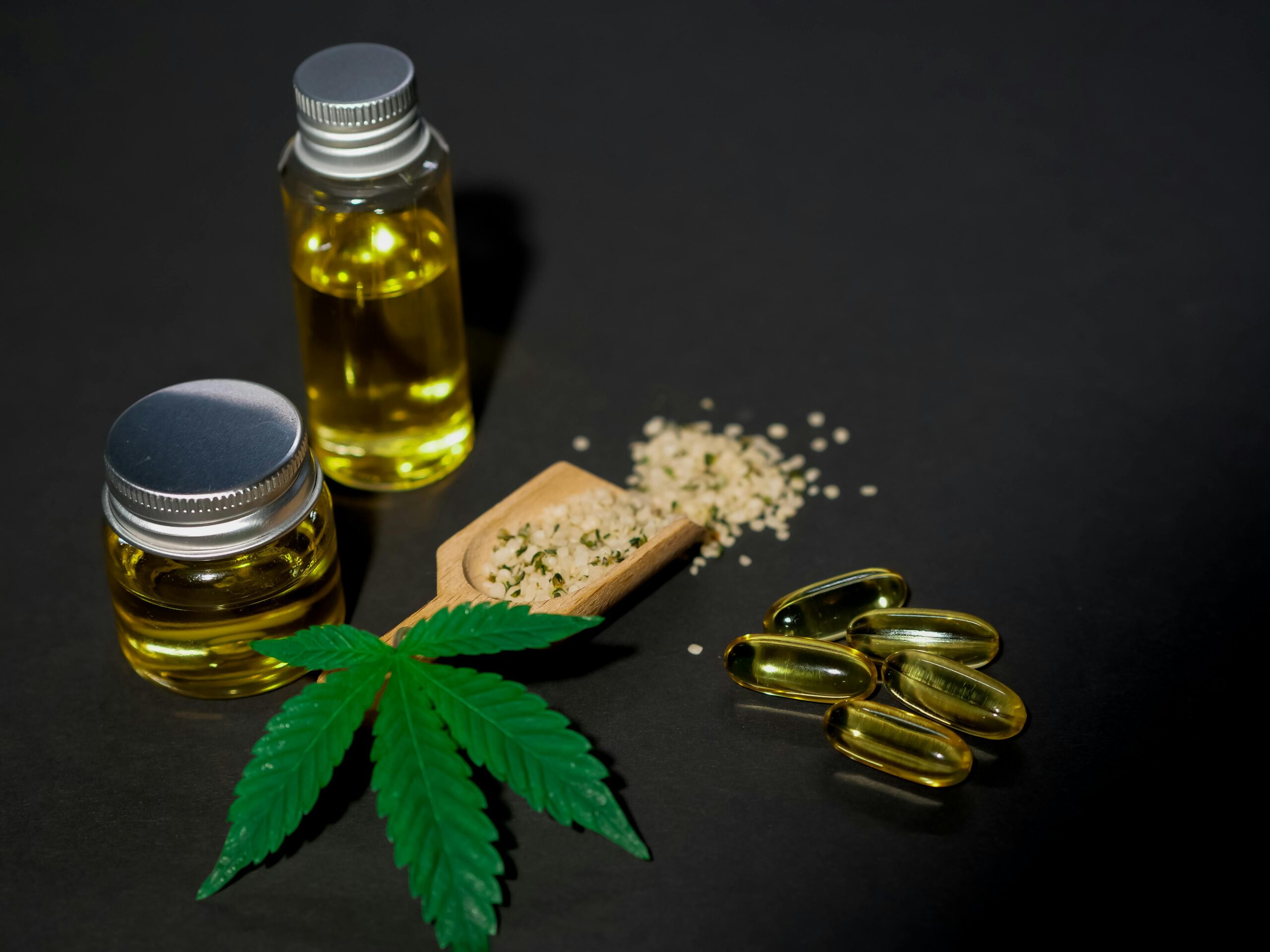
Cannabis double boil extraction is a gentle, time-tested method that helps you transform raw cannabis flower into potent, cannabis-infused oil. By using a double boiler, you apply low heat to your plant material without burning it, capturing all the cannabinoids and preserving the good stuff. Whether you’re making cannabis oil for pot brownies, massage oil, or salad dressings, this technique empowers you to enjoy the full spectrum of health benefits without harmful additives.
Key Takeaways
- Cannabis double boil extraction relies on controlled, lower temperature to protect all the cannabinoids and fat molecules from damage
- You can use a variety of carrier oils (like coconut oil, olive oil, or MCT oil) to craft your own canna oil at home
- Decarboxylation is crucial: without it, raw cannabis flower won’t deliver the same psychoactive effects or pain relief
What Makes Cannabis Double-Boil Extraction So Special?
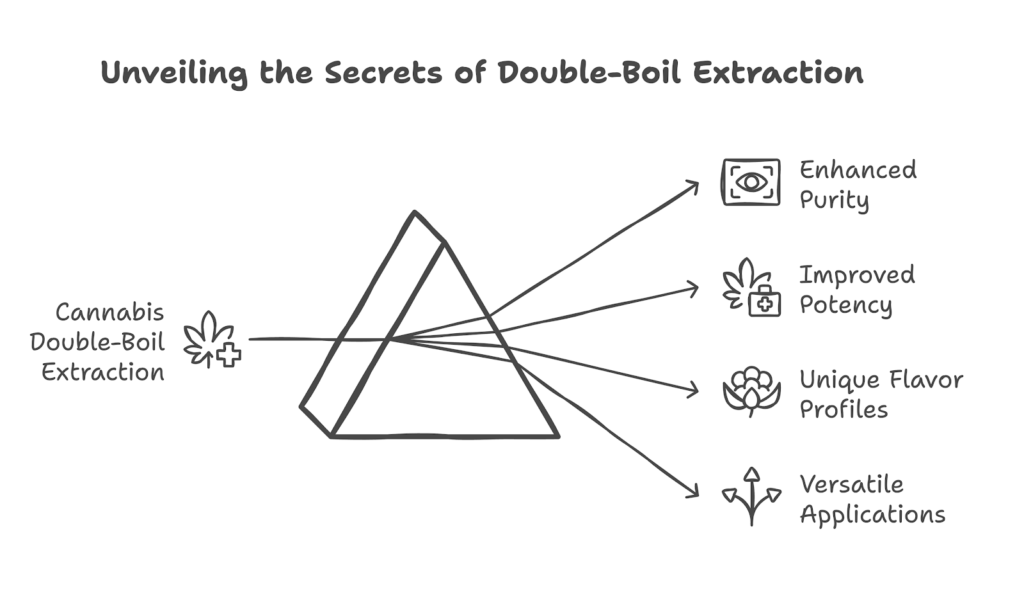
The double boil, also called a water bath technique, provides an even distribution of heat to your cannabis plant. This allows you to precisely extract all the cannabinoids while reducing the risk of scorching. Unlike using a slow cooker on high or frying the cannabis flower in a pan, a double boiler method keeps your cooking oil or hemp oil at a lower temperature, preventing burnt plant matter and preserving its full spectrum benefits.
How Does the Double Boiler Work?
The double boiler features a bottom pot filled with boiling water. Then, you place a heat safe bowl or second pot on top where the cannabis-infused oil mixture simmers.
You’ll want to use decarbed cannabis (or decarboxylated cannabis) in that top container to ensure the psychoactive effects are activated.
Here’s why it’s ideal for cannabis cooking oil:
• Precise Heat Control – The water in the bottom pot prevents temperatures from soaring above the boiling point, lowering the chance of overheating your plant material
• Reduced Harmful Additives – No direct flame contact means fewer byproducts and a cleaner cannabis oil recipe
• Optimal Infusion – Slow, steady heat encourages the oil to infuse cannabis thoroughly, locking in cannabinoids and terpenes
Stirring occasionally with a spoon helps the extraction process and ensures the same amount of heat is distributed across the plant matter.
What Oils Work Best for Double-Boil Extraction?
You can use many types of carrier oil to make your own cannabis oil—coconut oil, MCT oil, olive oil, hemp oil, or even vegetable oil.
Below are some popular choices, each with its own perks:
- Coconut Oil – High in fat molecules, which help absorb THC and CBD for a robust infusion process
- Olive Oil – Lower smoke point but rich in healthy fats and perfect for salad dressings or lighter recipes
- MCT Oil – Similar to coconut oil, but often preferred for its neutral flavor and ease of digestion
- Hemp Oil – Complements the essence of cannabis plant while maintaining a mild taste
If you want to create a super-charged cannabutter for baking tray recipes like a dozen cookies, you can follow the same process but substitute butter as your fat source.
By knowing what makes cannabis double-boil extraction so special, you can whip up canna oil or THC oil that hits all your personal preference notes in flavor, potency, and texture.
Why Do You Need to Decarb Your Cannabis First?
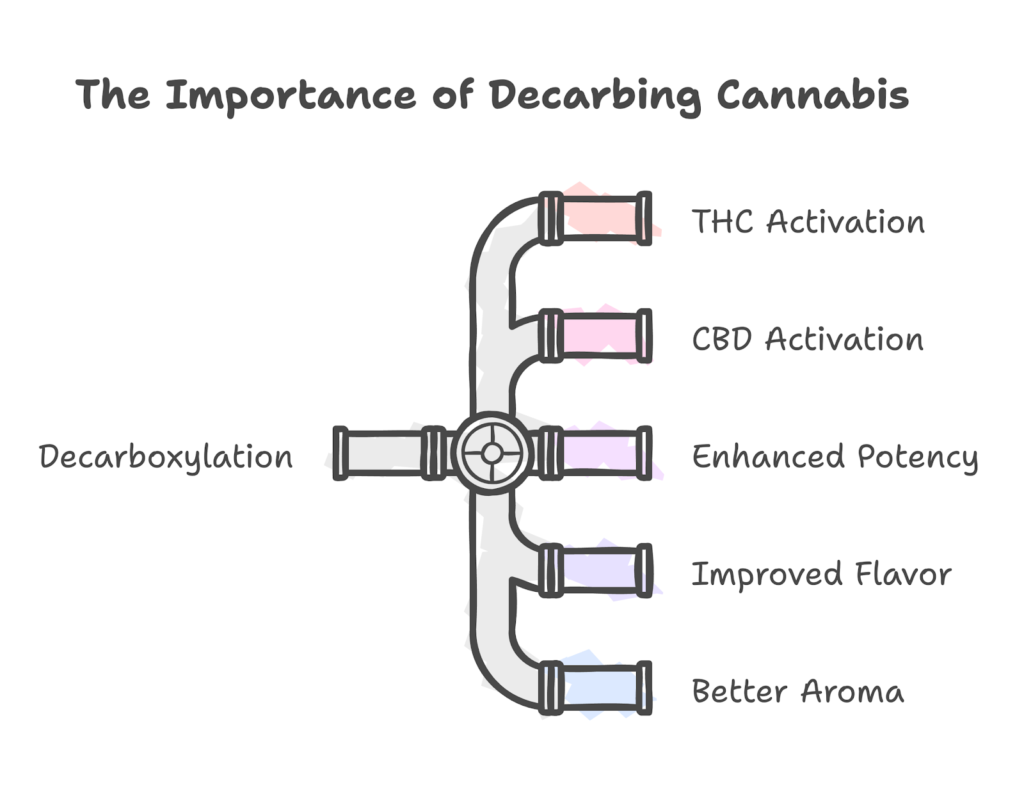
The decarboxylation process is the key to unlocking the psychoactive effects and pain relief qualities in cannabis. Raw cannabis flower contains THCA and CBDA, which need heat to transform into active THC and CBD. Without decarbing, your final product (whether cannabis-infused oil or cannabutter) won’t offer the same perks.
What Does “Decarbed Cannabis” Mean?
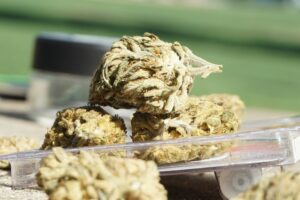
Decarbed cannabis is simply cannabis flower (or ground cannabis) that’s been gently heated on a baking sheet (or parchment paper) at around 220-240°F (105-115°C) for 30-40 minutes.
Here’s how you can do it easily:
- Spread raw cannabis flower evenly on a baking tray lined with parchment paper
- Bake at a lower temperature for the set time, stirring occasionally to ensure even heating
- Allow to cool to room temperature before mixing it into your oil recipe
This step ensures maximum potency when you infuse cannabis using the double boiler technique.
How Can You Tell if It’s Properly Decarboxylated?
If your decarbed cannabis has a slightly toasty, earthy aroma and a light brownish color, that’s a good sign you did everything right.
When in doubt:
- Don’t rush the process—keep that lower temperature to avoid scorching
- Use a thermometer to confirm the oven temperature stays consistent
- Err on the side of a little longer rather than hotter (to preserve more cannabinoids)
Proper decarboxylation ensures the good stuff makes it into your cannabis-infused oil.
How Do You Perform the Infusion Process with a Double Boiler?
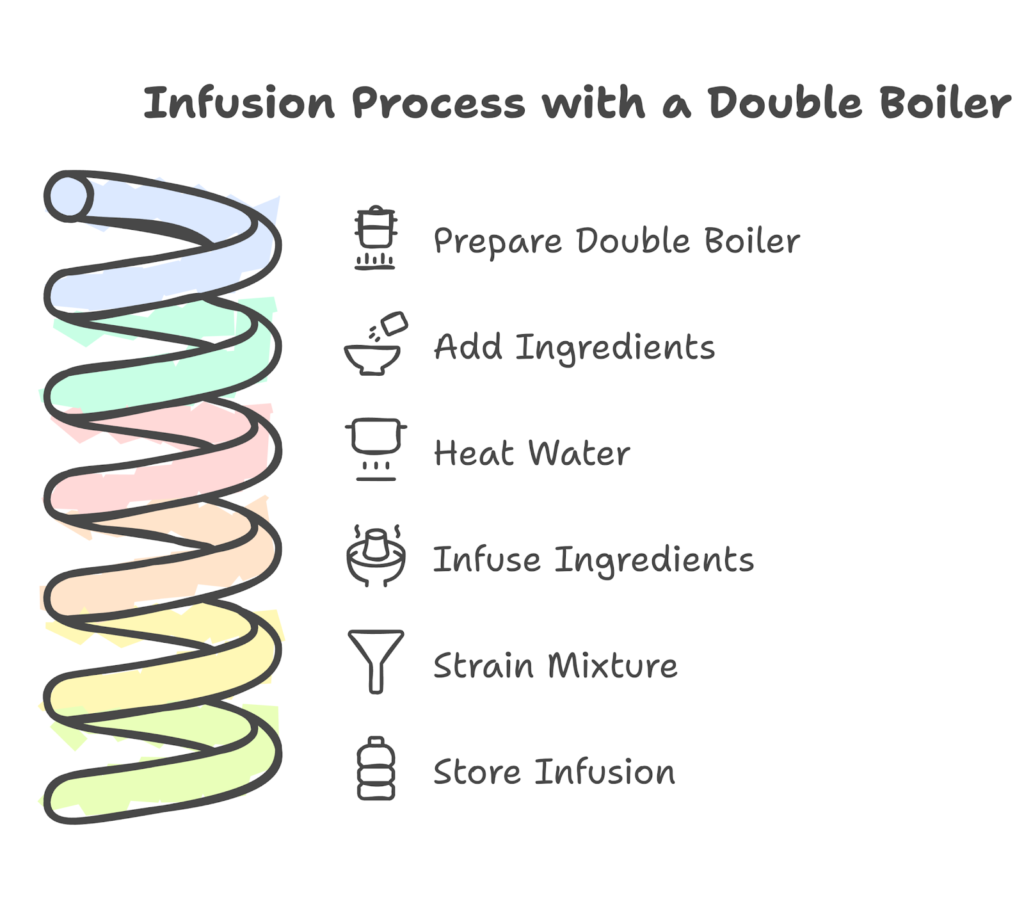
Making cannabis oil with the double boiler method is relatively straightforward. After you decarb your cannabis, you mix it with your chosen cooking oil in a heat-safe bowl or top pot, place it over gently boiling water, and let time work its magic. Creating canna oil or CBD oil this way means fewer worries about overheating, and you can manage the infusion machine-like process right on your stovetop.
Step-by-Step Guide to Making Cannabis Oil
Setting up your double boiler is the core of this technique.
Here’s a handy walkthrough:
- Gather Materials – You’ll need decarboxylated cannabis, your carrier oil of choice, a mason jar or heat-safe container, cheesecloth or fine mesh strainer, and a double boiler
- Combine Ingredients – Place the oil and ground cannabis in the top pot or glass jar
- Heat Gently – Maintain a steady, low heat so your mixture simmers without scorching
- Stir Occasionally – This ensures even extraction of all the cannabinoids
- Strain & Store – Filter with a coffee filter, cheesecloth, or fine mesh strainer to remove plant matter and pour into an airtight container
Your infused oil is now ready for use in pot brownies, a dozen cookies, or even as a simple massage oil.
How Long Should You Infuse?
Timing varies, but most people find that 2-3 hours is sufficient.
A few important considerations:
- Keep the water in the bottom pot at a gentle simmer (not a rolling boil)
- Check water levels periodically, adding more if it evaporates
- Some folks go for a longer infusion, up to 4 hours, for a stronger final product
A slow approach ensures the plant material has enough contact with the oil to release all its beneficial compounds.
Before moving on, let’s compare common oils used in making canna oil to help you find the best oil for your taste and needs.
| Oil Type | Smoke Point | Flavor | Notable Benefits |
| Coconut Oil | ~350°F (177°C) | Mild, Tropical | High in fat molecules; great absorption of THC & CBD |
| Olive Oil | ~375°F (191°C) | Light, Fruity | Heart-healthy fats; versatile cooking oil |
| MCT Oil | ~320°F (160°C) | Neutral | Easy digestion; popular for quick energy |
| Hemp Oil | ~330°F (165°C) | Earthy, Nutty | Complements cannabis plant flavors; mild taste |
This comparison can help you pick the perfect oil recipe when making oil at home.
How Do You Store and Use Your Cannabis-Infused Oil Safely?
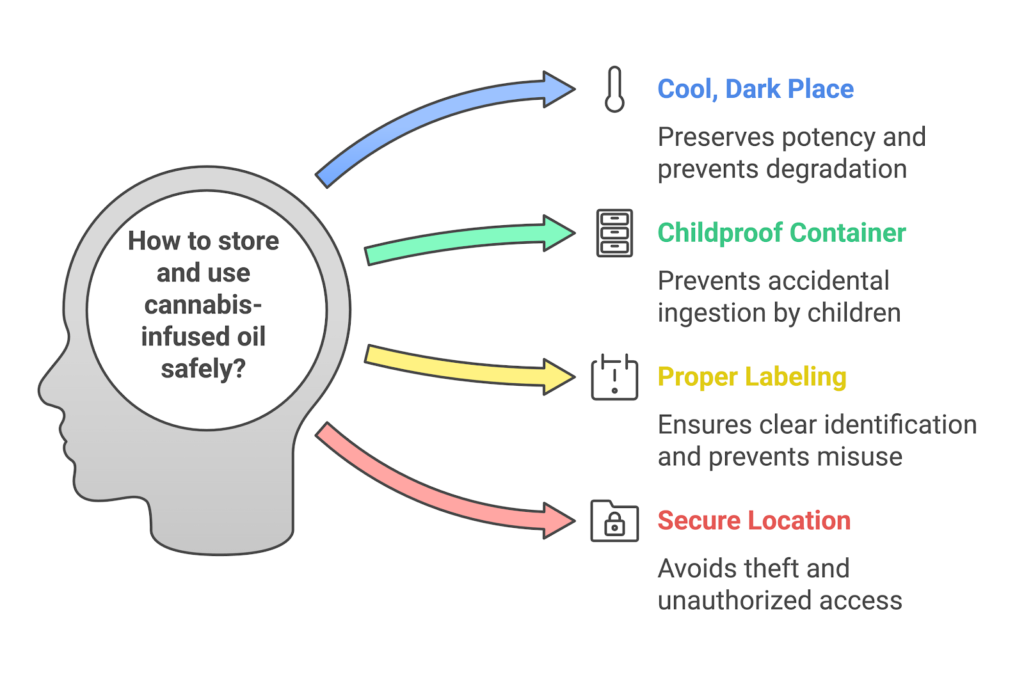
Proper storage is crucial to preserve freshness, extend shelf life, and maintain potency. Keep your cannabis double boil extraction in a cool, dark place: such as a cupboard or pantry. Some even refrigerate their cannabis cooking oil or freeze it for longer-term use. Because the infusion process can degrade with exposure to air and light, always keep your final product in an airtight container.
Best Practices for Storage
You don’t want to ruin your carefully extracted cannabis oil.
Follow these tips:
- Use dark glass jar containers or opaque bottles to block out light
- Label with the date of production so you know the shelf life
- Keep away from direct sunlight or heat sources to avoid degrading THC or CBD
By following proper storage, you’ll maintain the potency for weeks or even months.
Fun and Practical Uses for Cannabis Oil
Your newly made cannabis-infused oil is versatile.
Here are some ideas:
- Cooking & Baking – Make pot brownies, a dozen cookies, or whip up cannabis-infused salad dressings
- Topical Applications – Turn it into massage oil for localized relief
- Creative Edibles – Drizzle a few drops over your favorite dishes, or incorporate into a spread
You can even replicate the same idea to create an herbal-infused oil with other botanicals by following the same process.
Conclusion
Cannabis double boil extraction brings together simplicity, control, and efficiency. By combining decarboxylation with a gentle water bath, you sidestep harmful additives and scorching temperatures. Whether you prefer coconut oil, MCT oil, or olive oil, the double boiler approach delivers a potent, full-spectrum cannabis oil packed with psychoactive effects, pain relief, and more. From pot brownies to salad dressings, your homemade cannabis cooking oil can cater to your personal preference every single time. Embrace this timeless method, and you’ll be making cannabis oil like a pro—delivering the good stuff in every drop.
Frequently Asked Questions
Can I Skip the Decarboxylation Process?
No. Decarboxylation is essential to activate THC and CBD, unlocking psychoactive effects and therapeutic benefits. Without it, the full potential of your cannabis oil won’t be realized.
Can I Use a Slow Cooker or Infusion Machine Instead?
Yes. While slow cookers and infusion machines work, a double boiler provides gentler, controlled heat to preserve cannabinoids and terpenes. Choose based on your preference.
How Do I Determine the Potency of My Infused Oil?
Potency depends on the amount of decarbed cannabis, carrier oil, and infusion time. Use consistent measurements, track infusion time, and test cautiously. Adjust to refine your recipe over time.