

Key Takeaways
- Monoacylglycerol Lipase, commonly referred to as MAGL, is an endogenous cannabinoid that is an essential substrate in the breakdown of 2-arachidonoylglycerol (2-AG) in the endocannabinoids system (ECS).
- By blocking the Magl, the amount of 2-AG available can be increased which could lead to increased therapeutic outcomes in certain ailments like pain, inflammation, and even neurodegenerative diseases due to more cannabinoid receptors being triggered.
- MAGL is also involved in the formation of arachidonic acid, linking this enzyme to pro-inflammatory pathways.
- Within the field of MAGL inhibition research, developing selective and peripherally restricted MAGL inhibitors is vital to prevent psychiatric and sedative central nervous system side effects.
- The promise offered by MAGL inhibitors to treat chronic pain, Alzheimer’s, and even inflammatory illnesses is not yet tested in humans as the research is still in its infancy.
Monoacylglycerol lipase (MAGL) has been recently been at the center of the exploration of cannabis-based medicine. This enzyme is in charge of simulating the breakdown of 2-arachidonoylglycerol (2-AG), one of the most important endocannabinoids that activate cannabinoid receptors in the endo-cannabinoid system (ECS). By developing small molecule inhibitors of MAGL, scientists hope to formulate the means to treat pain, inflammation, and neurodegenerative diseases without the unwanted effects of marijuana. This article explores the structural and functional characteristics of the MAGL and outlines some of the therapeutic strategies of its inhibition.
What is Monoacylglycerol Lipase (MAGL)
MAGL is an enzyme belonging to the endocannabinoid system, responsible for the metabolism of 2-arachidonoylglycerol (2-AG).
Understanding the Biochemical Role of MAGL in the Body
MAGL, which is also known as Monoacylglycerol Lipase, is an enzyme of the serine hydrolase superfamily. Its major function is the hydrolysis of monoacylglycerols to free fatty acids and glycerol, thus playing an important part in lipid metabolism. Infamous glucocorticoids are responsible for augmenting the actions of MAGL.
One of the most important substrates is the endocannabinoid 2-arachidonoylglycerol (2-AG) which binds to CB1 and CB2 receptors. Such receptors modulate processes such as pain, hunger and mood. MAGL is the most critical enzyme in charge of the cutting of 2-AG to pieces and then, by this means, the activity of 2-AG is controlled to avoid overactivation of the cannabinoid receptors.
MAGL as a Critical Enzyme in Endocannabinoid Metabolism
Since MAGL controls the quantity of 2-AG, it can indirectly change the ECS. When there is an increase in MAGL activity, the likelihood of 2-AG being present is reduced, thus lessening the reaction of CB receptors. On the more positive end, monoacylglycerol lipase inhibitor allows for increased 2-AG action, opening the door for its potential use in treating chronic pain and neurodegenerative conditions.
The Discovery and History of MAGL Research
The research regarding MAGL started during the quest to understand the ECS in the 1990s. In the beginning, all the attention was directed towards anandamide (another endocannabinoid) until the discovery of 2-AG and subsequent focus was given to monoglyceride lipase as the enzyme that catalyzes the breakdown of 2-AG.
Later studies, however, have demonstrated that the scope of MAGL’s activity is not limited only to endocannabinoid degradation, as it also contributes to the synthesis of arachidonic acid that primarly leads to the formation of proinflammatory molecules. Hence, MAGL is also associated with inflammation[1].
How Does MAG Lipase Influence the Endocannabinoid System
In the ECS, MAGL regulates the activity of cannabinoid receptors by influencing the hydrolysis of 2-AG.
The Role of MAGL in Breaking Down 2-Arachidonoylglycerol (2-AG)
Cannabinoid receptors have, as a ligand, a lipid molecule called 2-AG. MAGL hydrolyses 2-AG and terminates its signaling activity by converting it into glycerol and arachidonic acid. This process is vital for the equilibrium of parameters within the ECS since an overabundance of 2-AG can cause a firing of signals that leads to mood swings or inflammation.
How MAGL Affects Cannabinoid Receptor Functionality
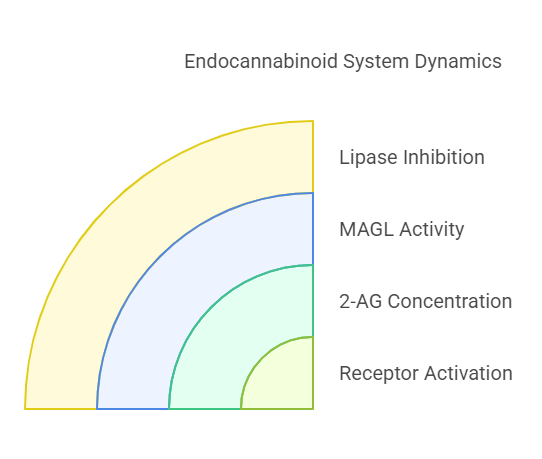
Endocannabinoids such as 2-AG are the ones that bind to active cannabinoid receptors (CB1, CB2), which are influenced by lipase inhibition. The control of the concentration of 2-AG by MAGL and the binding ability and duration of the receptor is directly related. Increased activity of MAGL leads to receptor over-activation alongside lower concentrations of 2-AG, while inhibition of MAGL leads to longer stimulation of the receptors. This is crucial in treatment when the pain or inflammation is excessive and calls for the increase of the activity of the cannabinoid receptors.
MAGL’s Regulation of Endocannabinoid and Eicosanoid Pathways
In addition to its activity in the ECS, MAGL activity through the hydrolysis of 2-AG produces arachidonic acid, a key intermediate for eicosanoids. These lipids are regulated and influence inflammation. MAGL’s activity constitutes a connection between the ECS and eicosanoid signaling by estimating MAGL activity levels, exemplifying the role of the enzyme as a peripheral matrix between neurophysiology and inflammatory pathways.
The Role of MAGL in Pain Management and Inflammation Control
MAGL acts by converting 2-AG molecules into arachidonic acid and glycerol. This mechanism of action bears an effect on inflammation and pain pathways.
MAGL and Its Role in Producing Pro-Inflammatory Fatty Acids
The enzymes activity produces arachidonic acid, which as previously described can be transformed into pro-inflammatory molecules known as prostaglandins. These molecules are critical for the mediation of pain and inflammation. In pathological conditions such as arthritis or neuropathic pain, increased MAGL activity correlates with the MAGL-dependent chronic inflammation and pain associated with these disease states.
Using MAGL Inhibitors to Alleviate Chronic Pain
By inhibiting the mechanisms of MAGL, pain has been shown to reduce with the increase of the 2-AG levels. Greater amounts of 2-AG will enhance the activation of the CB1 receptors, which have analgesic effects. Preclinical studies showing therapeutic efficacy in mice without central side effects are significant in knowing the analgesic effects of MAGL inhibitor JZL184 on neuropathic and post-inflammatory pain.
The Dual Role of MAGL in Inflammation and Analgesia
In addition to MAGL facilitating lipid metabolism, the production of inflammatory precursors also ties into MAGL dialysis where intervention is possible. The inhibition of MAGL can morph the balance from the inflammatory promoting production of arachidonic acid to the beneficial effects of elevated levels of sustained 2-AG. This dual mechanism action of MAGL makes MAGL inhibition unique in the therapeutic modulation of pain and inflammation in contrast.
MAGL Inhibitors: A Breakthrough in Therapeutic Development
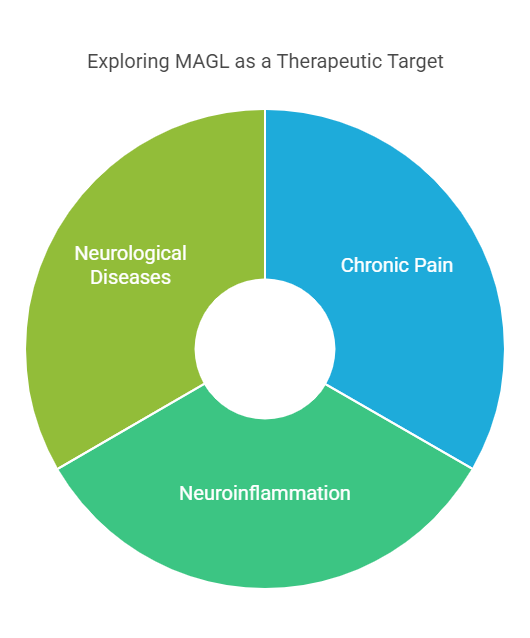
With the help of new inhibitors, MAGL has become a potential therapeutic target for treating chronic pain, neuroinflammation, and other neurological diseases.
Key MAGL Inhibitors and Their Mechanisms of Action
The human monoacylglycerol lipase inhibitors JZL184 and inhibitor MJN110 work by binding to the active site of the enzyme responsible for hydrolyzing 2-AG. These inhibitors are stringent in design to only inhibit MAGL and spare other lipases for specificity with fewer off-target consequences.
Therapeutic Applications of MAGL Inhibitors in Mouse Disease Models
There are several studies on monoacylglycerol lipase inhibitors showing therapeutic efficacy in alleviating pain, and inflammation, and even combating neurodegeneration in animal models. To illustrate, in mouse models of Alzheimer’s disease, MAGL inhibition decreased neuroinflammation and enhanced cognitive functioning.
Promising Therapeutic Potential of MAGL Inhibitors in Humans
MAGL inhibitors are promising therapeutic targets for humans despite there being no human trials conducted at this point. This novel approach shows great promise in treating chronic pain and neuroinflammation, both of which are poorly addressed by existing treatments and have the potential promise of fewer side effects than conventional anti-inflammatory drugs[2].
The Mechanisms Behind MAGL Inhibition and Its Benefits
MAGL inhibitors function by binding to the active site of the enzyme, inhibiting its capacity to hydrolyze 2-AG. This mechanism leads to the buildup of 2-AG, increasing the endocannabinoid signaling potency to CB receptors, resulting in stronger pain relief and enhanced anti-inflammatory reactions.
The Long-Term Benefits of MAGL Inhibition for Systemic Health
Extensive inhibition of MAGL has been known to lower neuroinflammation, enhance neuronal health, and lessen oxidative stress, all of which are crucial to overall health. This is indeed beneficial for doctors as it poses great promise for patients with uncontrolled Alzheimer’s disease, which is characterized by high inflammation and oxidative markers, particularly through the use of MAGL inhibitors and genetic approaches.
Reversible and Irreversible MAGL Inhibitors: A Comparative Analysis
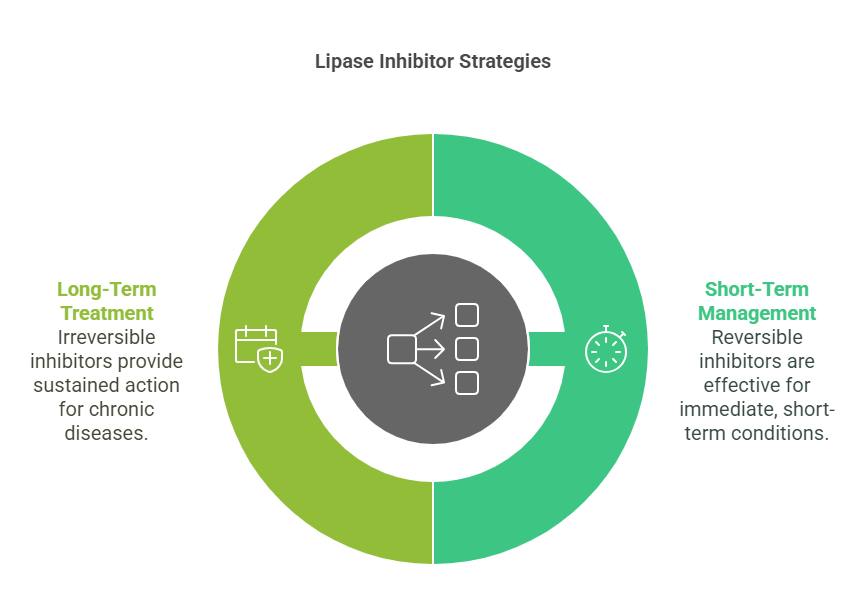
Challenges in Developing Effective MAGL Inhibitors
The design and construction of monoacylglycerol lipase (MAGL) inhibitors are not without their fair share of problems and obstacles.
Overcoming Central Side Effects in MAGL Inhibitors
One of the primary issues relative to the development of MAGL inhibitors is to avoid centrally mediated sedative or psychoactive side effects. Such effects are being studied to broaden the use of negatively charged, peripherally restricted inhibitors that do not survive the blood-brain barrier.
Developing Selective MAGL Inhibitors for Peripheral Targets
MAGL shares structural and functional similarities with other serine hydrolases, such as hormone-sensitive lipase, lipoprotein lipase, and diacylglycerol lipase, which complicates the process of designing selective inhibitors. Selectivity to MAGL is crucial which is why these inhibitors should only affect the target pathways. Improvements in engineering drugs allow for the design of peripherally restricted MAGL inhibitor LEI-515 molecules active against peripheral MAGL without disrupting central ECS processes.
Balancing Efficacy and Safety in Clinical Applications
The therapeutic window for MAGL inhibitors must be carefully optimized to achieve efficacy without adverse effects. Preclinical studies are helping identify dosing regimens that maximize benefits while minimizing risks.
Conclusion
Monoacylglycerol lipase is central to maintaining proper function and regulation within the endocannabinoid system (ECS). It modulates 2-arachidonoylglycerol (2-AG) concentration with its subsequent hydrolysis of monoacylglycerol and arachidonic acid formation. MAGL connects the ECS to inflammation, which makes its inhibition an interesting possibility for a plethora of issues such as chronic pain, neurodegeneration, and inflammation. It is clear that further work aims to increase specificity, lower central nervous system side effects, and move into human clinical tests, particularly focusing on reversible MAGL inhibitors.
Frequently Asked Questions
What is Monoacylglycerol Lipase (MAGL)
MAGL is classified as an endocannabinoid hydrolase which metabolizes 2-arachidonoylglycerol (2-AHG) into Glycerol and Arachidonic acid.
What is the role of MAGL in inflammation
MAGL The process produces Arachidonic acid to prostaglandin metabolism, which is significantly influenced by monoacylglycerol lipase activity. Further, inhibiting MAGL could lead to enhanced inflammation due to increased 2-AG levels and less arachidonic acid.
Why is selectivity important in MAGL inhibitors
Selective MAGL inhibitors help to isolate optimisation of action on MAGL without unintentional damage to other enzymes, thus limiting the side effects of medicines and fostering better health.
What is the difference between reversible and irreversible MAGL inhibitors
Reversible inhibitors circumvent MAGL performance in periods of aggravation of a disease while targeting MAGL permanently suppresses medication during periods of decrease in intensity of chronic diseases.
References
- Granchi, C., Caligiuri, I., Minutolo, F., Rizzolio, F., & Tuccinardi, T. (2017). A patent review of Monoacylglycerol Lipase (MAGL) inhibitors (2013-2017). Expert opinion on therapeutic patents, 27(12), 1341-1351. https://doi.org/10.1038/srep35784
- Ren, S. Y., Wang, Z. Z., Zhang, Y., & Chen, N. H. (2020). Potential application of endocannabinoid system agents in neuropsychiatric and neurodegenerative diseases—focusing on FAAH/MAGL inhibitors. Acta Pharmacologica Sinica, 41(10), 1263-1271. https://doi.org/10.1038/srep35784