If you’re looking to enjoy cannabis without the overpowering buzz, choosing low-THC strains can be a fantastic way to find pain relief, manage anxiety, and promote relaxation while still enjoying the therapeutic benefits of the plant. These cannabis products typically contain a high CBD content and a lower THC percentage, which helps you steer clear of the strong psychoactive effects often linked to high THC strains. Whether you’re curious about the best low THC strains or want to learn how the thc to cbd ratio impacts your mood and body, this article will guide you through the potential benefits of low thc cannabis and help you make an informed decision for your wellness journey.
Key Takeaways
- Low-THC flower can provide anti inflammatory effects, making it ideal for chronic pain and chronic anxiety without causing intense euphoric effects.
- CBD rich strains offer a more manageable experience with less risk of paranoia and other adverse effects linked to higher thc levels.
- You can still experience a mild sense of uplifting effects and mild euphoria from low thc options, but without the strong intoxicating effects of high thc cannabis.
What Makes Low-THC Strains Appealing for Wellness?
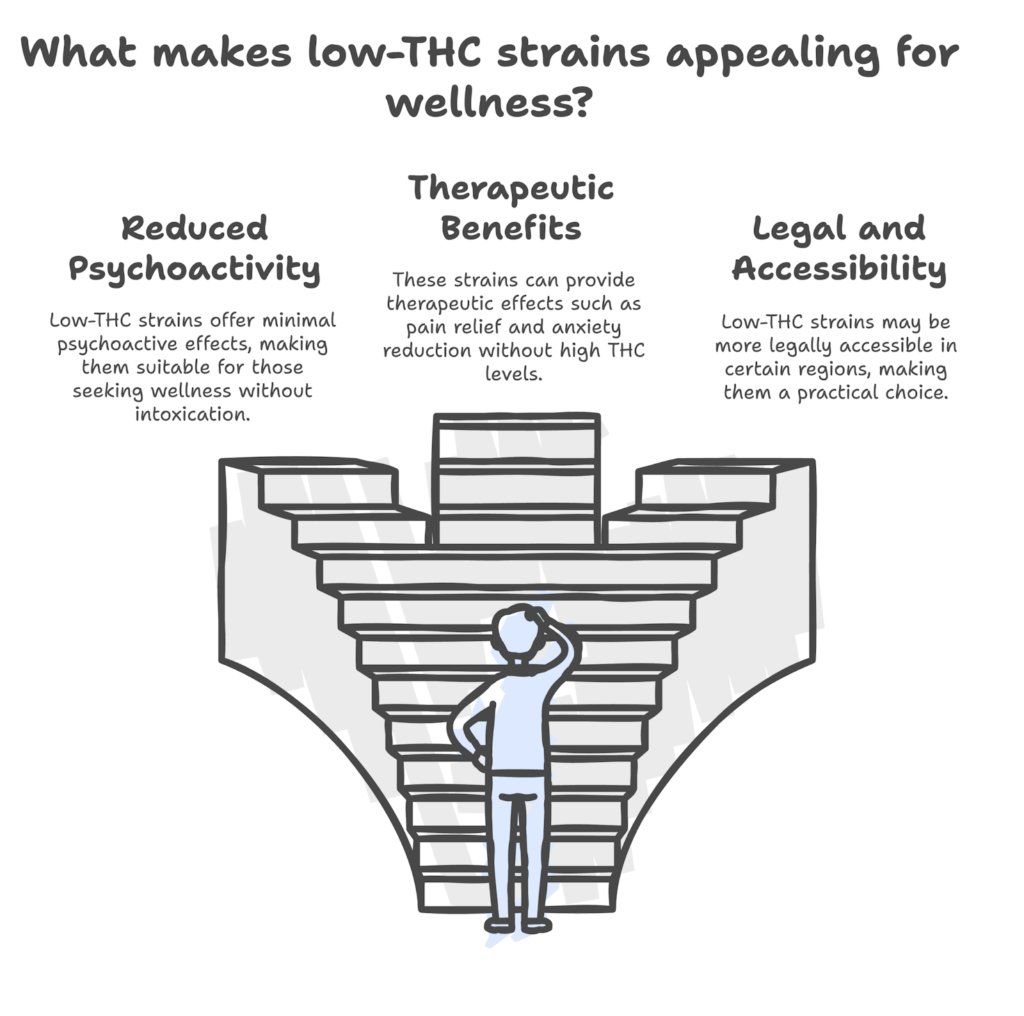
Low-THC strains are appealing because they offer relief from chronic pain, stress, and eye pressure while minimizing the likelihood of strong psychoactive effects. By focusing on cbd ratio and a balanced thc ratio, you can tailor the experience to relieve symptoms without feeling overwhelmed.
How Does THC Content Affect Your Experience?
The THC content determines how strongly you’ll feel the intoxicating effects of marijuana.
- High THC strains (like certain sour diesel phenotypes) can cause intense euphoric effects, possible paranoia, and a potent sense of being “high.”
- Low thc flower with a more balanced thc to cbd ratio provides a gentler effect, allowing you to remain clear-headed while experiencing therapeutic benefits such as pain relief and anti inflammatory effects.
In essence, thc levels play a major role in whether you’ll have a calm or exhilarating feeling after you consume. Always keep an eye on the thc percentage listed on cannabis products to gauge the experience you’re likely to get.
Which Are the Best Low THC Strains to Consider?
Many cannabis consumers recommend Ringo’s Gift, Pineapple Thai, Master Kush, and Star Tonic as some of the best low thc strains on the market.
- Ringo’s Gift is a high cbd strain known for its mellow vibes and anti inflammatory effects.
- Pineapple Thai offers an invigorating effect and subtle relaxation.
- Master Kush is a hybrid strain that promotes stress relief and pain management.
- Star Tonic combines balanced cannabinoids for a manageable experience with a pleasant mood lift.
These low thc cannabis options might not hit you with a heavy psychoactive punch, but they still help you manage chronic pain, chronic anxiety, and everyday aches.
Many users enjoy these strains because they deliver a satisfying balance between therapeutic benefits and comfortable uplifting effects. They allow you to go about your day without feeling stuck on the couch, unlike some high thc cannabis offerings.
Are Low-THC Strains Effective for Pain and Stress Management?

Absolutely! While higher thc percentages can offer strong euphoric effects, low thc alternatives can often help relieve symptoms of chronic pain, chronic anxiety, and stress without overly impacting your daily routine. This is especially vital for people who are sensitive to tetrahydrocannabinol or wish to avoid its more intense impact.
Pain Relief Through Balanced Cannabinoids
A balanced cbd to thc profile can be key for effective pain relief without the heavy sedation.
- Low thc strains promote a functional level of comfort.
- CBD strain options often possess anti inflammatory effects that help with inflammation, chronic pain, and migraines.
- Hybrid strain varieties may combine both cbd and thc in a harmonious thc ratio for targeted symptom control.
By choosing a high cbd strain over a high thc one, you’ll likely experience a smoother ride that helps you keep focused on daily tasks.
Managing Anxiety and Stress with Low-THC
If you’re prone to chronic anxiety, you might find that high thc varieties worsen your symptoms.
- Low thc cannabis with higher CBD ratio can help soothe racing thoughts without triggering paranoia.
- Mild euphoria and uplifting effects can keep your mood balanced.
- Flower form strains like sour diesel in a low thc version might still offer an invigorating effect but without the intense psychoactive effects of typical high thc strains.
Being able to enjoy a sense of calm without the heavy headspace can make all the difference in your daily life.
How Do Low-THC Strains Compare to High-THC Strains?

When it comes to deciding between low thc or high thc options, it’s all about how you want to feel and what goals you’re aiming to achieve with cannabis use. While high thc strains can deliver a powerful punch, low thc flower offers a gentler experience that still provides therapeutic benefits.
Below is a quick comparison chart to help you see the differences:
| Aspect | Low-THC Strains | High-THC Strains |
| THC Content | Typically less than 10% thc percentage, often balanced with CBD | 15% or more thc content, sometimes exceeding 20% |
| Effects | Subtle mild euphoria, minimal intoxicating effects | Intense euphoric effects, potential paranoia |
| Best For | Managing chronic pain, anxiety, general wellness | Recreational users seeking a stronger “high,” pain management with sedation |
| Adverse Effects | Lower risk of psychoactive effects and paranoia | Potential for heightened chronic anxiety and stronger body load |
| Manageable Experience | Great for daytime use, allows productivity | More suited for nighttime or experienced users seeking a heavy high |
Selecting the Right THC Levels
Finding the right THC levels for you can make a world of difference.
- You might want a manageable experience that doesn’t interfere with work or social engagements.
- Conversely, if you can handle a heavier sensation, high thc cannabis might be suitable for intense pain relief but could come with a risk of adverse effects.
A balanced cbd to thc ratio like 1:1 or 2:1 can be a sweet spot for many consumers, offering therapeutic benefits without an overwhelming buzz. This ratio often helps manage inflammation, depression, and chronic pain while avoiding a couch-lock feeling.
When to Opt for Higher THC
While low thc strains are often the go-to for daily wellness, there are situations where higher THC levels may be helpful.
- Certain severe medical conditions might require a stronger thc content.
- Some users genuinely prefer the invigorating effect or sedative properties of high thc.
- Specific conditions like intense eye pressure or advanced illnesses could benefit from stronger cannabis strains.
However, if you’re not sure, it’s always a good idea to start low and gradually work your way up, especially if you are new to thc cannabis or sensitive to psychoactive effects.
How Can You Incorporate Low-THC Strains into Your Routine?

Adding low thc cannabis to your daily life can be quite seamless, especially if you’re focused on potential benefits such as stress relief and pain management. It’s essential to listen to your body and consider consulting a healthcare professional for personalized advice.
Tips for a Smooth Start
Before you jump in, here’s a short paragraph with a few helpful pointers. Taking things slowly will help you gauge how low thc fits your lifestyle and how your endocannabinoid system reacts.
- Microdose: Begin with very small amounts to see how your mood and body respond.
- Track Your Usage: Keep notes on the feeling each time you use low thc flower.
- Time Your Sessions: If you’re unsure of potential intoxicating effects, try using these cannabis products in the evening or on a day off until you feel comfortable.
A slow and steady approach ensures you don’t overshoot your comfort zone.
Pairing Low-THC with Other Wellness Activities
If you want to maximize therapeutic benefits, try combining your best low thc strains with other healthy habits.
- Yoga or Meditation: A gentle strain can help with relaxation without making you too sleepy.
- Light Exercise: Some users report that a hybrid strain with low thc content can provide an uplifting effect for a mild workout.
- Routine Self-Care: A cup of herbal tea and a soothing low thc session may reduce stress and support better sleep.
This multi-faceted approach often helps you take advantage of cannabinoids holistically, addressing both mental and physical well-being.
Conclusion
Low-THC cannabis can feel like the calm in a storm—offering relief without the intensity. It’s a way to manage discomfort, ease anxiety, or address inflammation without stepping into overwhelming territory. Strains higher in CBD often provide that balance, giving just enough relaxation without making you feel off-center.
Why does this approach work? It’s all about moderation—finding that sweet spot where benefits meet comfort. With low-THC options, you can enjoy a mild lift, stay focused, and avoid the overpowering effects that sometimes come with high-THC varieties. However, everyone reacts differently. The key is tuning in to what your body tells you and experimenting carefully to see what works best.
Frequently Asked Questions
Can Low-THC Strains Still Cause a “High”?
Yes, but the psychoactive effects are typically milder. You may feel a subtle uplifting effect or mild euphoria, but you’re less likely to experience overwhelming paranoia or strong intoxicating effects.
Are There Any Side Effects of Using Low-THC Strains?
Although low thc cannabis generally poses fewer adverse effects, you could still experience dry mouth, drowsiness, or slight anxiety. The risk is lower compared to high thc options, but it varies based on individual tolerance and thc ratio.
How Do I Choose the Right Low-THC Strain for Me?
Start by considering your wellness goals—whether it’s chronic pain, stress, or depression. Look for cbd rich strains with a balanced cbd to thc ratio and read user reviews to see what cannabis consumers say. Don’t hesitate to consult a healthcare professional if you have specific medical concerns.