
Fungus gnats are perhaps one of the most resilient pests within cannabis cultivation. These minute bugs love moisture and can take hold fast over your cannabis crop. The proper knowledge about how to control the life cycle of fungus gnats is therefore an absolute necessity in getting a good yield. These bugs prove particularly troublesome as larvae since they cause root hairs to get destroyed and inhibit the uptake of nutrients.
Key Takeaways
- Cannabis fungus gnats are most dangerous in their larval stage, where they devour root hairs and decaying organic matter.
- Adult fungus gnats lay hundreds of eggs in wet soil, leading to infestations if left unchecked.
- Combining preventative measures like yellow traps and natural solutions such as Bacillus thuringiensis israelensis is key to managing these pests.
What Are Fungus Gnats, and Why Are They a Problem for Cannabis Plants?
Fungus gnats are small, flying bugs that resemble fruit flies but cause far more damage. They infest the soil around cannabis plants, where their larvae devour tender cannabis roots and contribute to root rot.
How to Identify Fungus Gnats
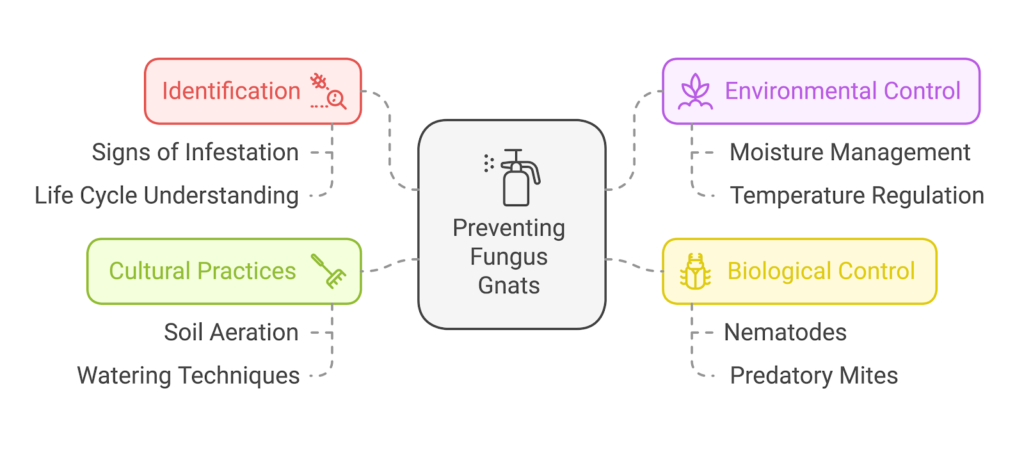
Knowing the signs of a fungus gnat infestation can help you act early:
- Flying Bugs: Tiny black flies often hover around the soil surface or your grow area.
- Drooping Plants: Infested plants may experience stunted growth, sickly growth, or unexplainable plant issues.
Damage Caused by Fungus Gnats
- Larval Stage: The larvae feed on organic matter, root hairs, and even fragile cannabis roots. This leads to root rot.
- Fungal Spread: Adult females lay hundreds of eggs, and the adult fungus gnats spread fungal spores that make the health of the plant worse.
These pests are a breeding ground for further issues, and it becomes necessary to remove fungus gnats immediately after they start appearing.
The Fungus Gnat Life Cycle: Understanding Their Behavior
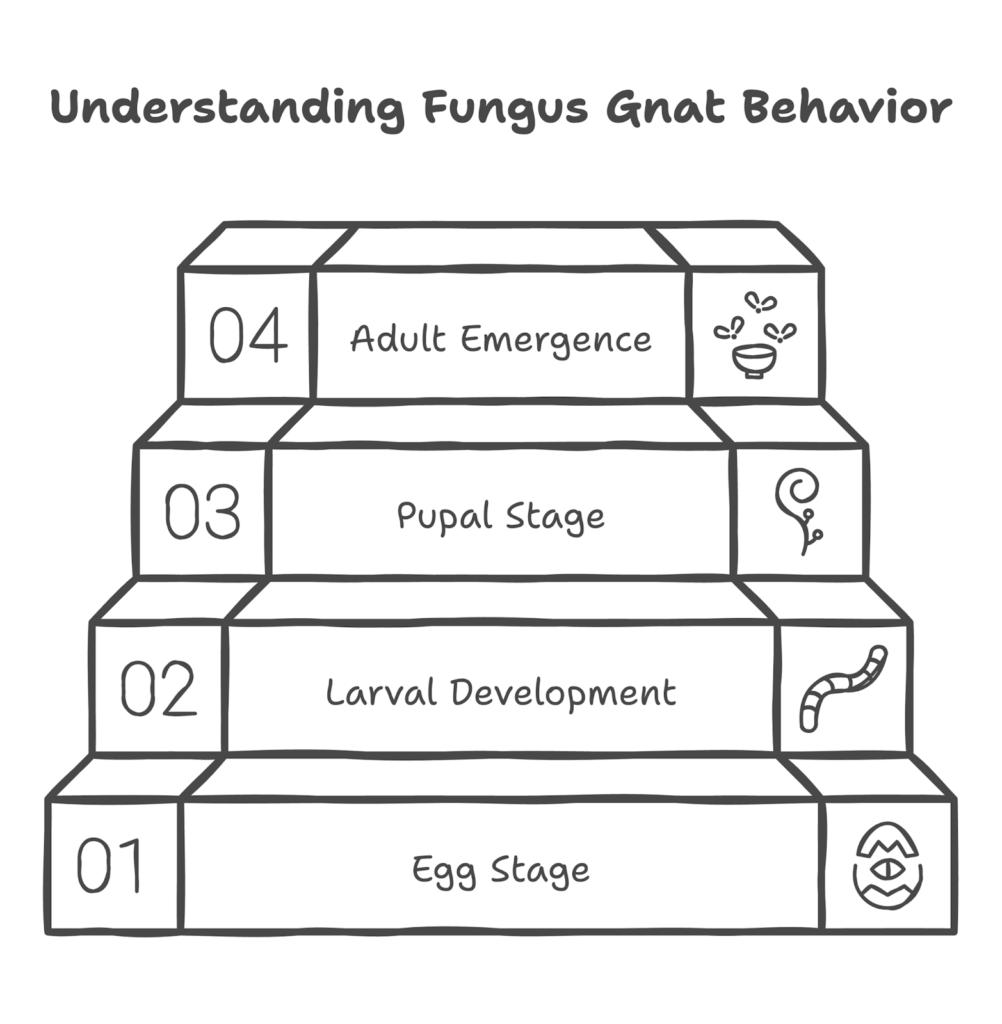
To effectively kill fungus gnats, you need to understand their life cycle. Fungus gnats live and thrive in moist soil, moving through several stages.
The Four Stages of a Fungus Gnat’s Life
- Egg Stage: Adult females lay eggs in moist soil, often near cannabis roots.
- Larval Stage: This is when fungus gnat larvae feed aggressively on decaying organic matter and damage root hairs.
- Pupal Stage: The larvae transform into pupae before adult gnats emerge.
- Adult Stage: Adults live for about a week, laying eggs and spreading fungal spores.
Why Timing Matters in Fungus Gnat Control?
- Attack the Larval Stage: Use the bacillus thuringiensis bacterium to kill all the larvae before they develop into adults.
- Prevent Egg Laying: Keep the surface of the soil dry and put yellow sticky traps to catch the adults.
- Breaking the Cycle: Reducing moist conditions prevents the eggs from hatching and also breaks the infestation cycle.
How to Remove Fungus Gnats from Cannabis Plants?
You would have noticed minute bugs hovering over your plants; the time has come to act. Here are the effective ways of killing fungus gnats and how to protect the roots of your cannabis.
Natural Remedies for Killing Fungus Gnats
Many growers prefer natural solutions that target fungus gnats without harming the plants:
- Neem Oil: A safe organic solution that destroys the fungus gnat life cycle
- Diatomaceous Earth: Sprinkle this on the soil to prevent larvae and adult gnats from thriving.
- Hydrogen peroxide mix: Diluted solution kills larvae on contact; spores cannot produce a fungus.
Why These Methods Work
- Neem oil repels pests while protecting cannabis plants.
- Diatomaceous earth dries out the soil surface, making it inhospitable.
- Hydrogen peroxide also sanitizes the soil, killing both larvae and fungal spores.
Chemical and Biological Controls
For severe infestations, a more targeted approach might be necessary:
- Bacillus Thuringiensis Israelensis: A highly effective bacterial solution that kills fungus gnat larvae naturally.
- Chemical Insecticides: Use sparingly and only on wet soil to avoid harming the entire plant.
Combining natural and chemical methods ensures a robust approach to managing fungus gnats.
How to Prevent Fungus Gnats from Returning?
Prevention is the best cure when it comes to fungus gnats. By creating an environment they dislike, you can grow weed without worrying about pest infestation.
Best Practices for Watering Regimens
Fungus gnats thrive in wet soil, so managing moisture levels is essential.
- Check Soil Moisture: Before watering, ensure the pot feels noticeably lighter.
- Drainage Improvements: Use pots with holes and alternative growing media to reduce wet conditions.
Using Traps and Barriers
Traps and physical barriers are simple yet effective tools for preventing infestations:
- Yellow Traps: These traps attract and capture flying bugs, especially adult gnats.
- Sand or Gravel Layers: A top layer of sand blocks access to moist soil, where eggs hatch.
By drying out the soil and blocking breeding grounds, you can prevent adult females from laying eggs.
Comparison: Natural vs. Chemical Control Methods
| Method | Targeted Stage | Environmental Impact | Effectiveness |
| Neem Oil | Adults & Larvae | Eco-friendly | Moderate |
| Bacillus thuringiensis bacteria | Larvae | Safe for plants | High |
| Diatomaceous Earth | Larvae | Safe | Moderate |
| Chemical Insecticides | Adults & Larvae | Potentially harmful | Very High |
Natural methods are often safer but may require consistent application. Chemical solutions provide rapid results but should be used with caution.
Long-Term Damage Caused by Fungus Gnats
If left unchecked, fungus gnats can kill cannabis plants, particularly young seedlings. Their larvae damage root hairs, disrupt nutrient uptake, and contribute to nutrient deficiencies. This leads to stunted growth and, in severe cases, death.
Steps to Mitigate Damage
- Improve Air Circulation: Blow air around your grow space to keep the soil surface dry.
- Regular Monitoring: Inspect for signs of breeding grounds and act immediately.
- Alternative Growing Media: Materials like coco coir improve drainage and reduce moist conditions.
Taking these steps ensures your cannabis plants get proper nutrients and avoid long-term issues.
Conclusion
Fungus gnats are far from being a simple nuisance pest. They are rather the greatest foe of roots and the health of plants in cannabis. Knowing how fungus gnats live and reproduce helps you establish practical solutions, including BT bacteria, yellow sticky traps, and managing the soil. Fighting off an infestation and preventing the next one is between vigilance and action on your part as you protect your cannabis plants.
Frequently Asked Questions
What are fungus gnats and how do they impact cannabis plants?
Fungus gnats are minute flies whose larvae feed on the roots of the plant. As such, they are even more harmful to seedlings. Adult females can lay hundreds of eggs in wet soil. Such an infestation of fungus gnats would cause growth stunting and weaken the health of your plants.
How can I kill fungus gnats organically?
For eradicating fungus gnats, reduce the soil’s excess moisture content and introduce natural beneficial bugs like predatory nematodes or Hypoaspis mites. These methods will target the larvae of fungus gnats and disturb their life cycle, thereby saving the plant roots.
Why Fungus Gnat Larvae Are Bad for Cannabis Plants?
It feeds on the small roots and organic matter of plants, causing them great damage. When unchecked, fungus gnats inhibit the uptake of nutrients and water by the plant, causing it to deteriorate and sometimes die.