Cannabis is widely known, but its “biphasic effects” often go unnoticed. Low doses of THC—the main psychoactive compound—may promote relaxation and focus, while higher doses can cause anxiety or other adverse effects. This makes finding your “optimal dose” crucial, especially for therapeutic goals like managing anxiety, pain, or depression. Understanding how your body’s “endocannabinoid system” reacts to different doses is key to reaping the benefits of “cannabinoid therapy” while minimizing potential risks to mental well-being.
Key Takeaways
- Cannabis has “biphasic effects,” meaning different doses can produce very different outcomes—from soothing relief to “increased anxiety.”
- “Low doses” can sometimes reduce “fear” and nurture relaxation, while “high doses” might cause “significant side effects,” including “anxiety like behaviors.”
- It’s wise to work with a “healthcare professional” if you’re dealing with “anxiety disorders,” chronic “pain,” or other conditions so you can find the “right dose” for you.
What Exactly Are the Biphasic Effects of Cannabis?
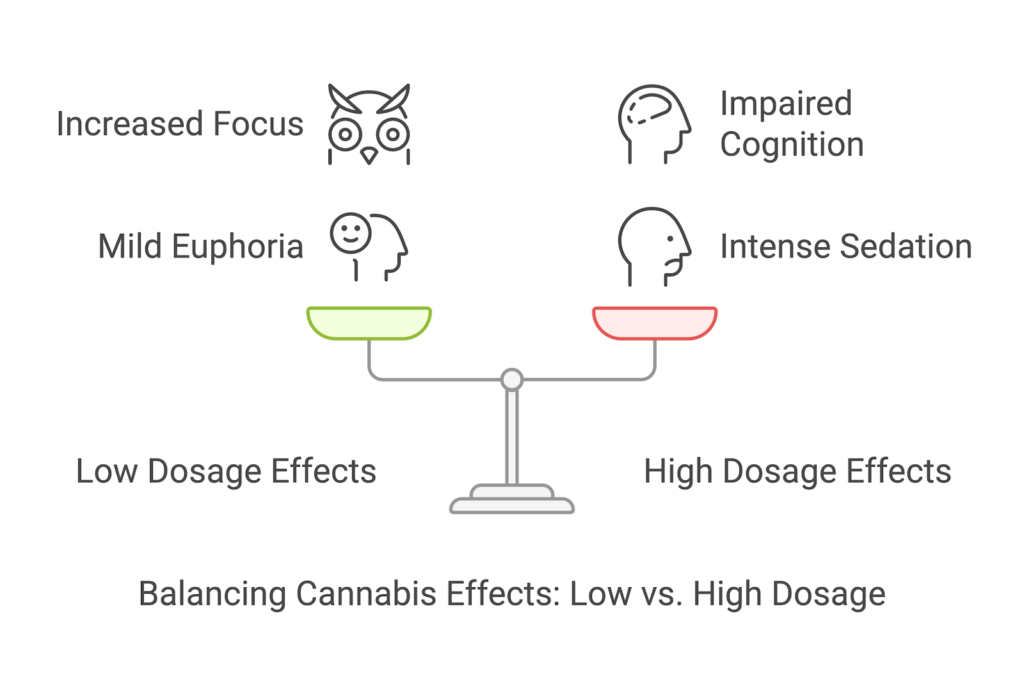
At its core, cannabis can generate two contrasting sets of results in your body—think of them as a yin and yang. Small amounts of THC often yield an “anxiolytic like effects” state (easier mood, reduced tension), whereas higher amounts might spark “anxiogenic effects” or “anxiety related behavior.” These “biphasic effects of cannabis” rest on how cannabinoids interact with receptors in your “central nervous system,” shaping how you experience “anxiety responses.”
The Biphasic Nature in the Central Nervous System
Scientists have studied how the “cannabis plant” affects “cannabinoid receptors,” and it turns out the dose itself plays a starring role in whether you’ll feel more mellow or more fearful.
- When animals treated (like “male rats” or “female mice”) receive “small amounts” of THC, they often show “antidepressant like behavior” or at least fewer “stretched attend postures” in tests.
- On the other hand, when “mice treated” with “high doses” are observed, “anxiety like behaviors” increase, as revealed by methods such as the “elevated plus maze.”
You might wonder if “caffeine” or other substances intensify this shift. In some “research,” mixing various compounds can produce “opposite effect” results, so keep that in mind if you’re a daily coffee drinker looking into “cannabinoid therapy.”
When you consider the “one way ANOVA” outcomes from multiple experiments, you see “significant differences” based on dosage. Ultimately, your “brain” can only handle so much stimulation before it needs to “slow” down, and cannabis dosage influences whether it’s a gentle slow-down or a jarring screech.
Why Does the Dose of THC Matter?
Finding that sweet spot can make all the difference between feeling blissful and feeling uneasy.
- “Low doses” of THC might offer a peaceful headspace, “decrease” “anxiety,” and help you focus on tasks or relax after a tough day.
- Going too far into “high doses” territory can present “significant side effects,” especially if you have “anxiety disorders” or you’re prone to worrying.
Keep in mind that “chronic use” might change how your body responds. Cannabis can be a “powerful tool,” but the “treatment” approach needs to be carefully structured. Nobody wants to end up with unwanted “adverse effects,” so practicing moderation—or “start low”—makes sense.
How Do Low and High Doses of THC Impact Your Experience?
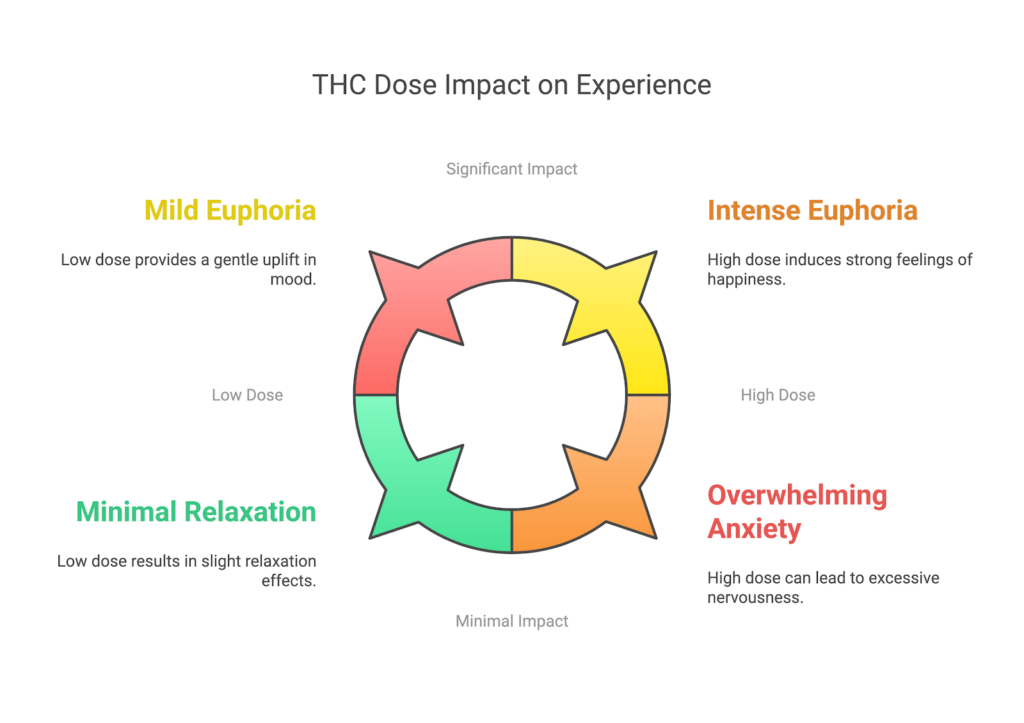
The transition from soothing calm to jolting nerves can happen faster than you think. That’s the beauty—and complexity—of “biphasic effects of cannabis.” “Therapeutic benefits” can appear at lower amounts, while “increased anxiety” may be the star of the show at “high doses.” If you’re attempting “treatment” for chronic ailments or want to manage your “anxiety levels,” keep an eye on dosage. The same plant can do wonders or cause you grief—depending on how much you consume.
Low Doses: A Window to Potential Therapeutic Benefits
Low doses of THC often create “anxiolytic like effects,” giving you the room to breathe, relax, and enjoy “relaxation” without feeling overwhelmed.
- They can help “decrease fear,” provide mild euphoria, and potentially support “cognitive function.”
- People sometimes report better “focus” and an improved mood, especially if they’re grappling with minor aches and tension.
In many “brain res” studies, “small amounts” of THC can be a game-changer for relaxation and general well-being. If you’re new to cannabis, “start low” so you can see if your body appreciates the shift.
High Doses: Treading Carefully in Uncharted Waters
High doses are a different story.
- You might experience “increased anxiety,” “opposing effects” to what you hoped for, and “significant side effects” like dizziness or paranoia.
- In scientific tests such as the “elevated plus maze,” “mice treated” with hefty THC amounts show more “anxiety like behaviors.”
Remember to be kind to yourself. Even though high-potency products may seem exciting, moderation might be your friend if you’re prone to “anxiety related behavior.”
Can Cannabis Support Anxiety or Depression Treatment?
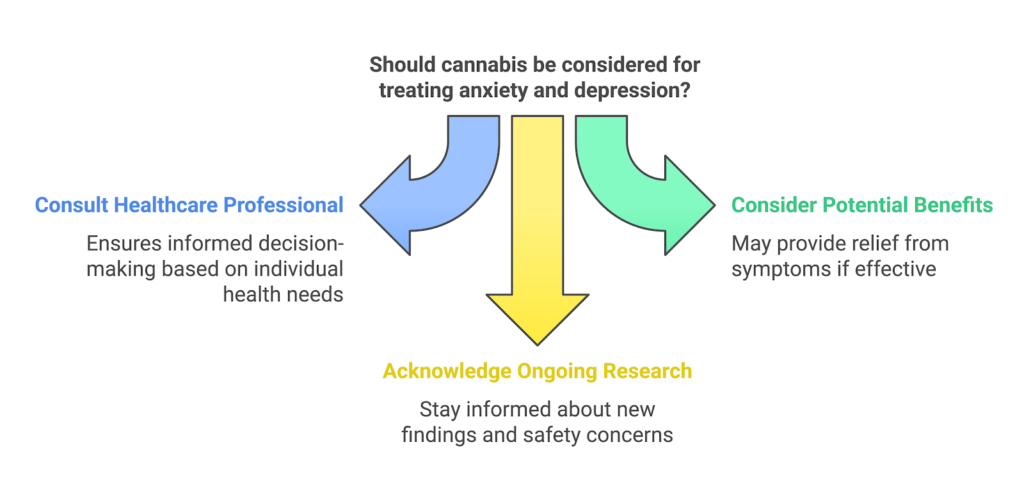
Many people are curious whether cannabis can ease stress or lift mood. With its “biphasic nature,” cannabis has shown promise in tackling certain “anxiety disorders,” but it’s not a one-size-fits-all remedy. “Significant differences” arise between individuals based on factors like the “estrous cycle” in females or prior “chronic use.”
Tackling Anxiety Disorders with Cannabinoids
Researchers have noted that “low doses” of THC might help some folks who battle anxiety.
- The “anxiolytic like effects” could be tied to how cannabinoids interact with “cannabinoid receptors” throughout your system.
- Tests with “male rats,” “female mice,” and other “animals treated” with varying doses often reveal that moderate amounts can “decrease” tension and “fear.”
It’s wise to work with a specialist if your “anxiety levels” are already high, ensuring the approach doesn’t backfire.
Addressing Depression and Chronic Pain
Some folks also wonder about relieving “depression” or “chronic pain” with cannabis.
- Low to moderate THC might offer “antidepressant like behavior” benefits and reduce discomfort.
- Getting carried away with your dosage could hamper your “cognitive function” and lead to undesired “adverse effects.”
It’s always better to talk openly about your experiences and keep realistic expectations. Cannabis isn’t magic, but if used wisely, it may fill a useful spot in your wellness arsenal.
When Should You Consult a Healthcare Professional?
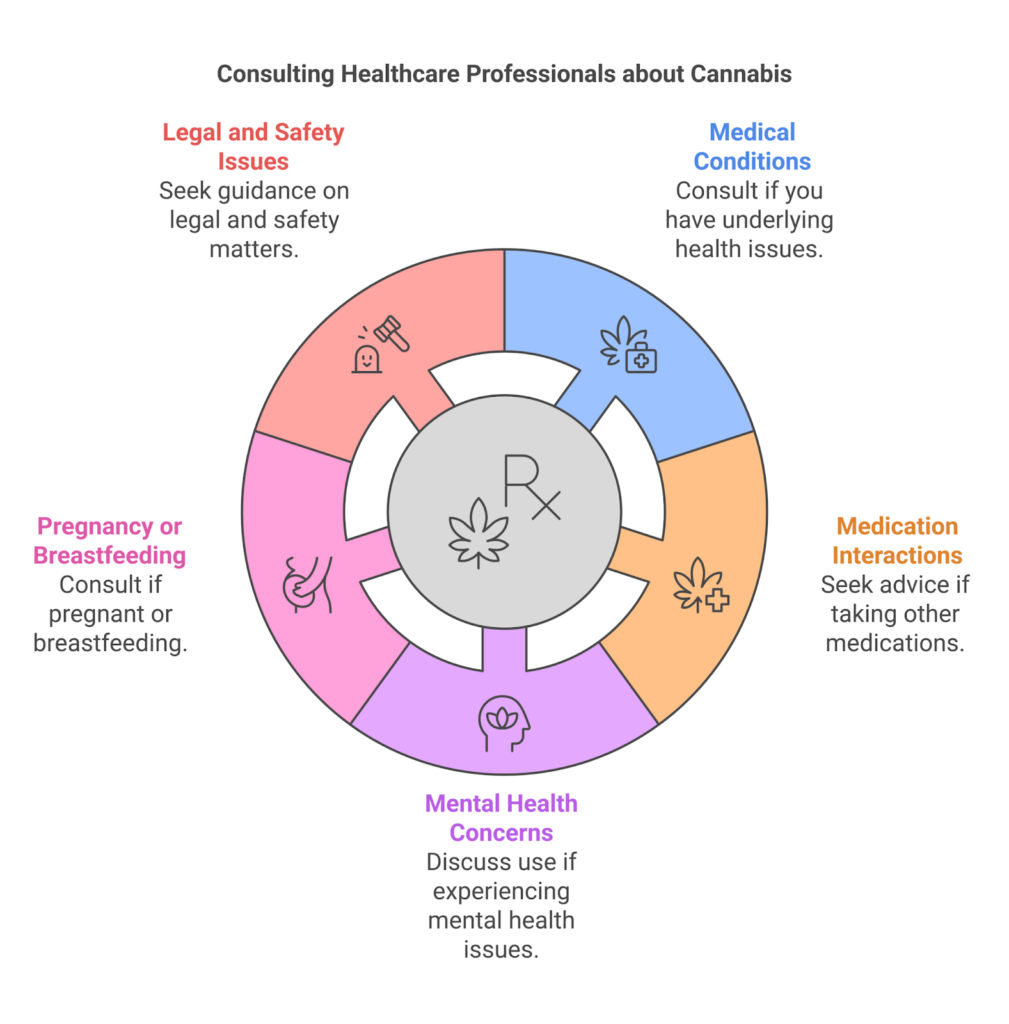
If you’ve noticed that cannabis impacts you more intensely than expected—or if you need it for a deeper “treatment” strategy—talk to a “healthcare professional.” They can guide you on the “right dose” and help you navigate the “significant” concerns that may arise during use, like increased paranoia or ongoing anxiety.
Determining the Right Dosage Through Professional Guidance
A professional consultation can clarify whether you should “start low” or try other methods.
- Specialists can suggest how to adjust your “dosage” over time so you get steady improvements rather than a rollercoaster of reactions.
- They might also recommend checking how your body responds in different scenarios, making sure your “receptors” aren’t overstimulated.
A quick look at the comparison chart below might guide initial discussions:
| THC Dosage Level | Possible Effects | Potential Risks |
| Low (1–5 mg) | Mild relaxation, gentle “focus” | Minor drowsiness, minimal “anxiety” |
| Moderate (5–10 mg) | Noticeable calm, reduced “pain” | Slight paranoia, “anxiety responses” |
| High (10 mg and up) | Strong euphoria, sedation | “Anxiety like behaviors,” panic, paranoia |
If you sense ongoing or “significant side effects,” your professional might tweak your plan.
A cautious approach can spare you from major pitfalls. Avoid the temptation to jump into higher doses too soon—especially if you’re new to cannabis or have a history of “anxiety disorders.”
Navigating Significant Side Effects
Even with expert guidance, it’s possible to run into complications.
- High doses may produce paranoia or severe mental fog.
- “Chronic use” can affect your “central nervous system” and trigger deeper troubles, like persistent “depression” or “anxiety.”
Stay mindful: if your “anxiety levels” climb or you detect a shift in mood that feels unsettling, take a step back. Sometimes, slight dosage changes can steer you away from riskier territory.
Conclusion
In a nutshell, the “cannabis biphasic effects” hinge on whether you’re dealing with “low doses” or “high doses.” One brings a soothing vibe and potential “therapeutic benefits,” while the other might unleash “increased anxiety” and “anxiety related behavior.” Keeping an eye on dosage—especially if you have “anxiety disorders” or want to manage “chronic pain”—is critical. By staying vigilant, consulting a “healthcare professional,” and taking things step by step, you can lean into the positive side of cannabis without stumbling into “adverse effects” that negate its advantages.
Frequently Asked Questions
Can I rely on cannabis alone for treating serious anxiety?
Not entirely. While low doses of cannabis may help reduce anxiety, it’s essential to work with a healthcare professional who can explore medication, therapy, or lifestyle changes tailored to your needs.
What’s the best way to find my optimal dose of THC?
Start with a low dose and track how your body and mind respond. Gradually increase until you find a dose that offers therapeutic benefits without significant side effects. If discomfort or anxiety occurs, adjust accordingly.
Will using cannabis for pain relief make me anxious?
It’s possible. Low doses may ease pain and stress, but high doses can trigger restlessness, paranoia, or anxiety. Monitor your dosage and consult a professional if side effects arise.