Cannabis is a highly intricate crop to grow, marrying science with art. While plants are naturally resistant, they still have limits. One of the most common risks of heat stress in cannabis is from too much heat or too much light, which can cause unhealthy-looking plants and affect the growth of new buds, root development, and total yields. The identification and control of heat stress, whether indoor or outdoor cannabis cultivation, play a significant role in optimal growth and avoiding setbacks.
Key Takeaways:
- Heat stress in cannabis plants often arises from excessive temperatures and poor environmental control.
- Early detection of heat stress symptoms can prevent damage to plant cells and restore balance.
- Strategies like proper ventilation, cooling roots, and adjusting light intensity can help avoid cannabis heat stress.
What Is Cannabis Heat Stress?
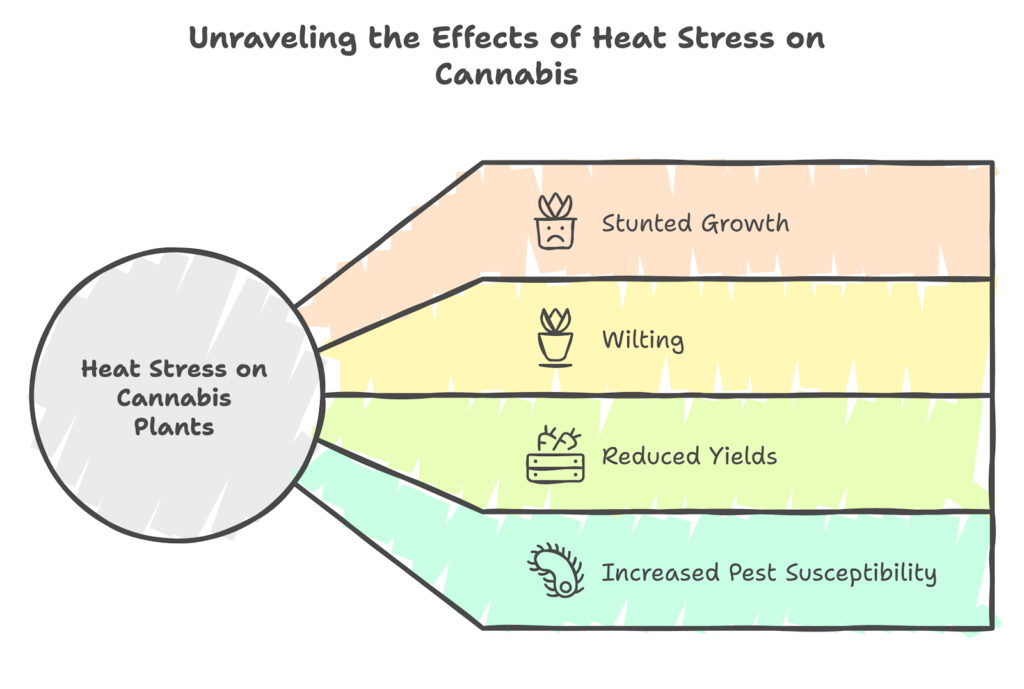
Cannabis heat stress occurs when plants are exposed to temperatures beyond their tolerance level. This environmental strain disrupts plant cells, slows vegetative growth, and can even lead to root rot. Many growers face this issue, particularly during dry climates or heat waves. Identifying heat stress early can save flowering cannabis plants from irreversible damage.
Recognizing Heat Stress in Cannabis Plants
- Curling Fan Leaves: Cannabis leaves may curl upward as a defense mechanism against excessive temperatures.
- Yellowing or Browning Foliage: This could indicate heat damage or nutrient deficiencies caused by stress.
- Stunted Growth: Temperatures rising above optimal levels force plants to focus on survival rather than growth.
- Dry and Brittle Leaves: Low humidity or intense sunlight leads to rapid evaporation, leaving leaves parched.
Why Does Heat Stress Happen?
Several factors contribute to heat stress in cannabis plants:
- Direct Sunlight and Intense Light: Outdoor plants exposed to the hottest hours of the day are at higher risk. Indoors, improperly placed grow lights can mimic this effect.
- Improper Ventilation: Stagnant air in grow rooms traps heat, raising temperatures above what plants can handle.
- Dry Climate Conditions: In regions with low humidity, evaporation from cannabis leaves accelerates, compounding stress.
- Excessive Temperatures: When the growing environment lacks balance, heat can spike and harm plants.
By addressing these issues, you can maintain optimal temperatures and prevent heat-related problems.
How Does Heat Stress Impact Cannabis Plants?
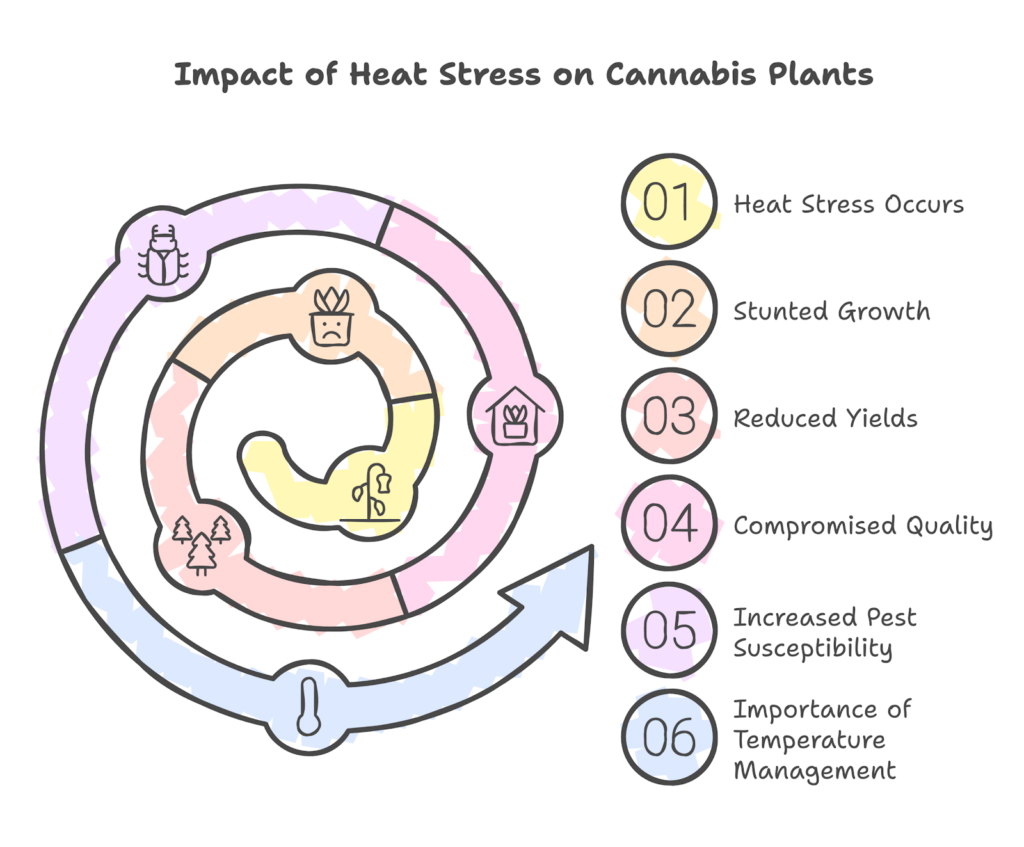
Heat stress affects both indoor plants and outdoor growers’ crops, with its impact varying depending on the growth stage.
Vegetative Growth vs. Flowering Stage
- Vegetative Growth: Excessive heat weakens roots, slows fan leaf development, and halts overall progress.
- Flowering Cannabis Plants: Stress during flowering reduces resin production, damages new buds, and diminishes potency.
Effects of Heat Stress
| Growth Stage | Effects of Heat Stress | Symptoms |
| Vegetative Stage | Root rot, slow vegetative growth | Curling fan leaves, yellowing |
| Flowering Stage | Reduced yield, impaired bud formation | Brittle leaves, poor resin |
Heat Damage vs. Heat Shock
- Heat Damage: Gradual stress caused by prolonged exposure to temperatures above optimal levels.
- Heat Shock: Sudden and severe stress resulting from extreme heat, often leading to permanent damage.
Recognizing these differences helps you prioritize actions to protect your plants.
How to Prevent Heat Stress in Cannabis Plants?
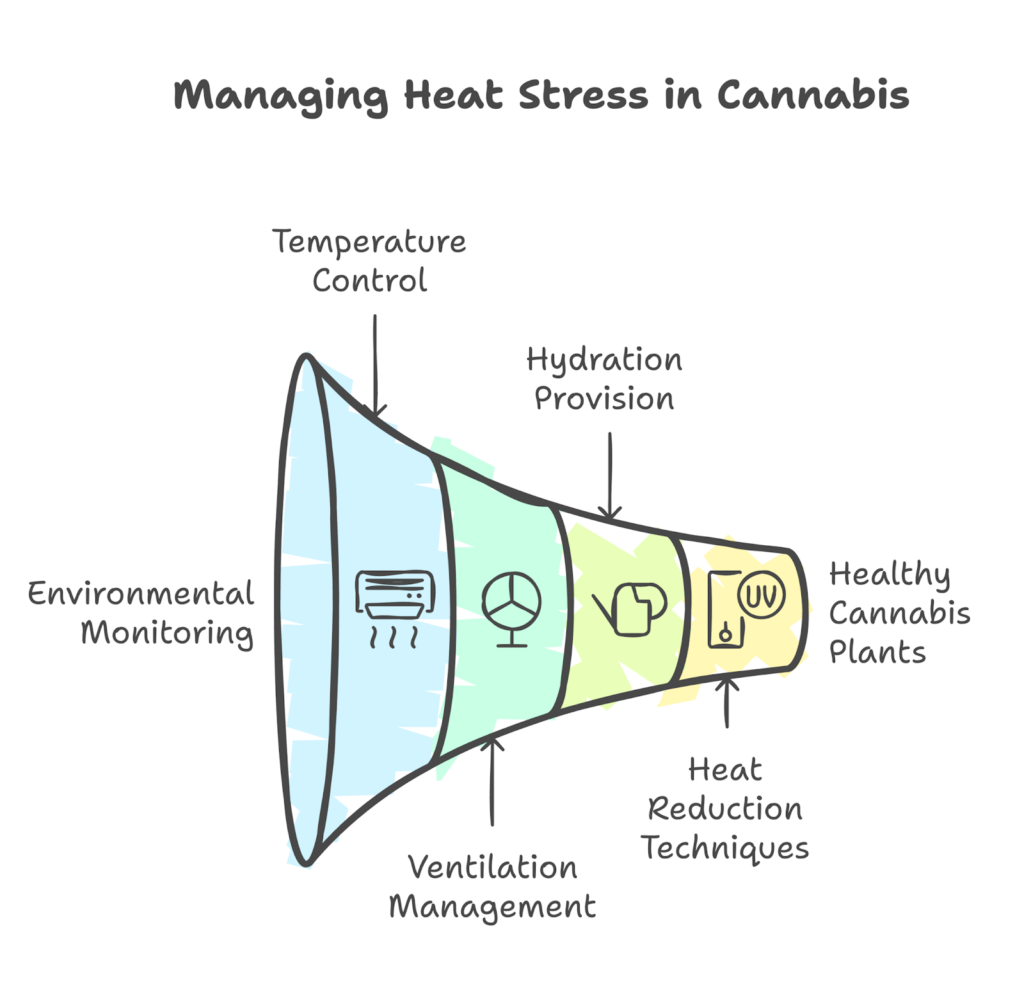
Prevention is always better than cure. Whether you’re cultivating indoor plants or growing outdoors, strategic adjustments can make a big difference.
Indoor Plants: Controlling the Grow Room
Proper Ventilation and Cooling
- Install exhaust systems to expel stagnant air and bring in fresh air.
- Use oscillating fans to promote airflow and keep temperatures stable.
- Ensure roots stay cool by maintaining consistent soil temperatures.
Adjusting Light Intensity
- Position grow lights at an optimal distance to avoid too much light exposure.
- Use LED lights, which produce less heat compared to traditional lighting systems.
- Monitor light schedules to prevent overheating during peak hours.
Humidity and Temperature Balance
- Maintain humidity levels between 40 and 70%, depending on the growth phase.
- Use air conditioners or dehumidifiers to create an ideal growing environment.
Outdoor Plants: Battling Natural Elements
Creating Shade
- Place shade cloths over plants during the hottest hours to reduce exposure to intense sunlight.
- Grow plants in partially shaded areas for better protection in hot climates.
Watering Schedule and Nutrient Support
- Water early in the morning or late evening to prevent rapid evaporation.
- Add kelp extracts or liquid fertilizers to help plants recover and strengthen resilience.
By following these practices, outdoor growers can reduce the risks posed by excessive temperatures.
How to Help Cannabis Plants Recover from Heat Stress?
If your cannabis plants show signs of heat stress, quick action can save them from further damage.
Immediate Remedies
- Relocate Plants: Move indoor plants away from heat sources or lights that are too close.
- Mist Leaves: Lightly mist cannabis leaves to cool them down temporarily.
- Boost Ventilation: Increase airflow to remove hot, stagnant air.
Long-Term Recovery Steps
- Use liquid fertilizers to replenish lost nutrients.
- Monitor and adjust your watering schedule to keep roots cool.
- Optimize your grow room or outdoor setup to maintain stable conditions.
Remember, recovery may take time, but with consistent care, your plants can bounce back.
Building the Perfect Growing Environment
Creating an optimal environment for your cannabis plants minimizes heat stress and promotes healthy growth.
Key Tips for Success
- Ventilation: Use exhaust systems and fans to maintain proper airflow.
- Temperature Management: Keep temperatures within the 70-85°F range for indoor plants.
- Light Positioning: Avoid placing grow lights too close to prevent heat damage.
- Humidity Control: Prevent powdery mildew or root rot by balancing humidity levels.
These steps ensure that your plants remain healthy and productive throughout their lifecycle.
Conclusion
One of the biggest challenges every grower should be prepared to face is cannabis heat stress. Knowing its causes, identifying early symptoms of heat stress, and implementing proactive strategies will help protect your plants from excessive temperatures. Whether you are managing a grow room or cultivating in a dry climate, balance is the secret to success. A stable environment with quick interventions will make your cannabis plants thrive and reward you with a good harvest.
Frequently Asked Questions
How Do I Know That My Cannabis Plant Is Feeling Heat Stress?
Watch out for curly fan leaves, yellowed leaves, stunted growth, and crinkled leaves. These are the sure signs of heat stress in cannabis plants.
How Can I Avoid Cannabis Heat Stress?
Have good ventilation, regulate light intensities, and cool the roots by examining the watering schedule and soil temperature.
Can Flowering Cannabis Plants Recover from Heat Stress?
Yes, quick action like shading, misting leaves, and kelp extracts can help flowering plants recover and continue producing quality buds.