
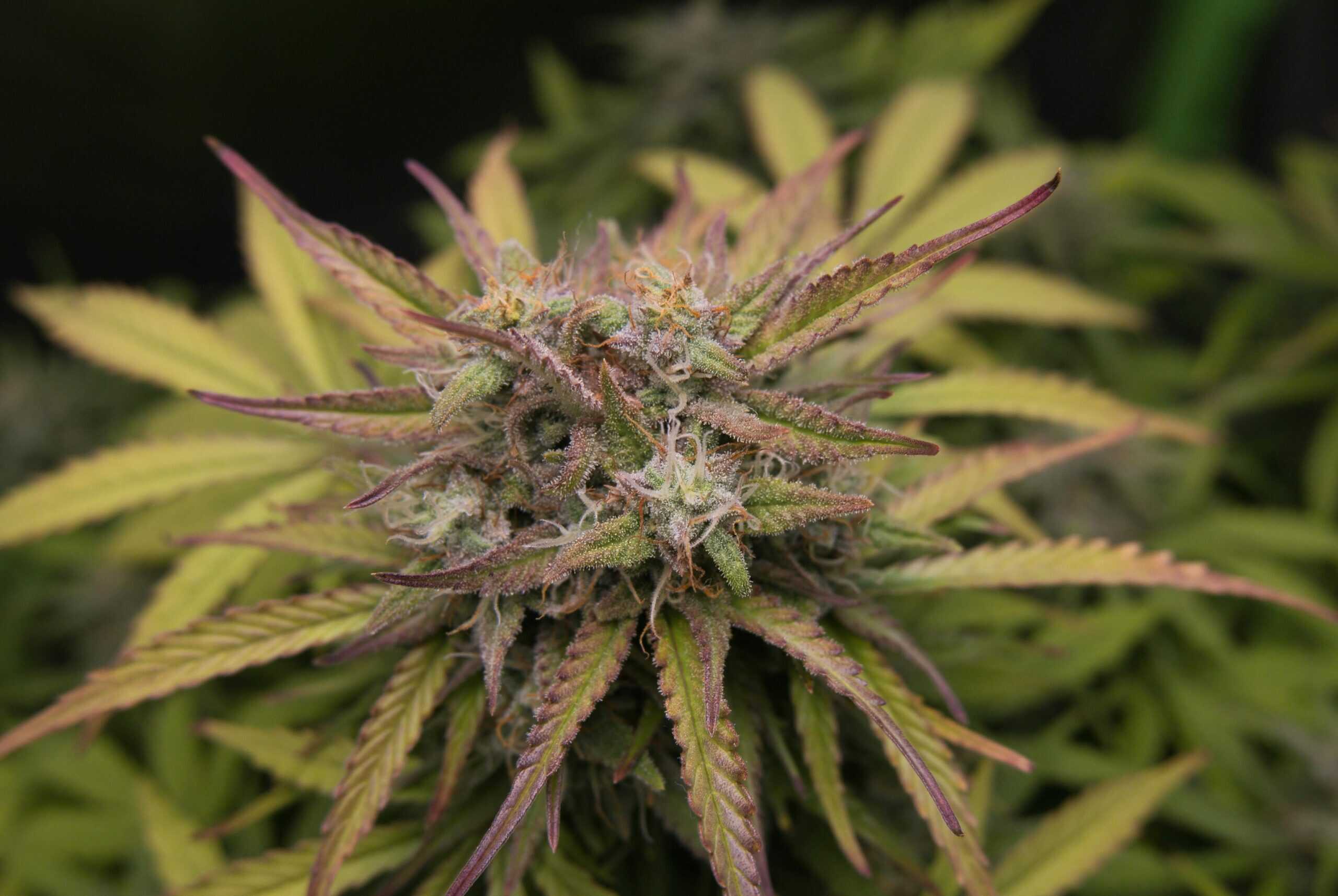
Life is brimming with botanical secrets, and cannabis is no exception. If you’ve ever wondered why certain cannabis strains have that fresh scent, or why some cultivars feel more uplifting than others, you’re likely sensing the influence of cannabis terpinolene. By exploring this often-underrated terpene, you’ll see how it contributes to unique flavors, potential benefits, and a distinct cannabis experience. Let’s dive into what makes terpinolene stand out among cannabis terpenes, and how you can incorporate it into your routine.
Key Takeaways
- Terpinolene may play a key role in giving many cannabis strains their energizing effects and bright, piney aroma
- Research published on terpinolene shows it might have a positive effect on cancer cells, heart disease, and chronic inflammation
- You’ll find terpinolene in more than just cannabis—this dominant terpene also appears in tea tree oil, fir trees, nutmeg, and apples
What Sets Cannabis Terpinolene Apart from Other Terpenes?
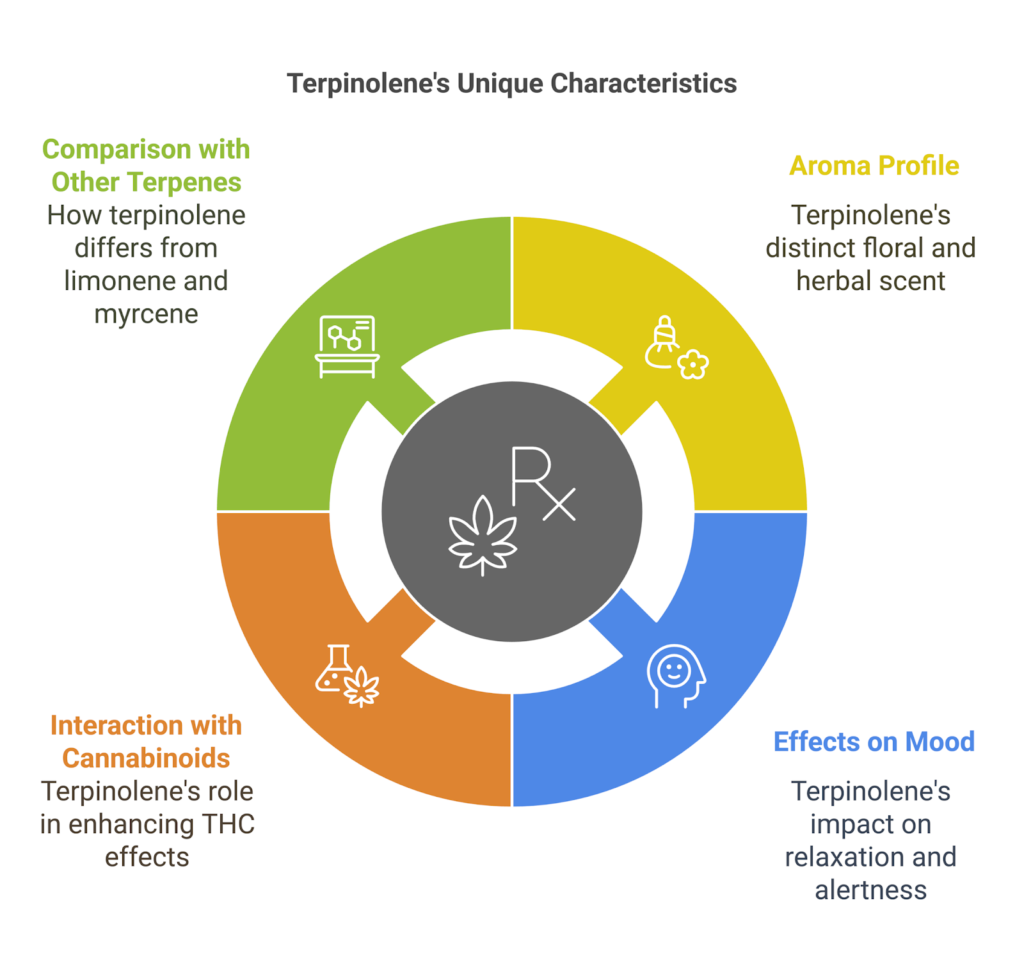
Terpinolene is often overshadowed by bigger names like limonene or myrcene, but it still commands attention. It’s part of most terpenes built on isoprene units, giving it a unique molecular structure that creates its signature crisp, fresh aroma. When you smell a strain that reminds you of pine forests or a light citrusy twist, there’s a decent chance you’re encountering terpinolene terpene.
Terpinolene’s Distinct Aroma and Structure
You can think of terpinolene as a quiet achiever. It’s present in soaps, perfumes, and even essential oil mixtures, thanks to its potent antioxidant and antibacterial properties.
Before looking at its specifics, here’s a short list to help you recognize where it appears:
- Tea tree oil (renowned for its antibacterial capabilities)
- Fir trees (contributing that invigorating, woodland scent)
- Nutmeg, apples, and certain sativa plants
Its molecular arrangement relies on those isoprene units common to other terpenes found in the cannabis plant, but terpinolene’s chemical “twist” sets it apart in terms of scent and potential benefits.
Even though terpinolene is a key role player in some high THC cultivars, it’s also found in low doses across many cannabis products. The fact that it’s so widespread in nature might be one reason it carries a familiar, comforting smell for many people.
Comparison: Terpinolene vs. Other Common Terpenes
Sometimes, a comparison chart helps shine a light on subtle distinctions among terpenes:
| Terpene | Aroma Profile | Potential Effects | Found In |
| Terpinolene | Fresh, piney, citrusy | Energizing or mildly sedative | Cannabis (Dutch Treat), tea tree oil, apples |
| Myrcene | Earthy, musky, herbal | Relaxing, sedative | Mangoes, hops, many cannabis strains |
| Limonene | Zesty, citrusy | Uplifting, mood-enhancing | Citrus rinds, sativa-dominant strains |
| Linalool | Floral, lavender | Calming, anxiety relief | Lavender, some cannabis cultivars |
By understanding these distinctions, you get a clearer picture of why terpinolene is such a standout. While most terpenes share certain structural traits, each one brings something special to the table, whether it’s the bright, forest-like essence of terpinolene or the soothing floral tones of linalool.
How Does Terpinolene Interact with Cannabinoids in the Cannabis Plant?
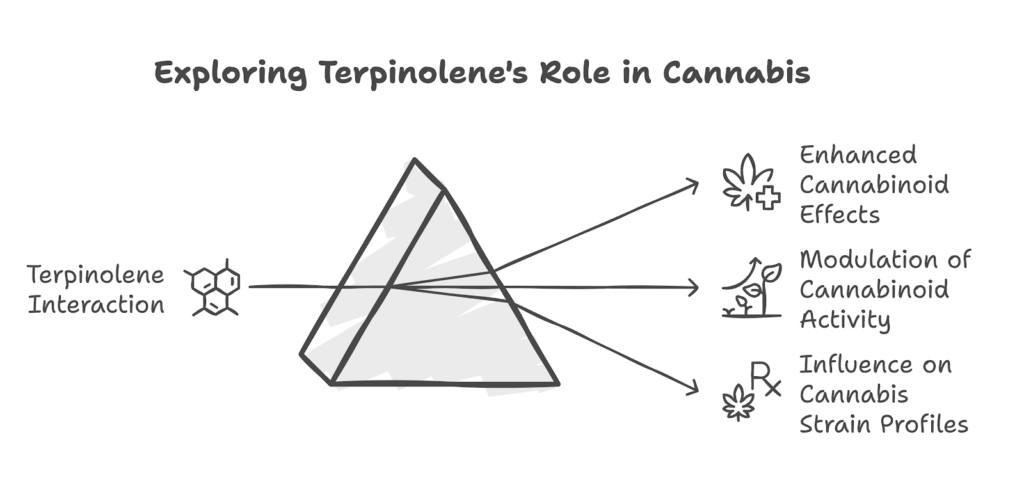
Because cannabinoids like THC and CBD garner so much attention, terpenes can sometimes get lost in the background. Yet terpinolene significantly shapes your cannabis experience, particularly when combined with other terpenes and cannabinoids.
Its potential benefits range from energizing effects to mild sedative effects, depending on dose, strain, and individual body chemistry.
The Power of Combination
Terpinolene may have the most impact when working alongside cannabinoids and other compounds in the cannabis plant. This synergy, often called the “entourage effect”, can influence how you feel.
Before checking out some highlights, note that everyone responds differently:
- Combining terpinolene with CBD may take the edge off anxiety by providing a sense of clarity
- High THC strains featuring terpinolene could amplify psychoactive sensations for some
- Balancing the ratio of terpinolene and other terpenes might smooth out unwanted side effects
It’s crucial to remember that your heart rate, tolerance, and personal preferences play a part. The sweet spot often comes down to careful trial and error.
Once you find the right combination, you could discover that terpinolene brings a positive effect to your day—maybe a spark of creative thinking or a soothing wave that doesn’t weigh you down.
Why Some Cultivars Highlight Terpinolene?
Dutch Treat, Jack Herer, and Golden Pineapple are popular cannabis strains that showcase terpinolene in their aroma and effects. These cultivars gained a reputation in the cannabis community for their uplifting yet balanced nature.
Before listing why these strains might catch your eye, here’s a small reminder: everyone’s endocannabinoid system is unique:
- Dutch Treat offers a punchy, pine-fresh profile that can feel both mentally stimulating and physically relaxing
- Jack Herer, a classic sativa, tends to give you a clear-headed focus without knocking you out
- Golden Pineapple stands out for its tropical twist and robust flavor thanks to the terpinolene terpene
Choosing a terpinolene dominant strain can be a game-changer if you’re seeking a fresh perspective while avoiding heavy sedation.
What Are the Potential Benefits and Effects of Terpinolene?
Research published in various scientific journals suggests terpinolene may function as an anticancer agent, showing promise in combating certain cancer cells. Additionally, early findings tie terpinolene to possible protective effects against heart disease.
While more studies are needed, these glimpses into its capabilities intrigue both medical researchers and everyday cannabis enthusiasts.
Exploring the Science Behind Terpinolene
Scientists have been digging into how terpinolene’s antibacterial and antioxidant properties might provide potential benefits. Some suspect that it could help reduce chronic inflammation, a key factor implicated in multiple health concerns.
Let’s consider a handful of these notable points:
- It may curb the growth of cancer cells, making it an exciting focus of ongoing research
- Antioxidant action can defend your body’s cells against harmful compounds
- Some preliminary data suggest it might lessen risks linked to heart disease
Though no single compound can offer a magic solution, combining terpinolene with cannabinoids like CBD or THC in low doses may enhance its overall impact.
A balanced approach that takes into account personal physiology could be the gateway to harnessing the more subtle advantages terpinolene brings. Whether it’s potential anticancer properties or simply a vibrant aroma, terpinolene appears to hold plenty of promise.
Staying Mindful of Possible Side Effects
Just like with other terpenes and cannabinoids, terpinolene isn’t free from side effects. Some individuals report mild anxiety or an increased heart rate when consuming high THC strains containing high levels of terpinolene.
Before we break down a few safety pointers, keep in mind each body reacts differently:
- If you’re prone to anxiety, test lower terpinolene strains first
- Observe how your body and mind respond over time
- Consider strains with balanced THC/CBD levels if you want to mitigate any nervous energy
Finding the sweet spot often means adjusting your dosage or trying different cultivars until you land on what makes you feel best.
How Can You Incorporate Terpinolene into Your Cannabis Experience?
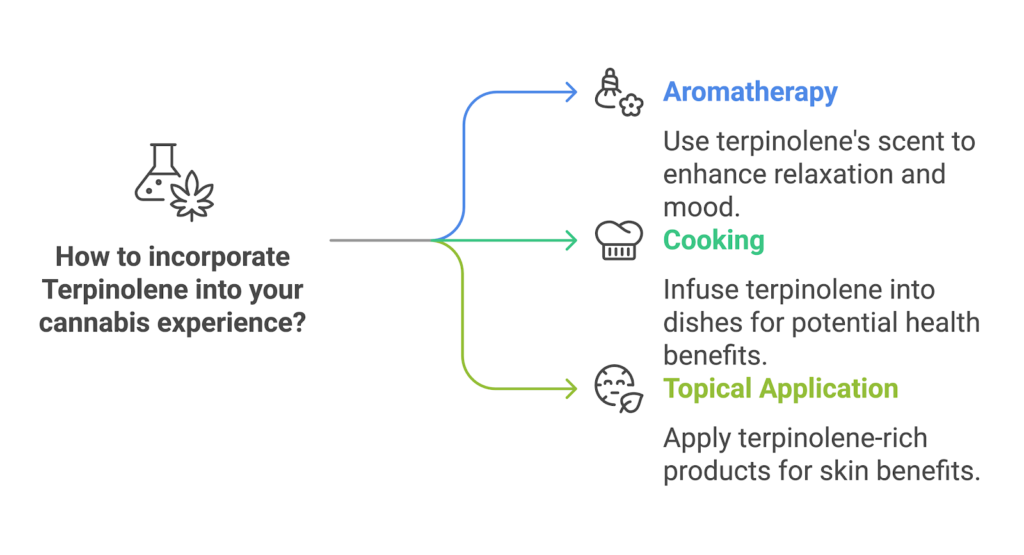
Whether you’re already a devoted cannabis enthusiast or just exploring, there are straightforward ways to include terpinolene in your routine. From the products you buy to how you use them, adding terpinolene’s fresh spark can be as simple or advanced as you like.
Selecting Terpinolene Dominant Strains
If you love a crisp, uplifting aroma, keep an eye out for “terpinolene dominant” labels on cannabis strains or ready-made cannabis products. Cultivars like Dutch Treat or Jack Herer are a good place to start.
Before you begin your search, here’s a short list of tips:
- Seek product descriptions that mention pine, citrus, or fresh forest scents
- Research strain reviews or lab reports that list terpene profiles
- Experiment with bud, concentrates, or even cannabis-infused edibles featuring terpinolene
Exploring new strains often broadens your cannabis horizons and allows you to find that perfect personal fit.
A balanced approach to inhalation or oral consumption can unlock terpinolene’s potential without overwhelming you, especially if you’re mindful of dosage and THC levels.
Going Beyond Inhalation: Topicals and Aromatherapy
Terpinolene isn’t limited to smoking or vaping. You’ll find it in tea tree oil blends, perfumes, and lotions, giving you multiple avenues to harness its aroma and possible antibacterial traits.
Consider these ways to explore terpinolene away from the pipe:
- Use topicals infused with terpinolene if you prefer a localized, non-psychoactive method
- Blend terpinolene-rich essential oil with your favorite carrier oil for a soothing massage
- Try aromatherapy diffusers that feature terpinolene from sources like fir trees or nutmeg
A gentle whiff or a dab of a terpinolene-infused product can be surprisingly refreshing and might bring a bright note to your daily routine.
Conclusion
Cannabis terpinolene serves as a reminder that every compound in the cannabis plant has its own story to tell. While THC and CBD often grab the headlines, the terpinolene terpene quietly holds a place of importance, offering fresh, piney notes and possible benefits linked to heart disease, cancer cells, and chronic inflammation. By seeking out strains like Golden Pineapple or Jack Herer, you can explore what makes terpinolene dominant varieties stand out. Whether you’re mixing essential oil blends, sampling new cannabis cultivars, or simply curious about the chemistry behind fresh aromas, terpinolene deserves a spot on your radar.
Frequently Asked Questions
Is terpinolene only found in cannabis?
Not at all. Although it’s a prized component in many cannabis strains, you’ll also encounter terpinolene in tea tree, nutmeg, apples, and fir trees. This broad presence highlights why it’s included in everyday items like soaps and perfumes.
Can terpinolene help with anxiety or stress?
Terpinolene may offer an energizing lift in low doses, but its effects can vary. For some, combining terpinolene with high THC cultivars might increase anxiety or heart rate. It’s always wise to start small and see how you respond.
Do you need high-terpinolene strains for the best benefits?
Not necessarily. While a terpinolene dominant strain might showcase its aroma and potential benefits more prominently, even strains with modest levels can provide a subtle fresh scent and positive effect. Experimentation is key to discovering what suits you best.