
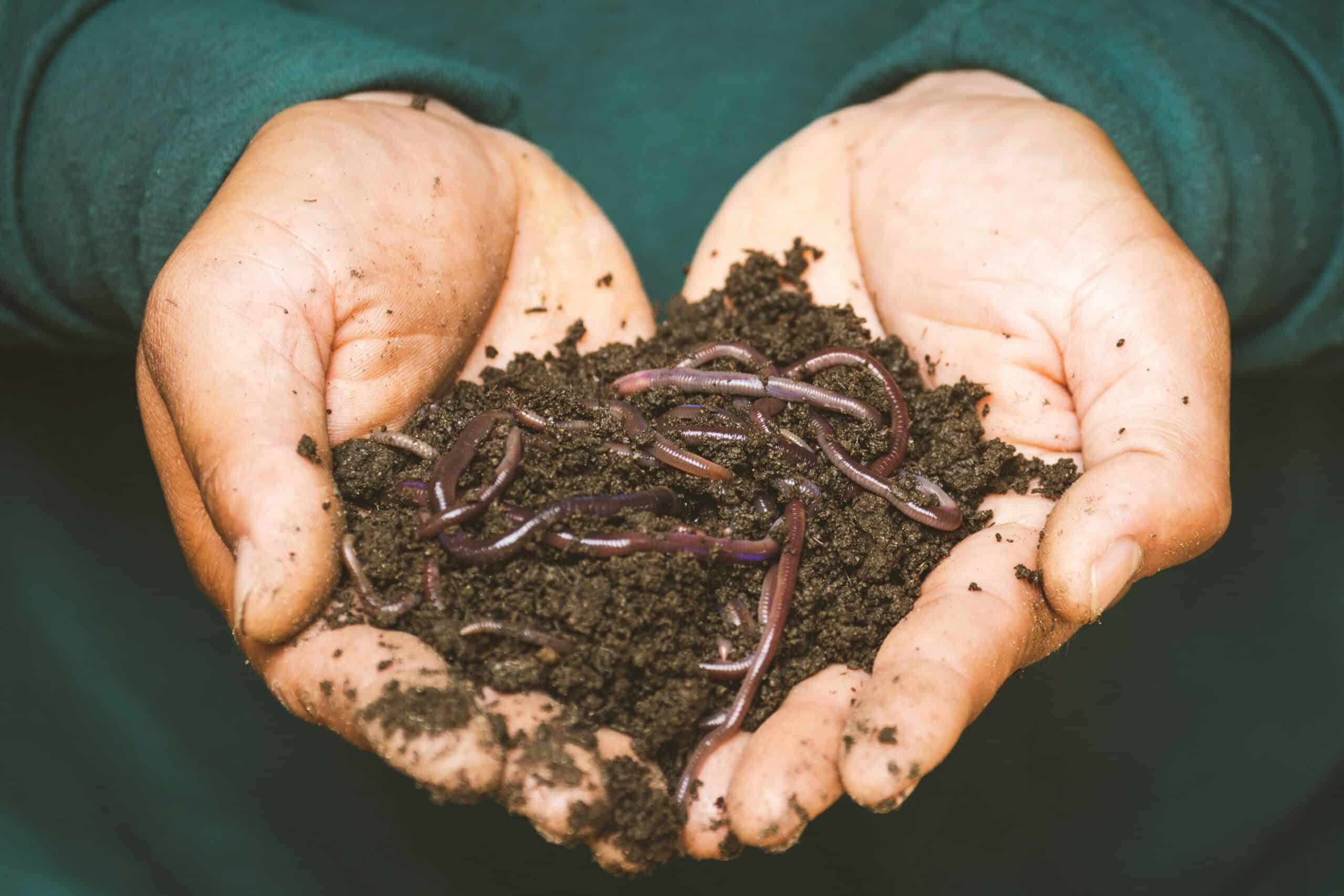
Worm castings are a nutrient-rich organic fertilizer made from the waste of earthworms. These castings enhance soil quality and provide essential nutrients that support healthy plant growth. By using worm castings, you can boost the vigor of your cannabis plants while also promoting a thriving ecosystem in your garden.
Utilizing worm castings effectively can boost yields, and since it supports sustainable, well-balanced gardening and soil health, farmers are increasingly using this natural alternative.
In addition to nourishing soil, worm castings boost microbial activity. As you learn more, you’ll find simple methods to employ worm castings to provide your cannabis plants with the optimum growing environment.
Key Takeaways
- Worm castings improve soil and cannabis plant health.
- Proper usage increases cannabis production.
- Gardeners may make worm castings at home.
Understanding Cannabis Worm Castings
Nutritional earthworm castings are made from worm excrement. This organic matter forms from the decomposition of various food scraps. As worms digest these materials, they produce castings that are beneficial for your cannabis plants.
Gardening using worm castings improves soil. They strengthen the soil and improve water retention, helping you grow marijuana healthily. Castings are also rich in nutrients. Many important micronutrients like potassium, phosphorus, and nitrogen are present.
Castings have beneficial microorganisms. Microbe communities strengthen the soil and improve plant nutrient absorption.
Vermicompost and worm castings are often confused by cannabis growers. Both are valuable, yet they differ significantly. Vermicompost is less concentrated and contains more organic material.
Worm casting benefits:
- Promotes soil health by improving soil aeration and structure.
- Provides invaluable nutritional content to cannabis plants
- Increases soil microbial activity.
- Provides a safe type of fertilizer for plants, which is less likely to cause nutrient burn.
Gardening with worm castings helps cannabis thrive.
Benefits of Using Worm Compost to Grow Marijuana
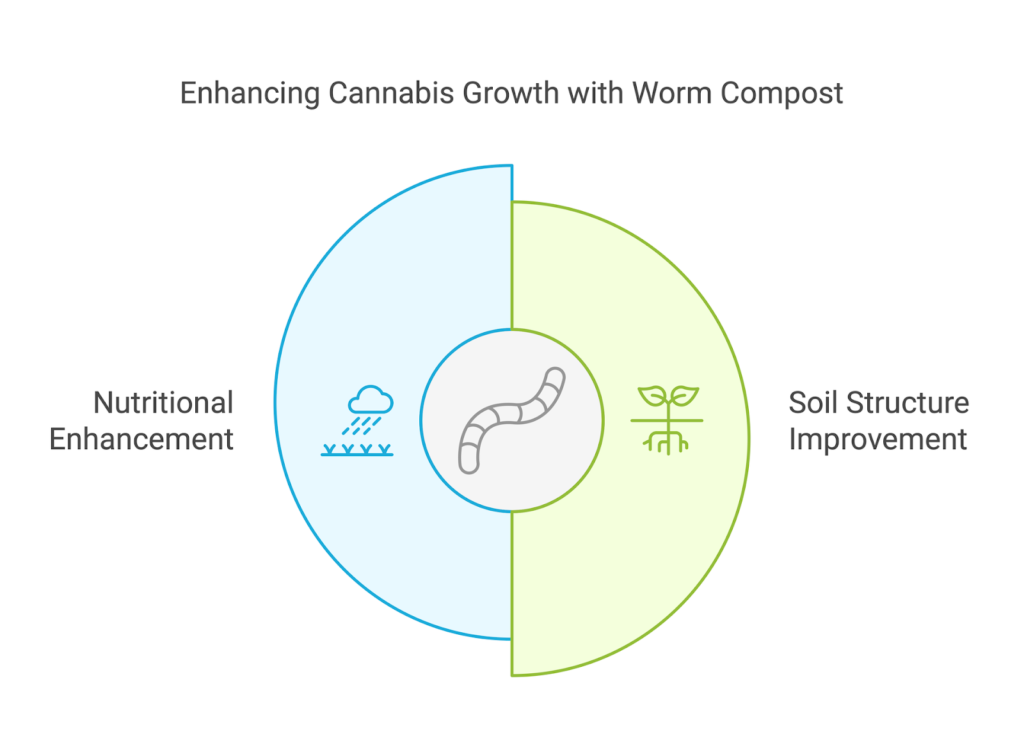
Worm castings are a natural fertilizer that benefits cannabis for several reasons. They boost soil nutrients and structure, helping plants grow.
Soil Structure Improvement
Worm castings improve soil. They help beneficial microbes proliferate. Plants use these bacteria to decompose organic matter and release nutrients.
Worm castings improve land drainage and aeration. Thus, water may flow through the soil more easily, preventing waterlogging and stimulating root development. Well-structured soil promotes plant development.
To keep cannabis plants hydrated, worm castings improve moisture retention. This moisture retention reduces watering, making growth more effective.
Nutritional Enhancement
The minerals in worm castings are essential for cannabis. They have a good potassium-phosphorus-nitrogen ratio. Flower and leaf development depends on these nutrients, making them vital for plant growth.
Worm castings’ nitrogen is vital. Leaf development and plant health depend on it. Fertilizer made from worm castings helps plants absorb nitrogen.
In addition to macronutrients, worm castings contain calcium, magnesium, and iron. Stronger plants and higher yields depend on these micronutrients. Using worm castings can help growers ensure cannabis plants have enough nutrients.
How to Use Worm Casting Fertilizer Effectively
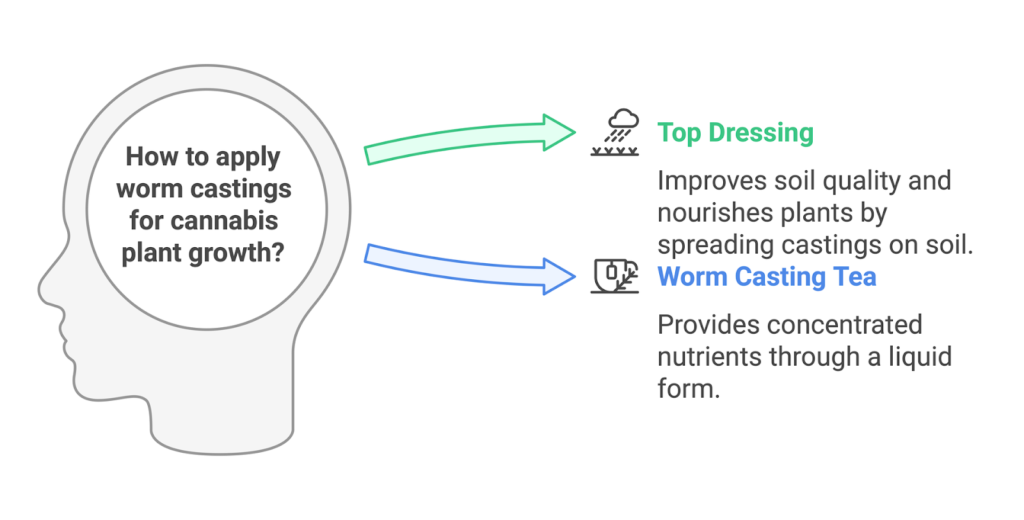
Worm castings boost cannabis plant growth and health. Making worm casting tea and top dressing are efficient ways to apply castings. Every method has plant benefits.
Top Dressing Technique
Top dressing improves soil quality and nourishes cannabis plants. Spread worm castings on the soil to use this strategy.
Steps to follow:
- Preparation: Use fresh, nutrient-rich, high-quality worm castings.
- Application: Apply about 0.5–1 cup of worm castings per plant. Do let it touch the stem and spread the worm castings evenly around the plant’s base.
- Watering: After applying castings, water plants to help them settle.
Plant health is improved by improving soil structure, microbial activity, and nutrient supply.
Making and Using Worm Casting Tea
Liquid worm casting tea provides concentrated nutrients to cannabis plants. It’s easy to make and boosts plant growth.
Making worm casting tea:
- Materials: You need worm castings, water, and a clean container. Use a mesh bag to store the castings.
- Brewing: Mix five gallons of water and one cup of worm castings. Steep it for 24–48 hours, stirring occasionally.
- Straining: Strain the liquid to remove solids. Tea can be sprayed on plants or watered.
This nutrient-rich tea provides cannabis plants with important nutrients.
Producing Worm Castings at Home
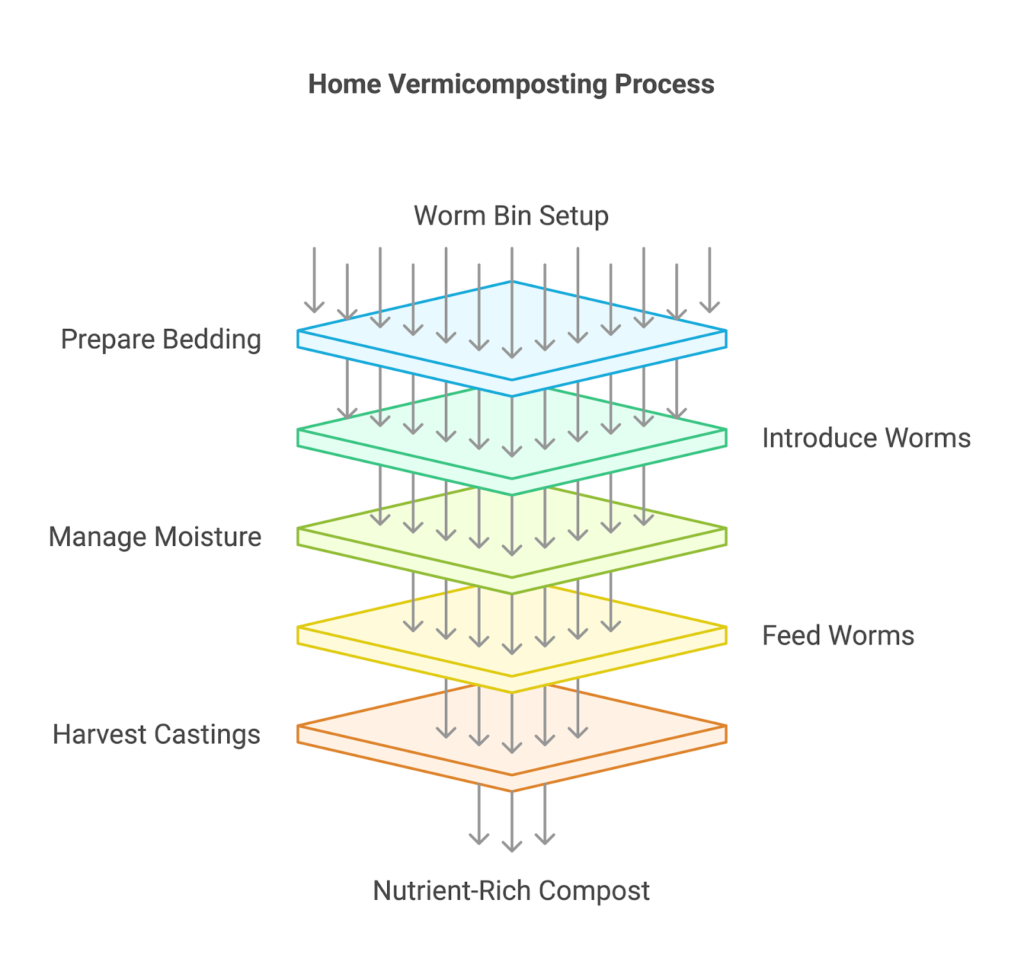
Homemade worm castings enhance cannabis soil and are fun to prepare. With a simple method and great attention to detail, you may make plant-friendly vermicompost. First, start here.
Setting Up Vermicomposting
Choose a decent worm bin. Use a wooden or plastic box. Maintain appropriate drainage holes to minimize moisture.
Prepare the worms’ bedding. You may use coconut coir, cardboard, or ripped newspaper. Create a 4-to-6-inch layer. Put a handful of soil in to introduce beneficial bacteria.
Choose red wigglers for composting. Throw out around a pound of worms. Add coffee grounds, vegetable peels, and leftover fruit. This combination will feed your worms well.
Managing the Vermicompost Process
Your vermicomposting system needs regular monitoring. Avoid overwatering the container. Too much moisture might hurt worms, while too little can dry them up.
Feed your worms a balanced diet for healthy castings. Meat, dairy, and fatty diets attract bugs and stink. Worms should be fed half their weight each week.
Check the compost every two weeks. Harvest worm castings months later. Simply keep the worms in one part of the bin and extract the compost from the other. This process produces nutrient-rich compost for cannabis plants.
Troubleshooting Common Issues with Organic Worm Castings for Cannabis Growing
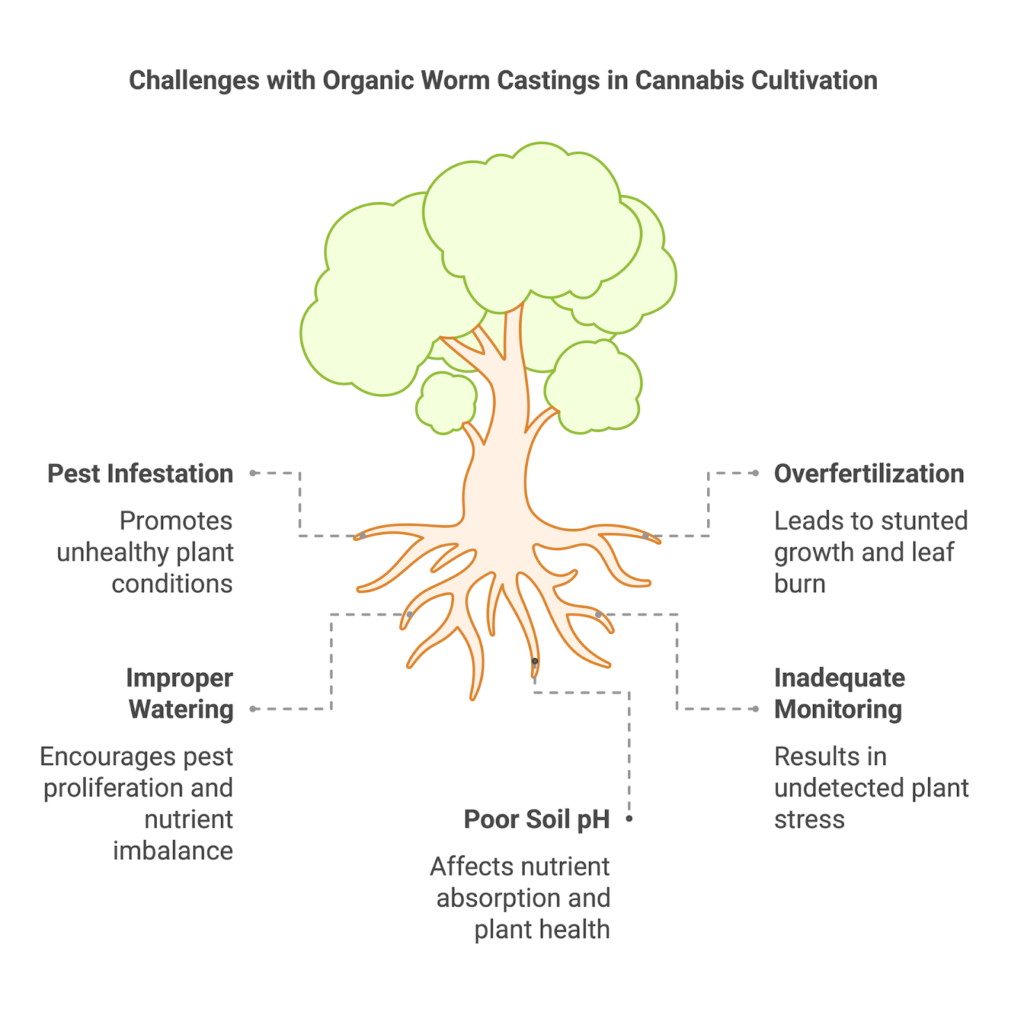
Although worm castings can benefit cannabis plants, the practice can also have some issues. Addressing common challenges like pests and overfertilization helps keep your garden healthy.
Preventing and Controlling Pests
Worm casting pests are a major issue. Fungus gnats thrive in damp environments, often seen in potting soil. To prevent pests, keep the soil slightly wet and allow it to dry between waterings.
If pests appear, try introducing beneficial microbes that inhibit gnat development. Gnat populations may be tracked and controlled with yellow sticky traps.
For better results, use Bacillus thuringiensis (Bt). This controls larvae without harming plants. Keep compost containers and equipment clean to avoid pests.
Management of Overfertilization
Worm castings can overfertilize cannabis. Overnutrition might cause stunted growth or leaf burn. Due to this, start with a few applications of worm castings.
Clean water dilutes nutrients in the soil. During this process, monitor your plants. The pH and nutrients should be tested. The ideal pH for cannabis cultivation is 6.0–7.0.
Try a different worm casting mix if your plants show signs of stress, such as leaf curling or yellowing. Increasing organic materials helps achieve equilibrium. Thus, subsequent nutritional spikes may be prevented.
Bottom Line
Worm castings offer an eco-friendly, nutrient-rich solution to optimize cannabis plant growth. By enhancing soil health, boosting microbial activity, and providing essential nutrients, they help create a thriving environment for healthy, high-yielding plants. Incorporating worm castings into your gardening routine, whether through top dressing or worm tea, ensures your cannabis plants receive the care they need for sustainable and productive growth.
Frequently Asked Questions on How To Make Worm Castings for Cannabis Plants
Worm castings make cannabis growing fun. Here are commonly asked questions concerning their usage, benefits, and effects on plants.
What are the benefits of worm castings in flowering cannabis?
Worm castings help flowers grow while blossoming. Phosphorus and nitrogen are essential for bud development. The castings’ microbial life improves soil health and nutrient availability.
How can worm castings be used most effectively for growing cannabis?
Mix worm castings into the soil before planting or top-dress existing plants. To boost nutrition absorption, create worm casting tea. Break down the castings completely for optimal results.
What is the recommended amount of worm castings for top-dressing cannabis plants?
Top-dress cannabis plants with 1–2 inches of worm castings. Plant size and soil nutrient needs influence how much is needed. Apply sparingly to avoid nutrient burn.
Can worm castings be beneficial for autoflowering cannabis strains?
Indeed, worm castings help autoflowering cannabis. They provide a gentle release of nutrients that can promote healthy growth throughout the shorter life cycle of these plants.
Worm castings on cannabis should be applied how often for optimal results?
Apply worm castings every 4–6 weeks throughout the growing season. By doing this often, you may feed your plants nutrients without overworking the soil. Match plant needs and growth stage.
How to prepare cannabis-specific worm casting tea?
Use a mesh bag to create worm casting tea using 1 cup of castings. Steep the bag in five liters of water for 24–48 hours. The nutrient-rich tea may be diluted and administered to cannabis plants after steeping and bag removal.