When cultivating cannabis, proper nutrient management is essential for robust plant growth and abundant harvests. The difference between poor outcomes and thriving plants can be determined by knowing your fertilizer options. Because synthetic nutrients provide a quick and effective means of supplying necessary components, gardeners looking for large yields frequently choose them.
However, synthetic fertilizers, while powerful, entail dangers such as nutrient burn caused by overfeeding. Striking a balance between effectiveness, soil health, and long-term plant impact is vital. With the right knowledge and practices, you can harness synthetic nutrients to maximize your cannabis garden’s potential.
Important Lessons
- The growth and output of cannabis are improved by synthetic fertilizers.
- Overfeeding can lead to nutrient burn; balanced application is crucial.
- Understanding plant nutrient needs ensures successful cultivation.
Understanding Cannabis Plant Nutrition
Cannabis grows best on a healthy diet. Understanding vital nutrient functions helps you choose between organic and synthetic nutrient solutions.
Vital Nutrient Functions
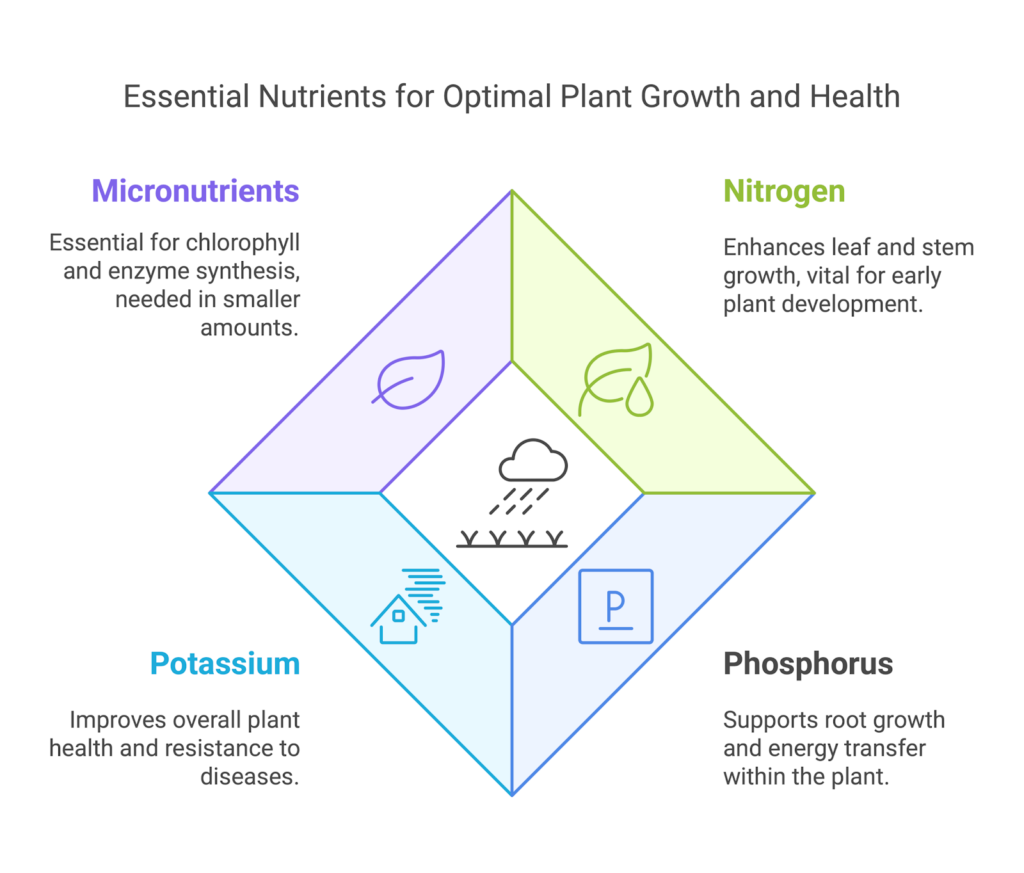
- Nitrogen enhances leaf and stem growth.
- Phosphorus aids root growth and energy transfer.
- Potassium boosts plant health and disease resistance.
Although needed in smaller amounts, micronutrients are just as important. Iron, zinc, and manganese aid chlorophyll and enzyme synthesis. Lack of appropriate nutrients can impede growth and reduce harvests.
Organic Nutrients versus Synthetic
Growers have two primary options for feeding cannabis plants: organic and synthetic nutrients.
- Organic nutrients come from natural sources such as manure, compost, and seaweed. Although they release nutrients gradually, organic sources promote healthy microbial activity and enhance soil health.
- Designed chemically to deliver nutrients precisely, synthetic options are perfect for immediate, quantifiable results. Many hydroponic gardeners prefer synthetic fertilizers due to their effectiveness.
You should choose a method based on your desired growing style and cultivation goals; organic and synthetic fertilizers each offer unique advantages.
Fertilizer Types and Their Chemical Make-Up
Organic Fertilizer Sources
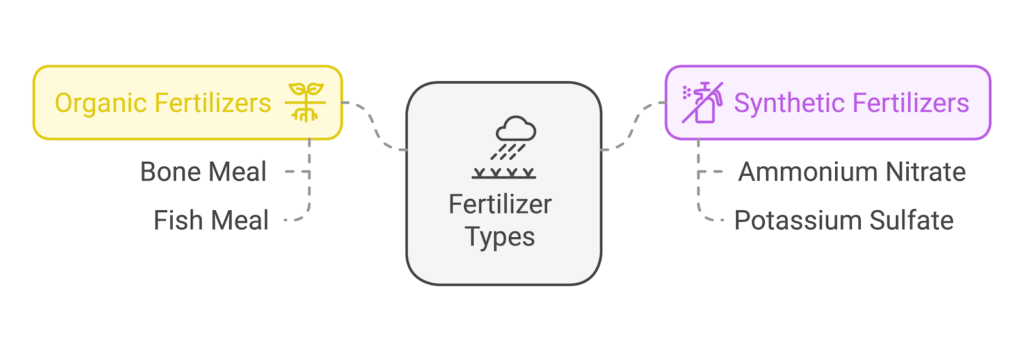
Over time, the soil is naturally enhanced by organic fertilizers. Examples include:
- Bone meal, which is phosphorus-rich, promotes flowering and root growth.
- The high nitrogen content of fish meal promotes rapid growth of leaves and stems.
These fertilizers produce healthier plants and more fragrant buds by enhancing microbial activity, improving soil structure, and releasing nutrients gradually. Organic approaches also reduce chemical residues in the end product, which is beneficial for both consumer health and environmental sustainability.
Ingredients of Synthetic Fertilizer
Synthetic fertilizers are manufactured with specific nutrient ratios tailored for different growth stages. Common examples include the following:
- Ammonium Nitrate: Delivers a fast nitrogen boost, creating luxuriant foliage.
- Potassium Sulfate: This nutrient is necessary for the growth of fruits and the general health of plants.
Even though synthetic fertilizers provide accurate nutritional control, overuse of them might cause soil salt buildup, which could damage plant roots. Monitor pH levels and flush the soil on a regular basis to help counteract this.
Availability of Nutrients and Soil Health
Microbial Activity and the Soil Structure
Healthy soil is made from a balanced combination of sand, silt, and clay; this helps to enable enough water circulation and aeration. Organic matter includes compost, which helps improve nutrient availability and moisture retention as well as enhance its texture.
Beneficial microorganisms break down organic matter into nutrients fit for plants, including fungi and bacteria. Further enhancing nutrient uptake are symbiotic interactions these bacteria create with roots.
How Nutrients Are Absorbed
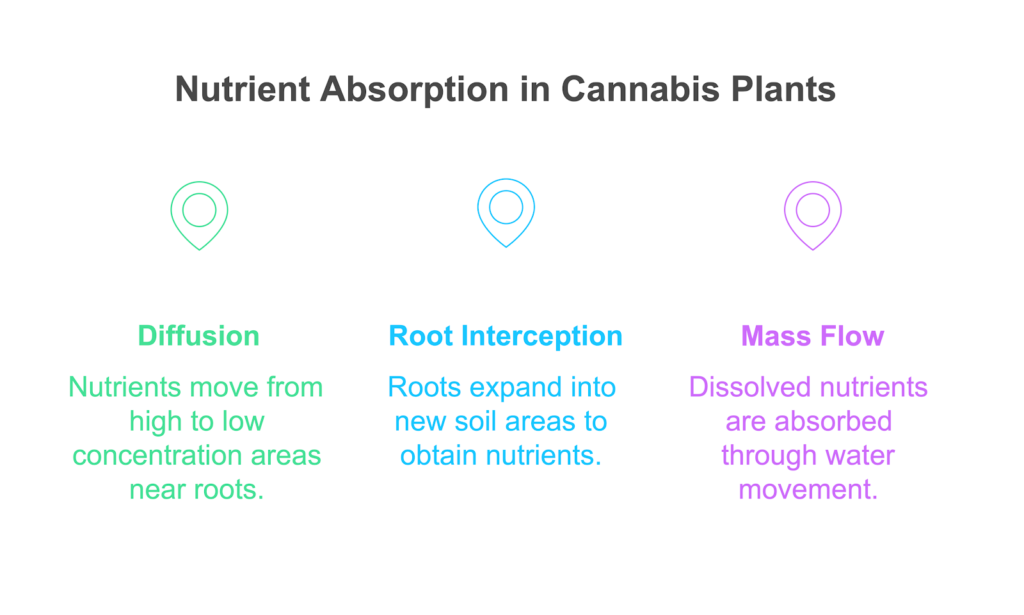
Nutrient absorption by cannabis plants occurs via mass flow, diffusion, and root interception:
- Diffusion: Near roots, nutrients shift from high-concentration regions to low-concentration regions.
- Root Interception: To obtain nutrients, roots physically expand into new soil areas, a process known as “root interception.”
- Mass Flow: Plant roots receive dissolved nutrients through water movement.
Optimizing soil health and microbial activity ensures efficient nutrient uptake and robust plant growth, which is crucial for maximizing yield and quality in cannabis production.
Cannabis Production Methods
Your choice of cultivation method—organic or synthetic, soil or hydroponic—affects how nutrients are given and absorbed.
Organic Cannabis Cultivation
The emphasis of organic farming is on natural resources and sustainability. Nutrient sources like compost and fish emulsion feed plants and soil, producing a healthy ecosystem.
Advantages of Organic Methods:
- Improved soil microbiology
- Enhanced flavors and aromas in buds
- Lower environmental impact
However, because nutrient release is slower and more difficult to precisely manage, organic farming necessitates patience.
Hydroponic and Soil Mix Setups
Hydroponic systems eliminate soil, supplying nutrients directly through water. In addition to providing accurate nutrient control, this technique speeds up growth. Popular hydroponic setups include nutrient film techniques and deep-water culture.
Combining organic and synthetic fertilizers in soil mixes gives growers who prefer soil more options. Media like coco coir, peat moss, and vermiculite help drainage and aeration, encouraging healthy root development.
The Effects of Synthetic Fertilizers
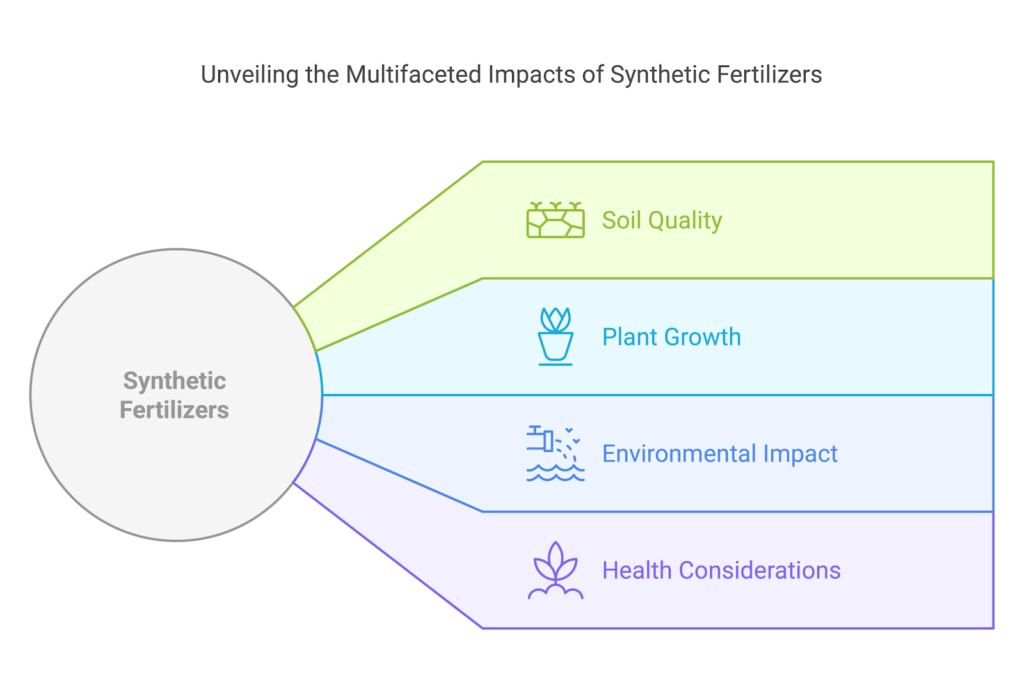
Using synthetic nutrients affects plant growth, soil quality, and the environment. Understanding these impacts helps growers strike the right balance.
Impacts on Soil, Yield, and Growth
By offering precise nutrient formulations, synthetic fertilizers can greatly increase growth and yield. Faster-growing plants and bigger, denser buds are frequently the results of this control.
However, misuse can result in nutrient burn, straining plants, and potentially lowering yields. Salt accumulation from overusing synthetic fertilizers can also weaken soil structure over time.
Environmental and Health Considerations
Runoff from synthetic fertilizers can contaminate water, among other environmental problems. Additionally, continued use may leave residues that damage the long-term health of plants and soil.
A lot of producers are using hybrid strategies, which combine organic and synthetic techniques to maximize yields while reducing their negative effects on the environment.
Conclusion
Synthetic fertilizers, which provide precise control and faster growth, have the potential to completely transform cannabis agriculture. To maximize the health and yields of your plants, you can make well-informed decisions by knowing their composition, application techniques, and effects. Striking a balance between synthetic and organic techniques enables robust growth while protecting soil and environmental health, making it a sustainable choice for producers.
Frequently Asked Questions
This section answers cannabis artificial nutrition questions. The important nutrients, comparisons with organic options, advantages of all-in-one solutions, feeding schedules, and considerations for choosing nutrient kits are all covered.
Which synthetic nutrients optimize cannabis growth?
Cannabis needs synthetic sulfur, calcium, magnesium, phosphorus, potassium, and nitrogen. These components boost plant health, growth, and flowering. Balanced nutrition mixes promote quick growth and high yields.
How do synthetic and organic cannabis nutrients differ?
Synthetic nutrients allow precise nutritional management, making it easier to meet plant needs. They work faster than organic fertilizers, which break down in the soil. However, organic nutrients boost soil health and microbial activity.
Advantages of growing cannabis with an all-in-one nutrient solution?
Complete nutrient solutions simplify feeding. Combining all nutrients in one bottle reduces nutrient imbalance and saves time. This solution also ensures your plants have a continuous supply of nutrients throughout their growth.
How should autoflowering cannabis strains receive synthetic nutrients?
When feeding autoflowering strains synthetic nutrients, start with less to avoid nutrient burn. Gradually increase dosage as the plant ages. Keep a check on your plants for excess or deficiency to adjust rates.
Can you describe a synthetic-nutrient cannabis feeding program?
During seedling, a diluted nutrition solution is fed weekly. Increase frequency to every three to four days as the plant vegetates. You can use a bloom nutrition formulation during flowering and feed every two to three days.
What should be considered when choosing synthetic cannabis nutrition kits?
Consider your strain’s needs while picking a synthetic nutrient kit. Get more vitamins and N-P-K balance. Also important is choosing products that work with your growing method—soil, hydroponics, or coco coir.