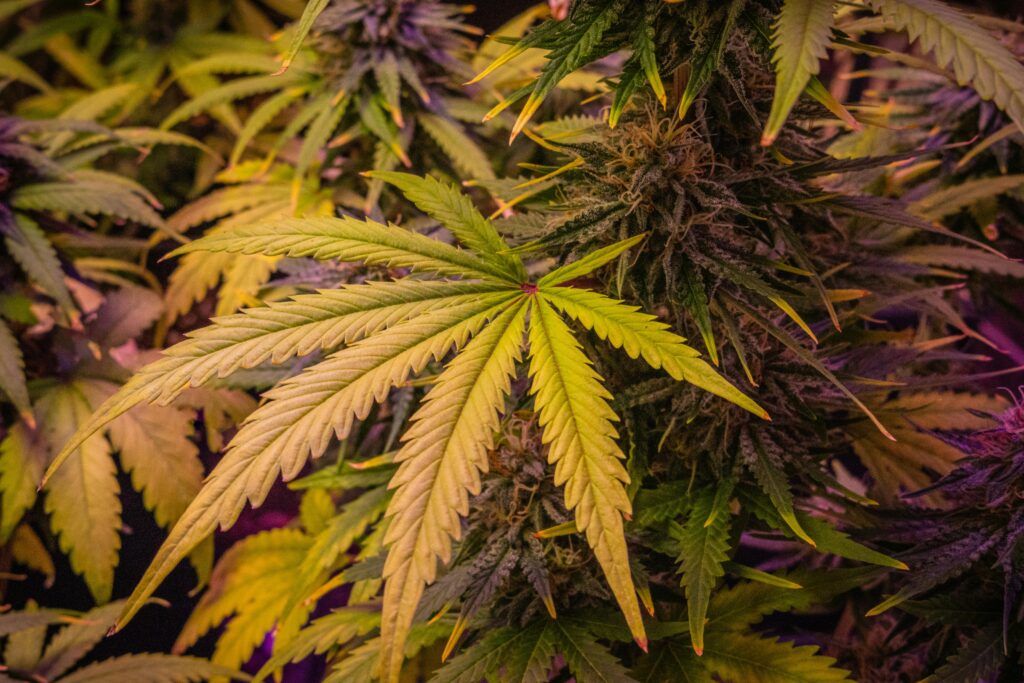
The first symptom that could mean multiple issues facing the health of the plant and yield is chlorosis, or yellowing of the leaves of the cannabis plant. It happens when the plant fails to create enough chlorophyll, resulting in disrupted photosynthesis and hence weak growth. This article details the causes and symptoms of chlorosis in cannabis plants and subsequently gives solutions on how to address the problem in advance and maintain healthy, strong plants.
Key Takeaways
- Chlorosis is usually caused by nutrient deficiencies, especially of nitrogen, magnesium, and iron, which are essential to plant life.
- Early interventions prevent extensive damage and bring the plant back to life with foliar sprays or modification in the applied nutrients.
- Good root care with the right pH of soil enhances nutrient uptake and overall hardness of plants.
Why Do Cannabis Leaves Turn Yellow?
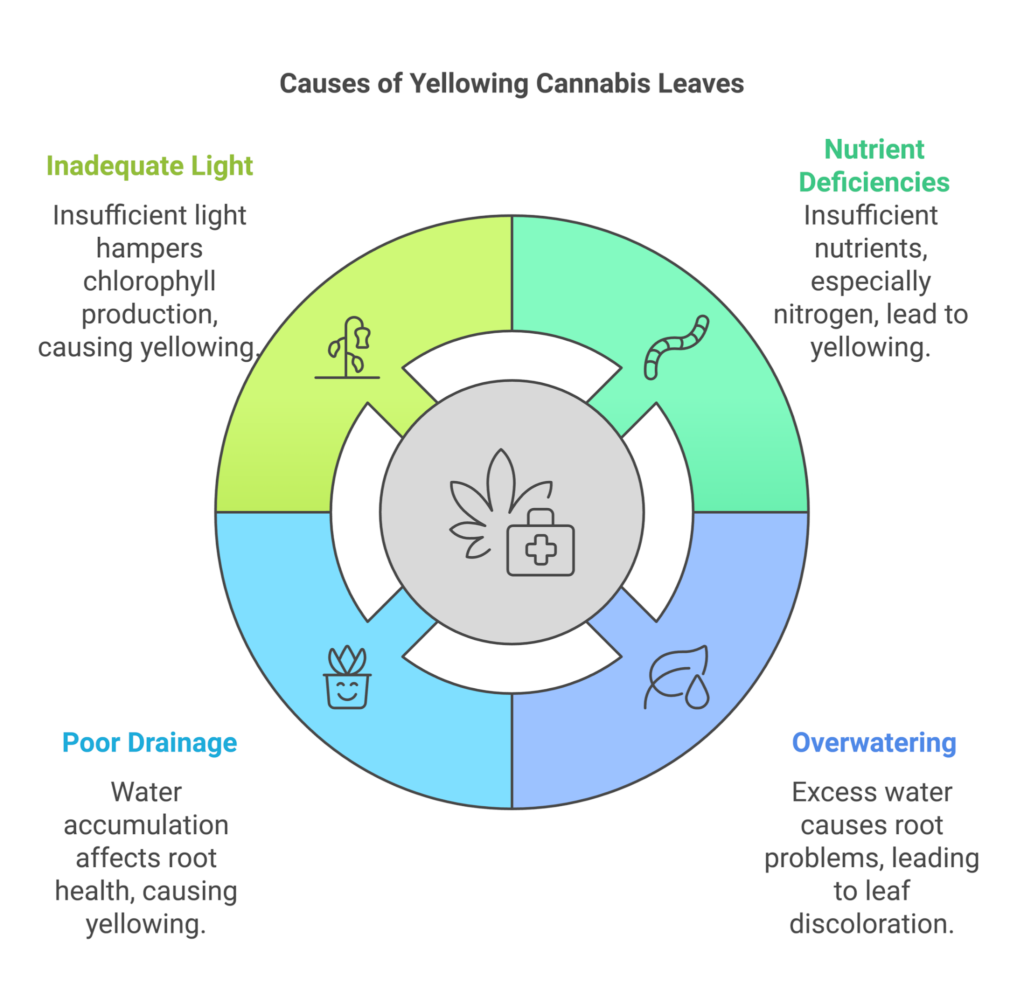
The appearance of yellow leaves, or chlorosis, signals that something is amiss within the plant’s system. Chlorophyll, which drives photosynthesis and energy production, diminishes under stress. Recognizing the root causes of chlorosis is essential for implementing effective solutions.
What Leads to Chlorosis?
- Nutrient Deficiencies: Missing key elements like iron, magnesium, or nitrogen disrupt the plant’s processes, resulting in discoloration and weakened growth.
- Iron aids in chlorophyll formation and leaf pigmentation.
- Magnesium facilitates photosynthesis by acting as a core component of chlorophyll.
- Nitrogen supports vigorous, green foliage and robust plant development.
- pH Imbalances: Nutrients may become inaccessible to the plant if soil or water pH is outside the ideal range, even when nutrients are present.
- Poor Drainage: Overwatering or compacted soil suffocates roots, hindering their ability to absorb nutrients effectively.
- Plant Diseases: Pathogens like lettuce chlorosis virus or fungal infections can exacerbate yellowing and weaken overall plant health.
Signs to Watch For
- Yellowing Leaves: The initial symptom, often seen in older leaves at the base of the plant.
- Interveinal Chlorosis: Green veins contrasted with yellow tissue between them, a hallmark of nutrient deficiencies.
- Leaf Curling or Tip Browning: A sign of prolonged stress, potentially from nutrient burn, overwatering, or root issues.
The recognition of these signs early leads to prompt corrective measures and mitigates long-lasting damage.
How Nutrients Impact Chlorosis?
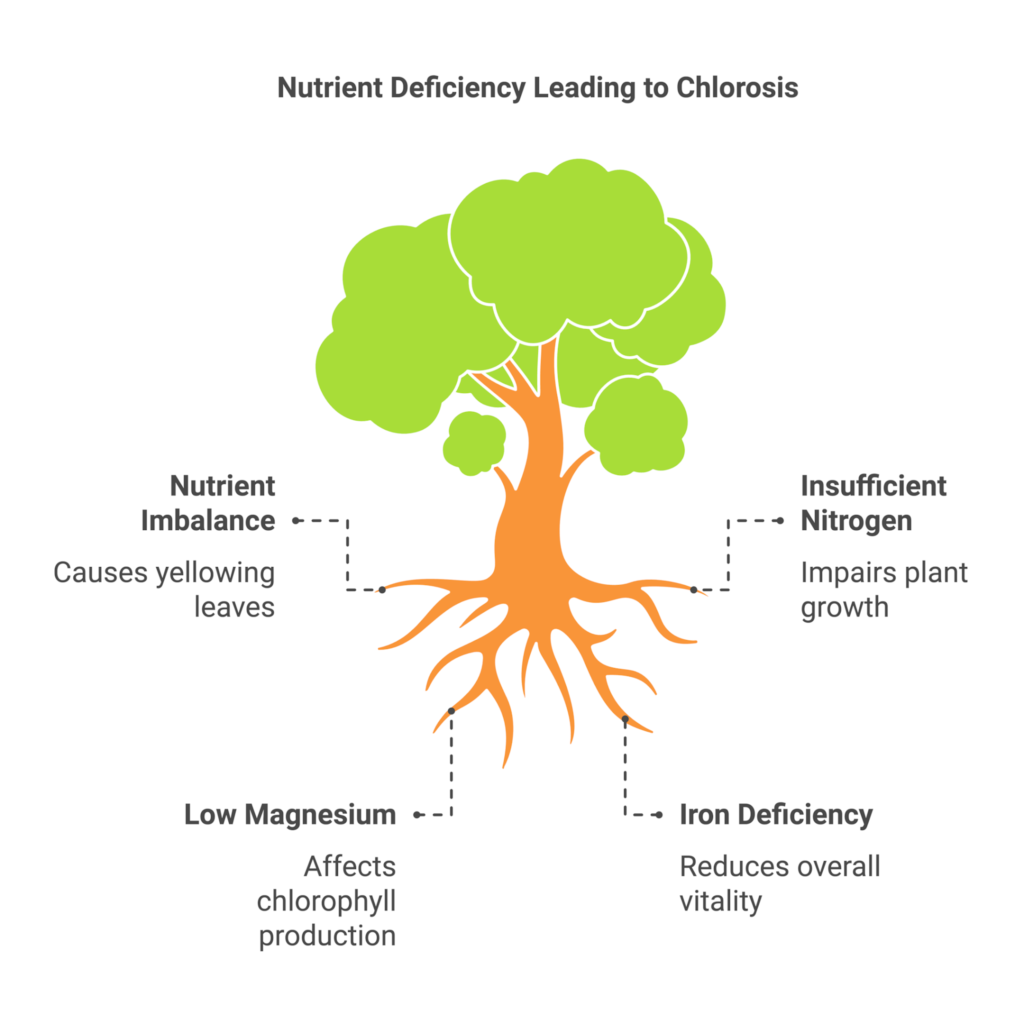
Nutrient deficiencies most commonly exhibit themselves as chlorosis. Each nutrient serves differently in maintaining plant health, and their absence precipitates certain symptoms.
Identifying Nutrient Deficiencies
Iron Deficiency
Iron contributes to chlorophyll synthesis and, therefore, plant metabolism. The characteristic symptoms include
- yellowing between the veins on the younger leaves, and this does not affect the older leaves.
- Slow growth of new leaves, which may yellow or become white.
Magnesium Deficiency
Magnesium is involved in photosynthesis and enzyme activity. Some symptoms include:
- Yellowing of leaves from the margins first and then spreading throughout the leaf.
- The oldest leaves die, displaying spots or curling up, or prematurely falling.
Nitrogen Deficiency
Nitrogen encourages large, healthy green leaves and lush growth. A deficiency causes:
- General yellowing of all leaves from lower and older foliage.
- Weak stems, slow growth, and a general decline in the health of the plant.
Restoring Balance
- Boost Nutrients: Supplement with chelated iron, magnesium sulfate (Epsom salts), or nitrogen-enriched fertilizers depending on the shortages.
- Foliar Feeding: Apply nutrients directly to leaves for fast absorption and relief.
- Adjust pH Levels: Maintain soil pH at 6.0-7.0 and hydroponic pH at 5.5-6.5 to maximize nutrient availability.
Taking action in time prevents further damage and helps recovery.
How to Prevent Chlorosis in Cannabis Plants?
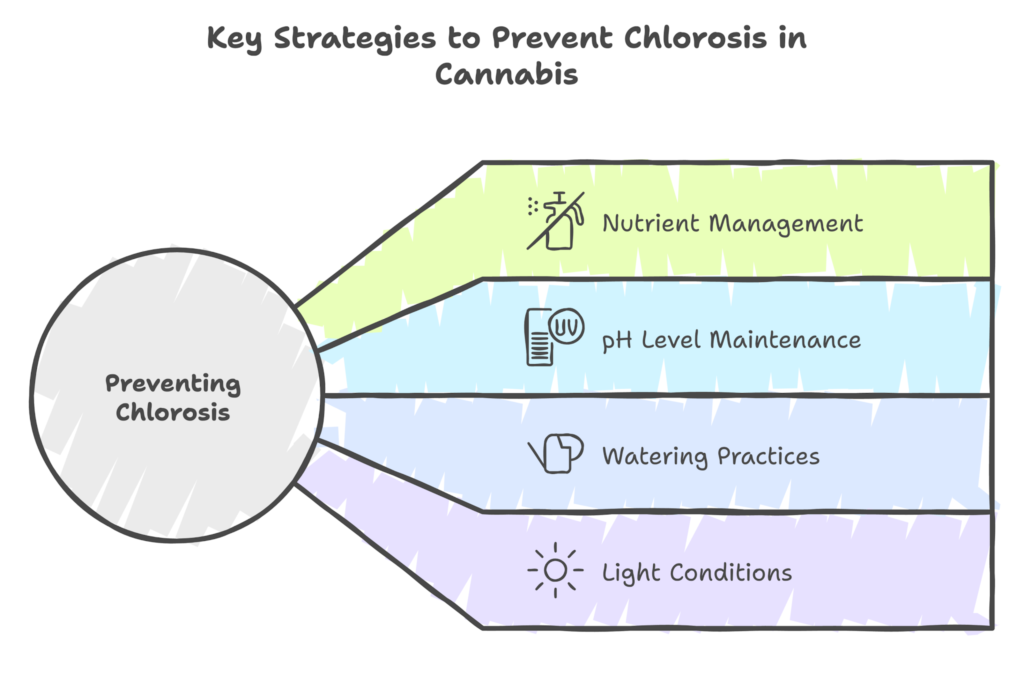
Prevention measures can easily decrease the possibility of chlorosis and ensure longevity in plant life. Planning should be done effectively and monitored continually.
Maintaining Nutrient Accessibility
Balanced Nutrient Solutions
- Ensure a balanced mix of nutrients. These include necessary macro- and micronutrients such as nitrogen, magnesium, and iron.
- Adjust nutrient levels according to the growth phase of the plant:
- Vegetative stage: higher nitrogen enhances leafy growth.
- Flowering phase-balanced phosphorus and potassium ensure more bud development.
Avoid Nutrient Lockout
- Test and adjust soil or water pH regularly to ensure nutrients are available.
- Flush the root zone periodically to remove salt buildup, which can block nutrient uptake.
Optimizing Growing Conditions
Enhancing Root Health
- Use well-aerated, draining soil or growing media to prevent waterlogging.
- Aerate compacted soil to improve oxygen flow and encourage robust root systems.
Creating the Ideal Environment
- Maintain consistent humidity and temperature levels to minimize stress.
- Adequate light for photosynthesis and energy
Other than chlorosis, these practices promote healthy and productive plants.
How to Diagnose and Treat Chlorosis?
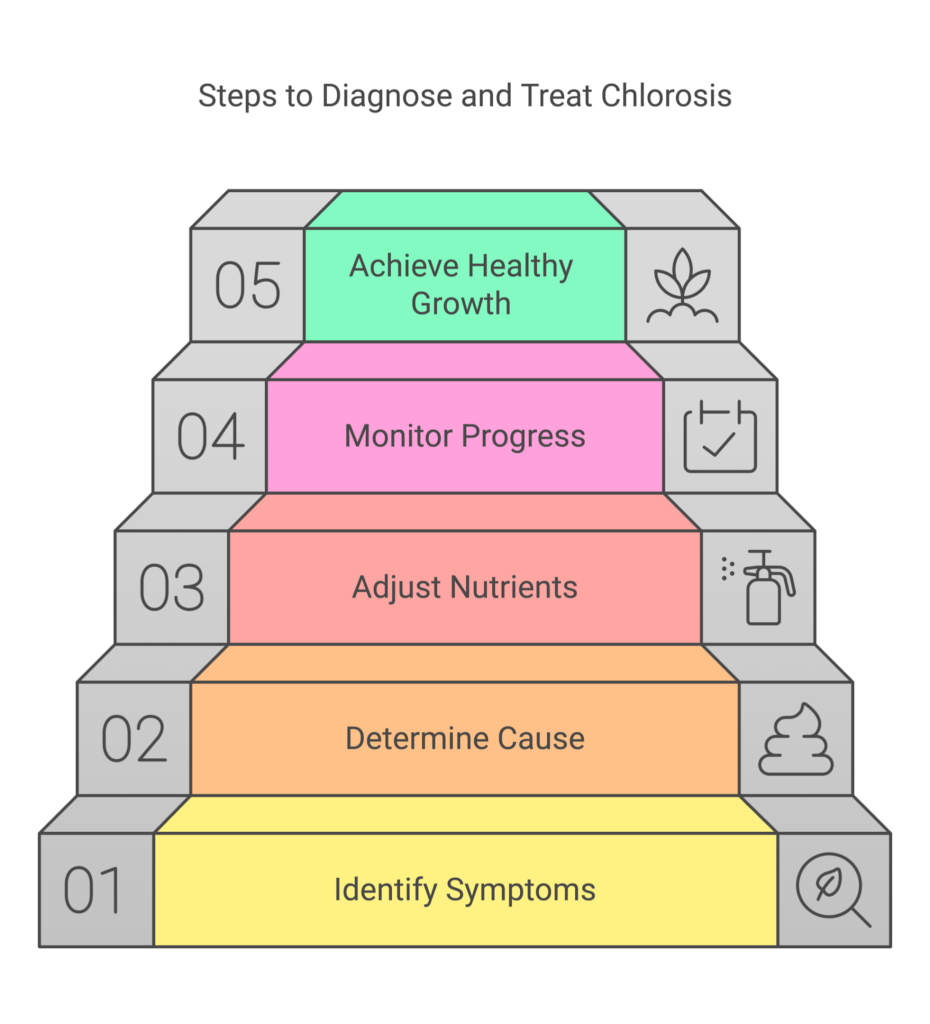
Accurate diagnosis is the key to effective treatment of chlorosis. Careful observation of symptoms and testing environmental factors are important steps.
Steps to Identify the Problem
- Examine Leaves: Look for distinct patterns, such as interveinal chlorosis or browning tips.
- Evaluate the soil through pH meters and test kits to identify any imbalances or drainage problems.
- Test for Nutrient Levels: Determine the concentration of nitrogen, magnesium, iron, and other necessary elements to find deficiencies.
Treatment Options
Foliar Sprays
- Apply nutrients directly to affected leaves for immediate relief.
- Proved to be most effective for treating magnesium and iron deficiencies.
Nutrient Adjustments
Use targeted supplements.
- Chelated iron for iron deficiencies
- Magnesium sulfate when there is a shortage of magnesium
- Nitrogen-rich fertilizers to increase greening and growth.
Avoid overfeeding and lockout by balancing nutrient solutions.
Better Root Health
- Provide better drainage and aeration for improved nutrient absorption.
- Beneficial microbes in the growing medium mean healthy roots and greater nutrient uptake.
Recovery action is fast to get plants up and growing normally again.
Nutrient Comparison Chart
| Nutrient | Deficiency Symptoms | Solution |
| Iron | Green veins, yellow interveinal areas | Apply chelated iron. |
| Magnesium | Yellow leaf edges, curling tips | Magnesium sulfate (Epsom salts) |
| Nitrogen | Yellowing leaves, stunted growth | Use nitrogen fertilizers. |
Vigilant monitoring and proactive care result in healthy plants and high yields.
Final Thoughts
Cannabis chlorosis is an easy problem to handle if proper techniques are known. Knowing what is causing it, such as nutrient deficiency or imbalance in the environment, helps you to take timely action. Maintenance of pH and nutrient levels with steady attention to the growing conditions results in a strong, resistant plant. With careful care, you can achieve a quality cannabis crop.
Frequently Asked Questions
What are some early symptoms of cannabis chlorosis?
These include yellow leaves where green veins are still visible, surrounded by yellow tissue. They usually represent nutrient imbalance or a deficiency.
How to correct magnesium deficiency in cannabis plants
Magnesium deficiency can be corrected by using magnesium sulfate, known as Epsom salts, through the soil or by foliar spray. Also, pH issues help magnesium absorption.
Why do the tips of cannabis leaves turn brown?
Brown tips usually come from nutrient burn, overwatering, or deficiencies. The problem can be solved rather effectively by adjusting the nutrient solution and improving soil drainage.