Promoting the growth of cannabis plants depends on mycorrhizae. Through a symbiotic relationship with plant roots, these helpful fungi improve overall health and nutrient absorption. By helping your cannabis to absorb more water and nutrients, mycorrhizae can develop stronger, more robust plants that provide better-quality buds.
Once you know how they function, you could potentially gain higher profits by including mycorrhizae in your growing techniques. Cannabis and mycorrhizae have a relationship that enhances soil quality and raises the ability of your plants to grow in many environments. Investigating this cooperation might help you to enhance your cannabis-growing experience.
Including mycorrhizae in your gardening will affect your yields. Interacting with these fungi will help you ensure your plants receive the best treatment, so optimizing your cannabis growing process.
Key Learning Points
- Mycorrhizae improves plant nutrition and condition in cannabis.
- These fungi strengthen the ground structure by means of their interactions.
- Using mycorrhizae can produce higher-quality buds and improved yields.
Mycorrhizal Symbiosis and Cannabis Cultivation
Improved health of cannabis plants depends on mycorrhizal fungus. These fungi improve soil quality and nutrient absorption by creating symbiotic connections with the roots. Being aware of these dynamics can help you maximize your cannabis cultivation.
Understanding Mycorrhizal Fungi
The two main forms of this fungus are arbuscular mycorrhizal fungi (AMF) and ectomycorrhizal fungi (EMF). Whereas AMF passes into the root cells, EMF develops around them.
These fungus’ generated spores germinate and grow into a hyphae network that permeates the ground. This network’s significant boost in root surface area will help your cannabis plants get more nutrients and moisture.
Symbiotic Mechanisms in Root Systems
Cannabis roots and mycorrhizal fungus form a mutualistic relationship. The fungi provide vital minerals including nitrogen and phosphorous. The photosynthesis of the plant supplies glucose for the fungus in return.
As they disperse across the ground, the hyphae also improve soil structure, therefore enhancing water retention and aeration. The fungi protect the roots against intruders, therefore boosting the plant’s immunity to disease.
Benefits To Cannabis Plants
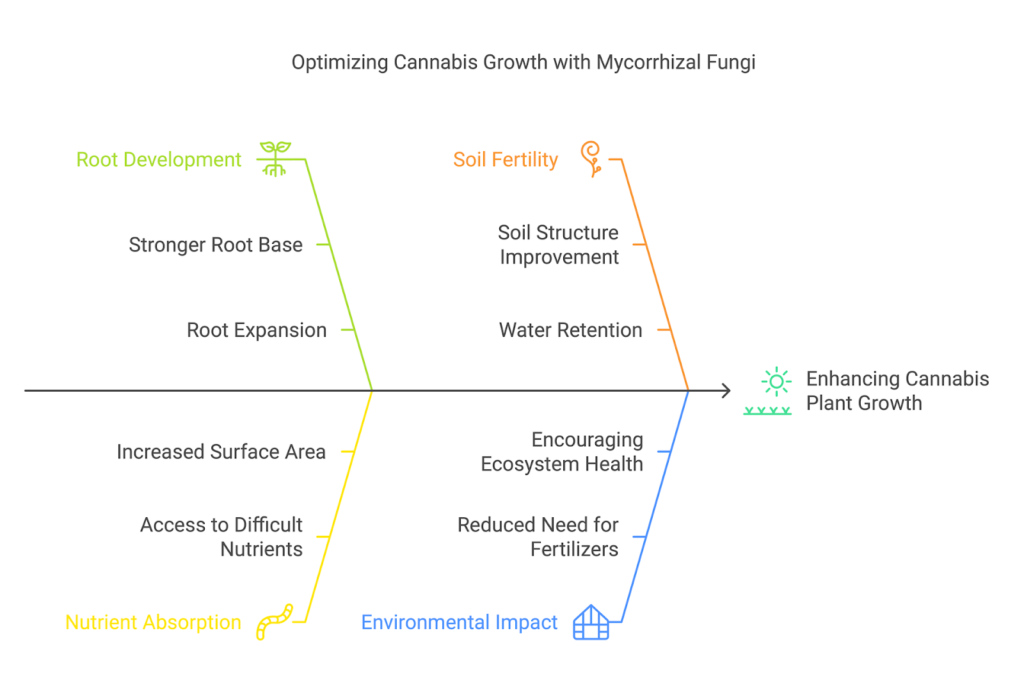
Using mycorrhizal fungus will help your cannabis plants in many different ways. A main advantage is better roots. These roots provide the plant with a stronger base and can help it to expand further.
You also see improved nutrient absorption, which drives higher output and growth. Mycorrhizal fungus helps roots to access often difficult nutrients. Furthermore, by reducing the need for artificial fertilizers, these fungi can help to encourage a more environmentally friendly development process.
Ultimately, employing mycorrhizal fungus in your cannabis growing helps a good ecosystem and has actual benefits.
Enhanced Absorption of Nutrients and Soil Health
Nutrient intake of cannabis plants depends on mycorrhizae. These beneficial fungi raise the availability of important nutrients by forming a symbiotic link with plant roots. They also assist to enhance the structure and fertility of the soil, therefore providing cannabis with a strong basis on which to grow.
Improving Nutrient Absorption
Mycorrhizae elongate the root systems of cannabis plants. They create a network reaching into more extensive and deeper soil areas. A larger root surface area makes it possible for nutrients like nitrogen and phosphorus—which are vital for plant development—to be better absorbed.
For your cannabis plants, mycorrhizal fungus gives access to nutrients they would otherwise find challenging. As tiny extensions of the roots, the fungus considerably enhances the efficiency of nutrient uptake. This link facilitates the movement of nutrients from the ground to the plant, therefore providing your cannabis with the required sustenance at every stage of development.
Fertility and the Structure of Soils
Soil structure improves with mycorrhizae. They help build aggregates that link soil particles to retain water. Due to enhanced moisture access, your cannabis plants will need less watering.
Water retention and soil fertility are improved by mycorrhizae. They increase soil microbial activity, breaking down organic matter faster. This mechanism releases cannabis-beneficial nutrients. Healthy soil promotes plant growth and yields.
Essential Nutrients for Growing Cannabis
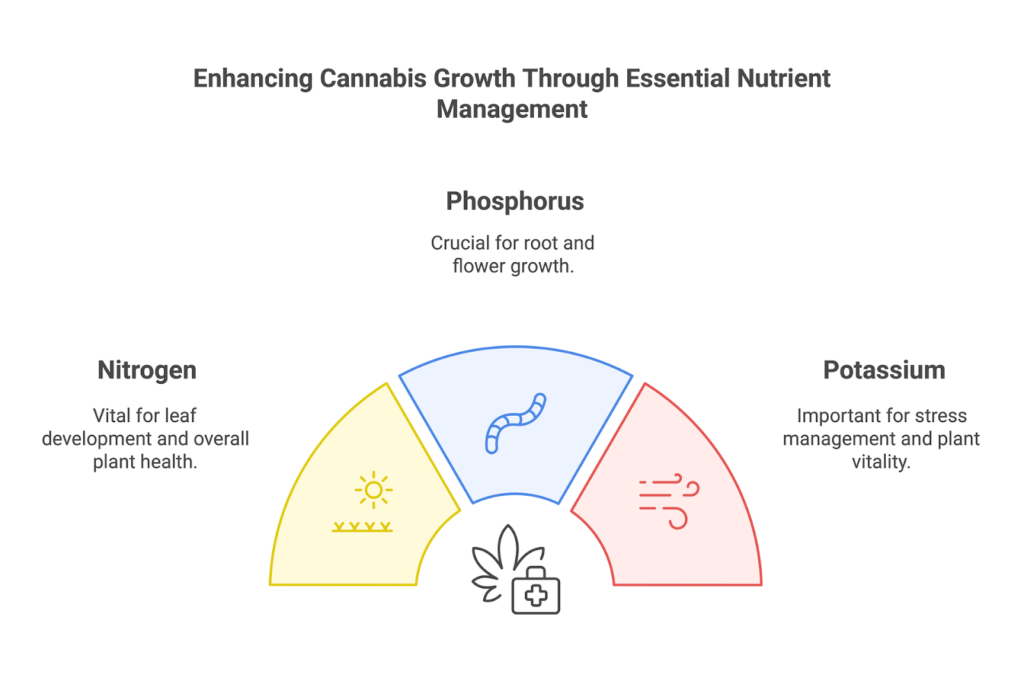
Controlling nutrients is essential in cannabis growing. Mycorrhizae aid in the absorption of essential nutrients:
- Nitrogen: Essential for the development of leaves and general plant health.
- Phosphorus: Necessary for the growth of roots and flowers.
- Potassium: Essential for managing stress and general plant health.
Mycorrhizae contribute to the growth of your cannabis plants by enhancing the absorption of these nutrients. Stronger and healthier plants that can produce high-quality crops are a result of the availability of these essential nutrients.
Adding Mycorrhizae to Cannabis Cultivation
Including mycorrhizal fungus in your production techniques can help your cannabis plants to be healthier. Direct contact between cannabis plant roots and mycorrhizae produces a mutually beneficial relationship. Particularly phosphorous, which is vital for plant growth, this symbiotic interaction enhances nutrient absorption.
One approach to introduce mycorrhizae is by adding powdered inoculants or mycorrhizal fungus to your soil mix. Many growers have found that applying these techniques generates stronger and more resilient cannabis plants, which in turn generates improved harvests.
Improving the Conditions for Growth
You must concentrate on establishing ideal growing circumstances if you want to get the most out of mycorrhizae. The efficiency of the fungus is influenced by the moisture content and aeration of your soil. Mycorrhizal development is supported by healthy soil life.
Because mycorrhizae are slightly acidic to neutral environments, it’s important to regularly check your pH levels. Controlling the temperature properly is also important. This setting promotes the growth of mycorrhizal networks, which improves your cannabis plants’ ability to obtain vital nutrients.
Eco-Friendly Methods with Lower Inputs
Growing methods are more sustainable when mycorrhizae are used. The requirement for synthetic fertilizers can be decreased with improved nitrogen absorption. This supports better soil ecosystems in addition to your cannabis plants.
Including mycorrhizal fungus in your growth method can also help you use less water. Your plants will get enough hydration without needing too much watering thanks to the fungi’s ability to hold onto moisture. This method preserves high-quality cannabis production while lowering your overall input expenditures.
Adopting these sustainable measures supports ecologically friendly growing techniques and results in better harvests.
Effects on Plant Yield and Health
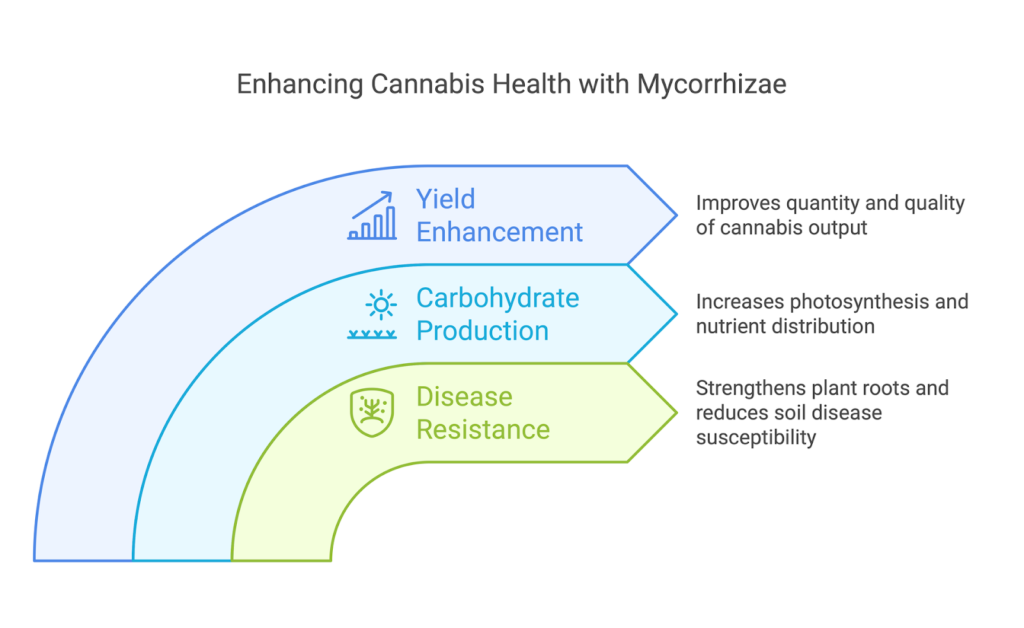
Mycorrhizae are essential for enhancing the productivity and general health of cannabis plants. These fungi improve a variety of development characteristics, from disease resistance to general nutrient intake, by developing advantageous interactions with plant roots.
Resistance to Disease
Mycorrhizal fungi increase the disease resistance of cannabis plants. By strengthening plant roots, they reduce their susceptibility to diseases carried by the soil. By forming a layer of defense surrounding the roots, the fungus lessens the chance of infection.
Mycorrhizae can also strengthen the plant’s defenses against disease. Protective chemicals are produced by mycorrhizal connections in response to pathogen exposure. By doing this, the plant becomes more resilient and may bounce back from stress or infection faster.
Improvement of Carbohydrate Production and Photosynthesis
The photosynthesis of cannabis plants is greatly impacted by this fungus. Mycorrhizae contribute to increased nutrient and water intake by enhancing root health. Higher rates of photosynthesis are made possible by this, and this has a direct impact on plant development.
The generation of carbohydrates rises in tandem with photosynthesis. These carbohydrates are then more efficiently distributed by cannabis plants, promoting growth and development. Stronger stems and branches can result from higher glucose levels, which will better sustain the plant and its yields.
Enhancement of Yield
Mycorrhizae’s beneficial benefits can increase cannabis production output. These fungi aid in ensuring that plants obtain the necessary components for strong development by improving nutrient absorption.
According to research, plants that have mycorrhizal relationships often yield more than those that don’t. Mycorrhizae can enhance the end product’s quality in addition to its quantity. Mycorrhizal fungus-enriched cannabis often has a more complex terpene and cannabinoid profile, which improves taste and potency.
Including mycorrhizal fungus in your production methods may be a good way to increase the productivity and health of your cannabis plants.
Commonly Asked Questions
Cannabis production depends on mycorrhizae. You can maximize your growing efforts by knowing their benefits, application methods, and optimum variations.
How does mycorrhizae affect cannabis growth?
Mycorrhizae helps cannabis grow by interacting with its roots. By improving nutrient and water absorption, this interaction makes plants stronger and healthier. Cannabis plants can absorb more soil nutrients with a bigger root surface area.
In what ways do mycorrhizae boost cannabis yields?
Mycorrhizae increase nitrogen intake, increasing cannabis crop yields. They enhance phosphorus uptake for growth and flowering. Stronger, larger buds increase yields.
How does mycorrhizae help cannabis flower?
They boost phosphorus uptake, which flowers need. Better nourishment during this period encourages larger, more resinous buds, improving crop quality.
What is the best way to add mycorrhizae to your cannabis plants?
Mycorrhizae can be applied to the root zone during transplanting or mixed into the soil before planting. Follow the product’s instructions for the best results. Root dipping may also work.
What is the ideal frequency of mycorrhizae treatment for cannabis crops?
At the start of your growing cycle, add mycorrhizae. Reapply during growth or transplanting. Since product frequency varies, follow the manufacturer’s directions for the appropriate application intervals.
Are some mycorrhizal fungal species better for cannabis?
Cannabis-friendly mycorrhizal fungi include Glomus intraradices and Glomus mosseae. These strains boost nutrient intake and plant health, making them good cannabis choices.