
Key Takeaways
- FAAH, or fatty acid amide hydrolase, plays a significant role in the human body since it regulates the utilization of anandamide, an endocannabinoid that assists in managing emotions, pain, inflammation, and other activities.
- An increase in anandamide resulting from FAAH inhibition could lead to a better mood, pain relief, and protection by promoting healthier signals from endocannabinoids.
- FAAH enzyme inhibitors are under examination for further research as possible treatments for mental conditions such as anxiety and depression and some neurodegenerative disorders.
- While the FAAH inhibitors portray more value, challenges of specificity, extent of action, and safety during prolonged use have to be addressed prior to their clinical utilization.
The cannabis world interests people today more than it ever did before, and a system that is important in the human body, called the endocannabinoid system (ECS), has been no exception. Undoubtedly, one of the crucial enzymes that governs this system is fatty acid amide hydrolase (FAAH). The enzyme activity dominates the home-grid decomposition of cannabinoids, which affects mood, pain, and even inflammation within the body. FAAH functions as a modulator of these hormones to cannabinoid ratios and prevents the body from having either too much or too few. This article focuses on the world of FAAH enzymes, their physiological importance, and the innovative development of new therapies.
What is Fatty Acid Amide Hydrolase (FAAH)
Fatty Acid Amide Hydrolase (FAAH) is an enzyme that serves its function in the complicated ECS by hydrolyzing bioactive lipids with an emphasis on fatty acid amides, including anandamide and oleamide.
The Role of FAAH in Endocannabinoid Breakdown
FAAH is responsible for breaking down endogenous cannabinoids such as anandamide and oleamide, both of which are derived from lipids. These biological signals are part of the endocannabinoid system (ECS). The FAAH accomplishes this by hydrolyzing them, which ensures that they are only partially effective at the cannabinoid receptors such as CB1 and CB2. If it were not for FAAH, these endogenous molecules would build up infinitely and lead to overstimulation and disorder within ECS.
Why is FAAH Considered a Membrane Enzyme
Due to its location within the lipid bilayers of cells, FAAH is designated a membrane enzyme. Further, because many of the substrates FAAH interacts with, such as amides of fatty acids, are hydrophobic, this part of the enzyme is essential for metabolism. Considered a membrane enzyme, FAAH is in a very favorable position to metabolize these lipids.
How Does FAAH Regulate the Endocannabinoid System
The activity of FAAH in the ECS of the body is required for the body to have an internal balance, physiological homeostasis.
FAAH’s Function in the Endocannabinoid System
FAAH is an enzyme that is responsible for the hydrolysis of anandamide, a fatty acid amide, bound to its cannabinoid receptors such as CB1 and CB2. Anandamide is a fatty acid amide produced on demand and acts as an intrinsic ligand to the cannabinoid receptors, as a result of which they influence physiological processes such as pain, mood, and appetite.
The FAAH system effectively removes anandamide, inhibiting endless cannabinoid reception by stopping the signals when the task is completed. This prevents overstimulation and ensures that the balanced endocannabinoid system, which is extremely important, works properly. Therefore, FAAH has indirect control over both the amplitude of endocannabinoids and the period of their existence or sustainment.
FAAH and Anandamide: A Feedback Loop
The endocannabinoid system generates a feedback loop, and FAAH takes part in negative feedback regulation. Endocannabinoid signaling begins with the production of anandamide, which in turn signals FAAH to regulate it. The signal inhibits FAAH activity during initial stages but stimulates the breakdown to maintain homeostasis. FAAH monitors the level of anandamide, mitigating the possible overstimulating effects on the receptors and preserving the necessary stimulation of endocannabinoid signaling.
FAAH assists in the modulation of anandamide concentration and in the endocannabinoid receptor activity, which is important to keep the ECS in a healthy state.
Impact on Cannabinoid Receptors (CB1 and CB2)
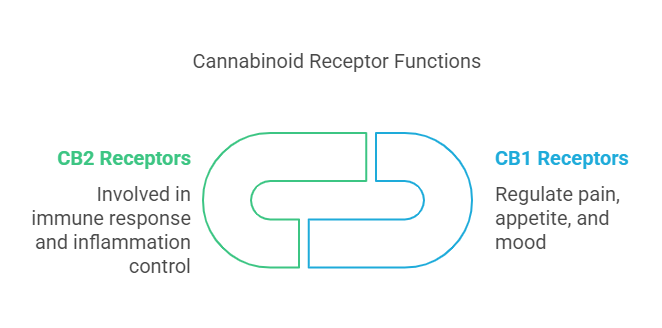
FAAH modulates and masks the overactive stimulation of CB1 receptors, which are heavily concentrated in the brain and technical nervous system, as well as CB2, which is mostly in the immune system. When these receptors are activated, unwanted effects can happen, and FAAH helps prevent this by controlling anandamide levels. Unwanted activation of these receptors can contravene cognitive functions and mess up the immune system.
- CB1 Receptors: The activation of CB1 receptors in the brain regulates processes such as pain, appetite, and mood. Relaxation or inhibition of FAAH activities leads to increased levels of anandamide; CB1 receptor activation levels rise. This provides a level of therapy for chronic pain, anxiety, and depression.
- CB2 Receptors: In the CB2 Receptors, specific FAAH implicated in the immune system aid in associational activities of inflammation and control immune responses. Enzyme FAAH is capable of lowering levels of anandamide. By doing so, it reduces the level of activity of the immune system, which could serve as a target therapy for specific immune diseases such as autoimune and neuroinflammation.
FAAH Inhibition and ECS Modulation
Anandamide levels increase and become available for binding to cannabinoid receptors when FAAH enzymes are inhibited. This improves endocannabinoid signaling. Enhanced signaling from endocannabinoids will help people who suffer from chronic pain, neuroinflammation, and mental issues such as anxiety and depression because greater activation of cannabinoid receptors will be beneficial.
- Inhibitors of fatty acid amide hydrolase have drawn attention due to their promise in anandamide elevation and alteration of the endocannabinoid system, thus providing a potential solution to many imbalances in the function of ECS.
Mechanisms of FAAH: How Does This Enzyme Work
FAAH is the catalyst enzyme that hydrolyzes amide-type fatty acids, including anandamide.
The Molecular Structure of FAAH
FAAH is classified in the serine hydrolase group of enzymes. It has an active center with a catalytic triad of amino acids. These structural characteristics allow FAAH to hydrolyze fatty acid amides. Constructing FAAH’s molecular structure is important when formulating inhibitors to target specific sites.
Hydrolase Activity in FAAH and Its Function
FAAH operates as a hydrolase by breaking the amide bonds in various substrates, including anandamide. It breaks down endocannabinoids to arachidonic acid and ethanolamine, making them inactive and incapable of signaling. This mechanism of FAAH is indispensable for homeostasis within the ECS, inhibiting excessive signaling.
The Role of FAAH in Pain and Inflammation
Learning how FAAH controls pain and swelling in tissues reveals its use for managing chronic pain, inflamed tissues, or issues associated with the ECS.
FAAH and Pain Regulation
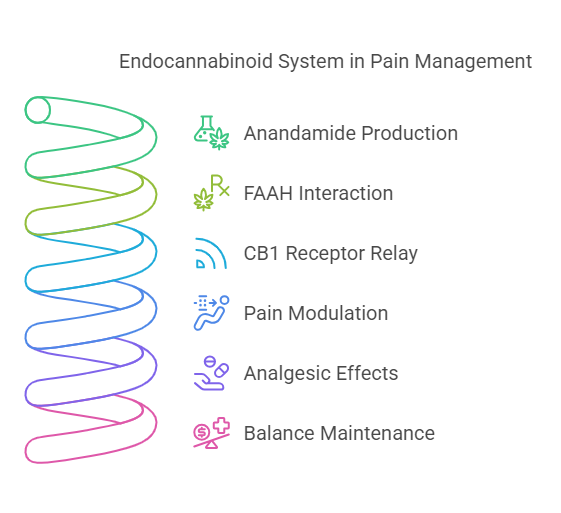
The inhibition of fatty acid amide can be useful in pain management since, when FAAH is inhibited, anandamide levels rise significantly. Anandamide produces prolonged activation of certain receptors (CB1) responsible for pain relief. Research shows that inhibitors of FAAH produce promising significant analgesic effects in neuropathic or inflammatory pain and conditions like fibromyalgia, which are otherwise difficult to manage.
Moreover, fatty acid amide hydrolase inhibitors work by raising the anandamide level, which enhances the ability to manage and modulate body pain. This presents the advantage of being able to avoid side effects that are customary of bone-deep painkillers.
FAAH and Inflammation
Besides pain, inflammation regulation is very important, and FAAH helps through its action on the immune system. Anandamide also acts on receptors CB2, which are mostly localized on immune system cells like macrophages and microglia. The effects of anandamide are assimilated through CB2 receptors; thus, inflammatory responses are diminished, and immune function is controlled.
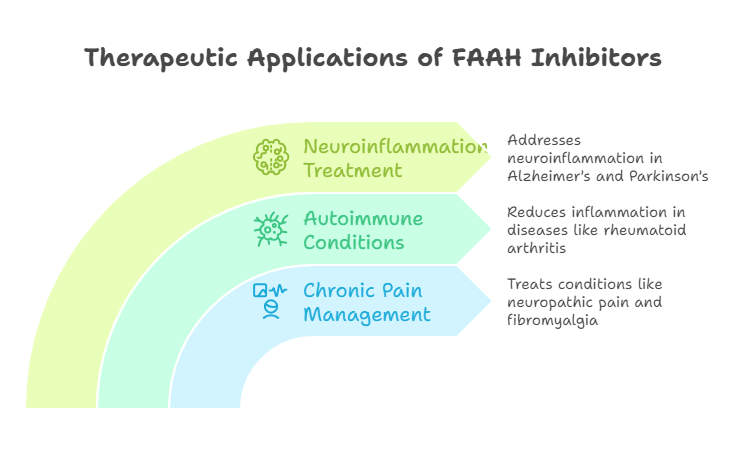
FAAH performs regulation of anandamides and, in turn, participates in control of the immune system. Biodispositional inhibition of FAAH can increase levels of anandamide, which is capable of activating CB2, and subsequently decrease pro-inflammatory cytokine secretion. This is useful in almost all cases of rheumatoid arthritis, multiple sclerosis, inflammatory bowel disease, neuroinflammation, and others that have unwanted high inflammation causing damage to tissue and disease.
Therapeutic Implications of FAAH Inhibition
There are many potential uses of FAAH inhibitors aimed especially at pain and inflammatory processes.
FAAH and Anandamide: A Key Relationship
The relationship that anandamide shares with FAAH is integral to how the endocannabinoid system functions
Anandamide as an Endogenous Cannabinoid Receptor Ligand
Anandamide, also known as the “bliss molecule,” is an endogenous cannabinoid responsible for the highest number of biological activities. It is an agonist at the CB1 and the CB2 subtypes. This lipid compound functions to control mood, pain, and appetite, which makes it very important. To maintain the physiological effects of anandamide at controlled and limited amounts, it is degraded by an enzyme known as FAAH.
How FAAH Modulates Anandamide Levels
FAAH controls anandamide levels in the body by turning it into arachidonic acids. Increasing the amount of FAAH may give a greater amount of anandamide, which improves the effectiveness of the treatment for depression and anxiety.
Insights from Human and Mouse Studies on FAAH
The use of human and mouse studies allows researchers to understand the mechanisms surrounding FAAH and also its functions in the body for treating certain diseases.
Findings from Mice Lacking Fatty Acid Amide Hydrolase
Research conducted on human and mouse fatty acid amide hydrolase revealed a high level of anandamide and other endocannabinoids. Some importance FAAH plays in ECS functions can be illustrated by these mice having reduced pain sensitivity and increased stress coping and anti-inflammation activity.
Applications of FAAH Inhibitors in Clinical Research
FAAH inhibitors have been clinically tested for anxiety disorders, chronic pain, and even neuroinflammatory diseases. Several compounds were found to be useful, but FAAH selectivity, safety, and effectiveness are challenges that remain.
Challenges in Developing FAAH Inhibitors
The potential development of FAAH inhibitors as a therapeutic agent entails some challenges.
Specificity Issues in FAAH Inhibitors
One of the major limitations of using FAAH inhibitors is achieving adequate specificity for FAAH, while not affecting other members of the enzyme family. Off-target activity can lead to altered physiology that is not intended, decreasing the value of the therapeutic application of these compounds.
Strategies to Enhance the Efficacy of FAAH Inhibitors
Due to the promise shown by FAAH inhibitors, a lot of effort is going into developing them. One of the methods being used towards that goal is advanced methods like structure-based drug design for selective FAAH inhibitors. The objective of these approaches is to enhance the structure-activity relationships between the inhibitors and the enzyme responsible for the degradation of FAAH to enhance efficacy and reduce adverse effects.
FAAH in Neuroprotection and Mental Health
Research has looked into how the FAAH genes’ inhibition or modulation could be beneficial therapeutically in several mental health problems and neurodegenerative diseases given the function of the FAAH gene in endocannabinoid metabolism.
The Role of FAAH in Anxiety Regulation
FAAH restricts anxiety by controlling the concentration of anandamide, which binds to CB1 receptors that are linked with stress and mood. Inhibition of FAAH genes has previously demonstrated anxiolytic activity in some preclinical trials, which implies that it could be beneficial for treating anxiety disorders.
FAAH Inhibition as a Potential Therapy for Neurodegenerative Diseases
By increasing endocannabinoid levels, FAAH inhibitors may offer neuroprotection in Alzheimer’s and Parkinson’s diseases. Inhibitors of this type mitigate inflammation of the nervous tissue and the oxidative stress that contribute to neurodegeneration.
Future Directions in FAAH Research and Drug Development
The development of reversible and irreversible FAAH inhibitors is progressing at a rapid pace. Newer compounds that possess higher specificity and less toxicity are being sought for the development of safer and more effective therapies.
The Next Frontier in Endocannabinoid System Research
More research will be done on potential FAAH inhibitors’ effects on the health and diseases of a human. This includes how it could help in complex ailments like chronic pain, cancer, and psychiatric disorders and how it might be useful for personalized medicine.
Conclusion
FAAH (fatty acid amide hydrolase) is essential to process the degradation of an important endocannabinoid such as anandamide that basically modulates emotions, controls stress, and imparts neuroprotection. From the information obtained so far, it is clear that FAAH affects mental health as well as the functioning of the nervous system. Therefore, its inhibition is likely to offer a solution to these and a myriad of other diseases. As we start to understand FAAH’s contribution toward mental health and neuroprotection further, the prospects for FAAH inhibitors as a future treatment option appear bright.
Frequently Asked Questions
What is FAAH and why is it important
FAAH (fatty acid amide hydrolase) is an enzyme responsible for the breakdown of anandamide, an endocannabinoid which plays a vital role in mood regulation, pain sensitivity, and inflammation.
How does FAAH affect mental health
The levels of FAAH activity can have a determinant impact on generalized anxiety disorder, as well as depression. An increase in relaxation also correlates with anandamide breakdown, meaning FAAH can change mood and stress levels.
What are FAAH inhibitors and how do they work
FAAH inhibitors are substances preventing the activity of FAAH enzymes, raising the levels of anandamide, and accelerating mechanisms of action that alter mood, relieve pain, and even provide neuroprotection.
What diseases could benefit from FAAH inhibition
FAAH inhibition might be useful in the management of neurodegenerative conditions such as depression, anxiety, Parkinson’s disease, and Alzheimer’s.
Disclaimer: This article is intended for informational and educational purposes only and should not be considered medical, legal, or professional advice. The information provided is not intended to diagnose, treat, cure, or prevent any disease or health condition. Always consult a qualified healthcare professional before making decisions regarding your health, medications, or treatment options. Research on FAAH enzymes, endocannabinoids, and cannabinoid-related therapies is ongoing, and scientific understanding may evolve over time. Products containing cannabinoids may not be legal in all jurisdictions, so readers should review and comply with applicable local, state, and federal laws.