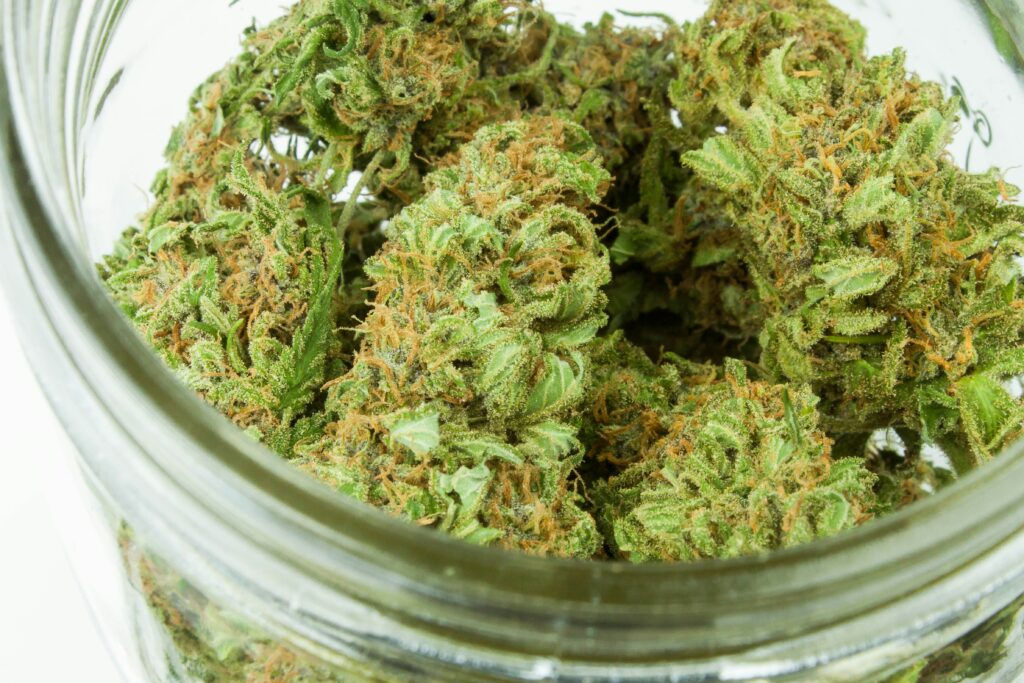
Have you ever wondered why people keep talking about that spicy, peppery scent in certain plants, especially when they discuss ways to support overall health? If so, you’re in the right place. Let’s take a casual but informative stroll through the world of cannabis beta caryophyllene, a fascinating substance found in the cannabis plant and various essential oils like black pepper and clove oil. We’ll uncover what makes β caryophyllene tick, how it might nurture your immune system and central nervous system, and why it’s generating so much buzz in medical cannabis research.
Key Takeaways
- Therapeutic potential: Alongside other natural compounds from cannabis sativa, beta caryophyllene may support chronic pain, immune regulation, and mood disorders.
- Direct binding with CB2: By targeting CB2 receptors, BCP uniquely promotes anti-inflammatory effects and reduces systemic inflammation.
- Anxiety support: In animal studies, it shows promise for easing anxiety-like behavior, suggesting potential benefits for anxiety disorders and other neuropsychiatric conditions.
What Are the Main Health Benefits of Cannabis Beta-Caryophyllene?
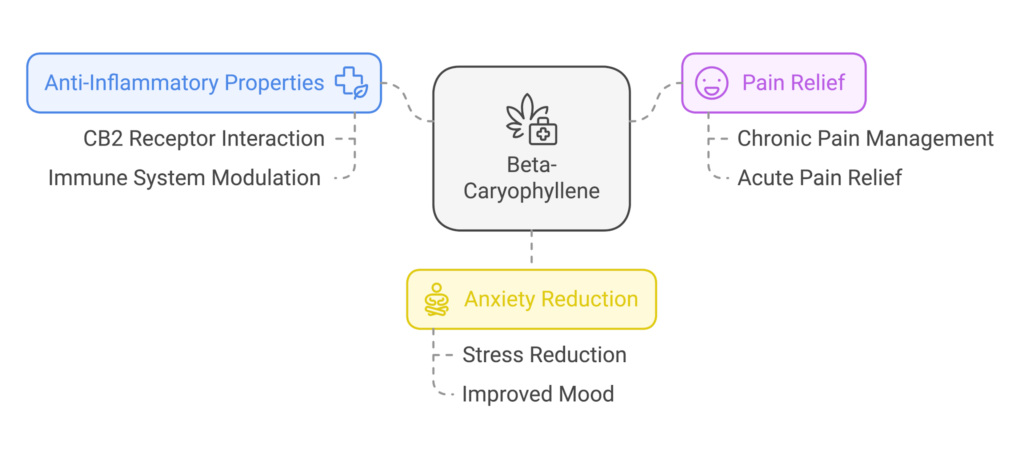
Imagine looking for a plant-based ally that would support a balanced body and mind. Cannabis beta caryophyllene fits the bill, providing numerous health benefits from soothing inflammation to supporting emotional well-being. It brings a gentle, non-intoxicating approach to wellness through interaction with your endocannabinoid system.
Its Anti-Inflammatory Edge
Ask any scientist about cannabis derived compounds, and you’ll probably hear about their anti inflammatory properties—with β caryophyllene right near the top of that list. Because it works directly with cannabinoid receptors, this terpene can produce a significant reduction in the markers related to inflammation.
Before we jump into how that might help you, here’s a snapshot of what β caryophyllene can do:
- It has modulatory effects on the body’s inflammatory responses, potentially easing chronic pain from lingering conditions.
- Unlike some treatments that have psychoactive effects, it seems to operate without causing big changes in perception or cognition.
- Future studies aim to confirm whether the highest dose tested might offer consistent benefits across various cannabis strain types.
That list might already look pretty impressive. But let’s not forget: beta caryophyllene also shows promise when it comes to mitigating systemic inflammation, which can be a driving force behind ailments like Alzheimer’s disease and other neurodegenerative disorders.
Potential Pain Relief
Chances are, if you’ve been dealing with discomfort, you’d give just about anything to find a safe solution. By targeting CB2 receptors in the endocannabinoid system, cannabis beta caryophyllene may offer pain relief that goes beyond the standard “quick fix.”
- It may soothe neuropathic pain by promoting anti-inflammatory actions.
- It might bolster well-being by lessening the effects of mood disorders that arise alongside constant aches.
- Recent studies suggest it helps preserve normal movement and daily function in rodent models.
There’s a fair chance you’ll see significant results once researchers thoroughly map out ideal dosing methods (sometimes referred to in labs as the dosing beaker approach). Let’s pause here for a moment and then head into how it meshes with your body’s natural rhythms.
How Does Beta-Caryophyllene Interact with Your Body’s Systems?
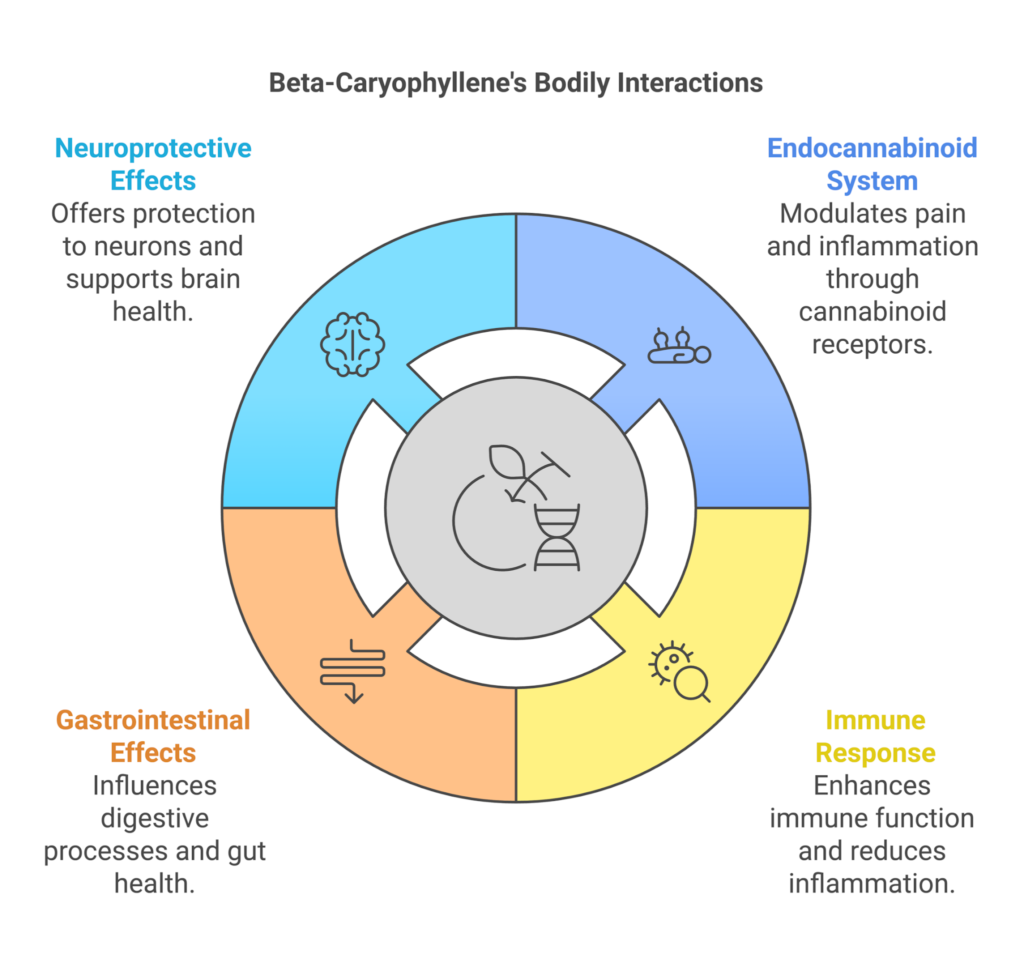
If you’ve ever wondered why certain compounds just “click” with the human body, you can thank receptor networks like the endocannabinoid system. Cannabis beta caryophyllene has a knack for locking onto CB2 receptors, driving changes that might be beneficial for everything from immune regulation to stress management.
CB2 Receptors and Immune Regulation
The interplay between beta caryophyllene and CB2 receptors has captured attention for its promising role in immune regulation. When this compound interacts with your immune machinery, the following perks may appear:
- Reduced systemic inflammation, which could lessen the severity of pathological conditions.
- Behavioral effects tied to chronic inflammation, like irritability, might be mitigated.
- Potential improvement in neuropsychiatric conditions that can worsen with unchecked immune responses.
If you’ve been exploring medical cannabis for overall wellness, the synergy of cannabis derived compounds that zero in on CB2 might be right up your alley.
Influence on the Central Nervous System
You may have heard about the swirl of tests—novel object approach test, object approach test, open field exploration test, or even the marble burying test—that scientists use on animal models to gauge how substances affect behavior. Well, cannabis beta caryophyllene shows up in a good number of these experiments:
- Anxiolytic effects were noted when animals spent more time exploring new objects and less time exhibiting anxiety like behavior.
- Novelty suppressed feeding studies suggest a calmer mental state might emerge, indicating antidepressant effects.
- Through direct binding to certain endocannabinoid receptors, it may play a part in fine-tuning mood, potentially assisting those with eating disorders or mood disorders.
This data sparks a world of possibilities, though much remains to be explored to gain a truly better understanding of its scope.
What Conditions Could Benefit from Cannabis Beta-Caryophyllene?
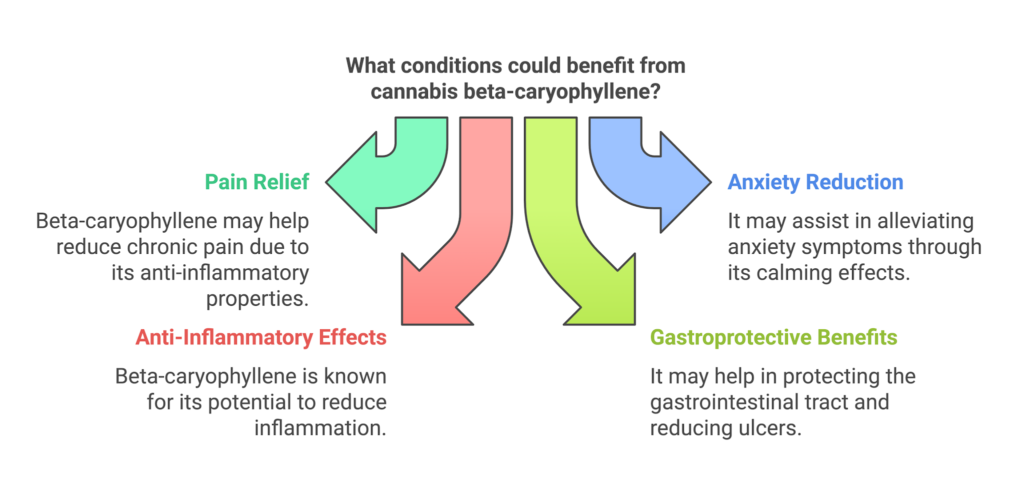
You might be thinking, “Alright, so this compound is versatile, but who exactly might find it helpful?” The answer spans an eclectic mix of ailments. Whether you’re struggling with neurodegenerative disorders, certain anxiety disorders, or even the discomforts of chronic pain, research points to some impressive applications.
Neuropsychiatric and Mood Disorders
Science has pointed to a notable role for cannabis beta caryophyllene in tempering the symptoms of neuropsychiatric disorders, not to mention general ups and downs. How does it manage that?
- Studies in mouse models hint at anxiolytic like effect with fewer signs of anxiety levels in stressful conditions.
- Significant reduction in stress behaviors, especially during the open field exploration test.
- Potential synergy with other natural compounds in delivering an entourage effect, where multiple components amplify each other’s benefits.
Even though alcohol intake sometimes complicates mental health, future studies may examine how beta caryophyllene supports emotional stability by lowering excessive inflammation and stress hormones.
Chronic and Neuropathic Pain
Pain is such a universal concern that any breakthrough here sparks intense interest. Because β caryophyllene aligns perfectly with CB2 receptors, it’s been researched for handling both chronic pain and neuropathic pain.
- Its anti inflammatory actions might address sore joints and muscles by decreasing systemic inflammation.
- It offers the possibility of relief without producing only a sedative effect.
- Individuals grappling with neuropsychiatric disorders linked to pain might see complementary advantages, such as better mood and enhanced coping ability.
The emerging role of cannabis beta caryophyllene in combating persistent discomfort has piqued the curiosity of many, making it an interesting candidate for both mainstream and alternative therapies.
How Can You Incorporate Beta-Caryophyllene into Your Wellness Routine?
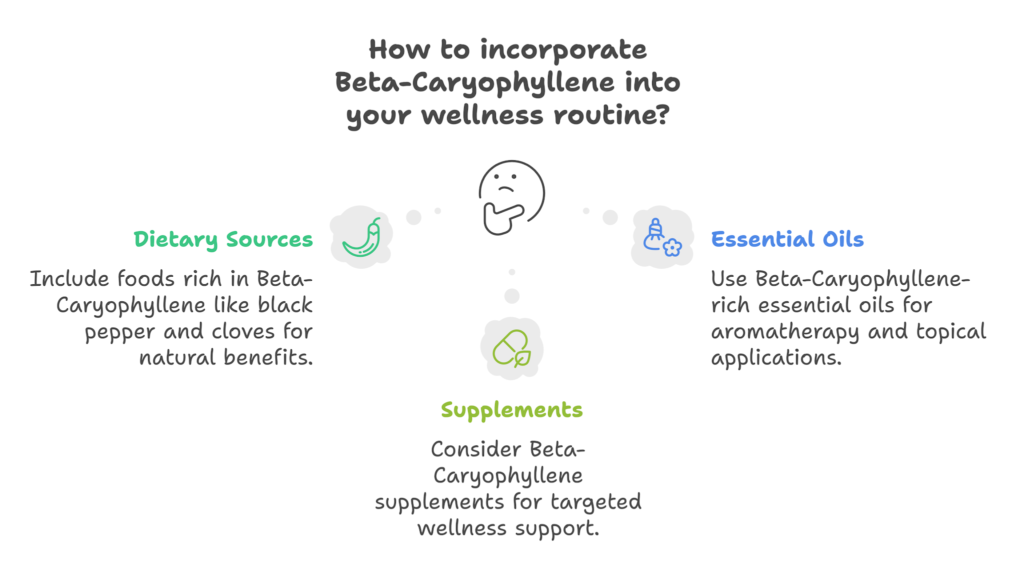
Now that you’ve got a handle on what cannabis beta caryophyllene brings to the table, you might be itching to figure out how to tap into its therapeutic benefits. Approaches range from full-blown medical cannabis usage to simpler methods like adding black pepper or clove oil to your diet in moderate doses.
Exploring Various Strains and Methods
You may want to consider a cannabis strain rich in beta caryophyllene if you’re keen on harnessing its therapeutic effects. This process often involves talking with healthcare professionals and reviewing any existing conditions that could be affected by cannabis derived compounds. Here’s a quick chart to see how beta caryophyllene compares to other common cannabis constituents:
| Aspect | Beta-Caryophyllene (BCP) | Other Cannabis Components |
| Primary Target | CB2 receptors (unique direct binding) | Mostly CB1 or broader receptor activity |
| Inflammation Control | Notable anti inflammatory effects | Varies by compound; may be less targeted |
| Psychoactive Effects | Minimal; no heavy sedative effect | Some (e.g., THC) can be more psychoactive |
Spend a moment comparing these features. It can help you decide whether BCP-containing products best meet your needs.
If you’re more comfortable dipping your toes in gently, consider building your routine step by step.
- Consult a professional about oral administration or topical use.
- Start low and gradually find the higher doses that work for you without unwanted behavioral effects.
- Keep track of any significant increase or decrease in symptoms over time.
Give yourself room to experiment safely, as not everyone responds the same way. Up next, let’s see how essential oils might factor into your wellness plan.
Using Essential Oils in Your Daily Life
You don’t necessarily need a prescription to start enjoying beta caryophyllene. Because it’s naturally present in essential oils like clove oil and black pepper, you might incorporate these into your cooking, aromatherapy, or even topical applications.
- Mix a drop or two of pepper or clove oil into a carrier oil for a soothing rub on sore spots.
- Infuse your meals with black pepper for a subtle daily dose of beta caryophyllene.
- Pair essential oils with gentle self-care techniques, like light massage or mindful breathing, for added relief.
Remember that synergy with other cannabis derived compounds—often called the entourage effect—may deliver an even broader array of therapeutic potential. Give yourself permission to explore different combinations under proper guidance.
Conclusion
And there you have it: cannabis beta caryophyllene is an interesting, multifaceted player in the wellness arena. Whether you are looking to soothe systemic inflammation, address mood disorders, or get some much-needed relief from chronic pain, this terpene is worth a second glance. There is still so much to be learned, but the significant decrease in harmful inflammation, the clear anxiolytic effects, and the multiple studies on animal models speak volumes about its promise.
Frequently Asked Questions
Can Beta-Caryophyllene Help with Anxiety Disorders?
It shows anxiolytic effects in animal studies, such as the open field test, but more human research is needed to confirm its potential.
Is Beta-Caryophyllene Psychoactive?
No, it interacts with CB2 receptors without causing psychoactive effects, offering benefits without impairment or sedation.
Could Beta-Caryophyllene Help with Neurodegenerative Disorders?
It may help conditions like Alzheimer’s due to its anti-inflammatory and immune-regulating properties, but further studies are needed.