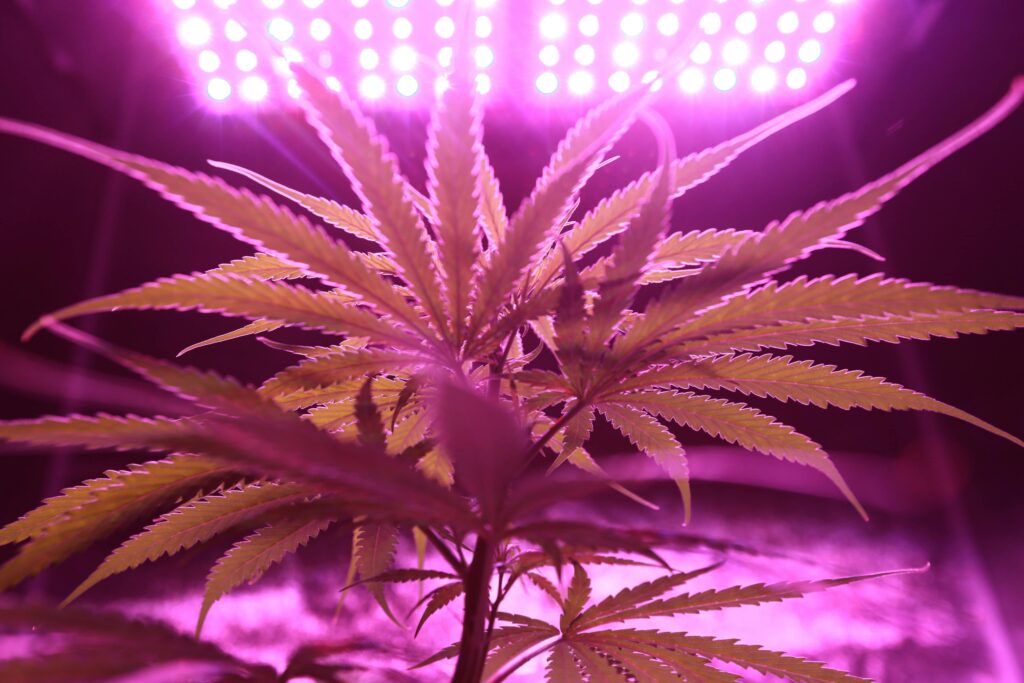
Cannabis light burn is a frustrating but preventable issue that many growers encounter, particularly when using powerful grow lights like LED grow lights. This condition occurs when cannabis plants are exposed to too much light or excessive heat, which can lead to visible damage, such as bleached buds and stunted growth. The key to success lies in recognizing the signs of light stress early and adjusting your approach to ensure your plants thrive at every growth stage.
Key Takeaways:
- Light burn symptoms include yellowing leaves, brown spots, and slowed growth, especially during the vegetative stage.
- Proper management of light intensity, distance, and cycles is crucial to avoid light burn.
- Balancing environmental factors like temperature, humidity, and ventilation supports plant health and prevents stress.
What Are the Symptoms of Cannabis Light Burn?
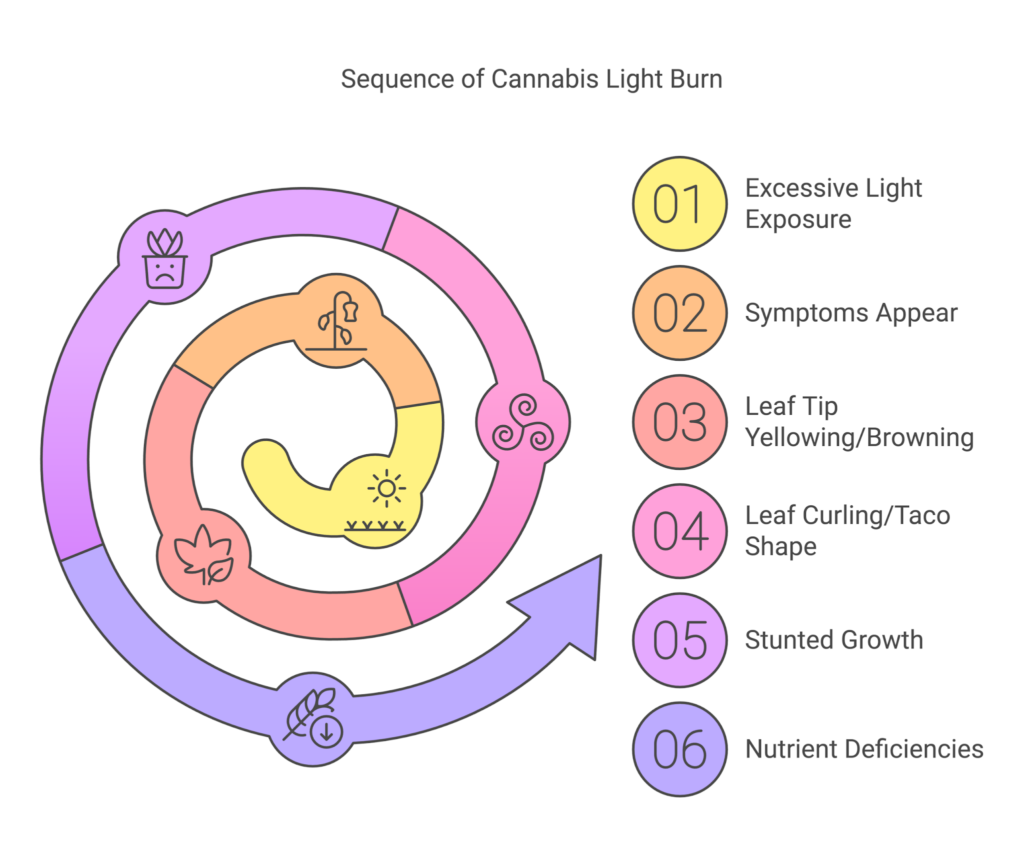
Spotting the signs of cannabis light burn early can save your crop. Most growers notice visible damage to their plants first.
Yellow Leaves and Brown Spots
One of the earliest signs of light burn on your cannabis is yellowing leaves, particularly near the top of the plant where light hits most intensely.
- Leaves may appear scorched or develop brown spots.
- These symptoms often resemble nitrogen deficiency but typically affect the upper parts of the plant first.
Bleached Buds and Stunted Growth
Excessive light exposure, especially from LED grow lights, can bleach cannabis buds, turning them an unnatural white.
- Bleached buds are often devoid of potency and terpenes, reducing the plant’s overall value.
- Growth may stagnate during both the vegetative and flowering stages, as the plant’s ability to conduct photosynthesis is impaired.
Comparing Light Burn vs. Nutrient Burn
Differentiating between light burn and nutrient burn can help pinpoint the cause of your plant’s stress. Here’s a comparison:
| Symptom | Light Burn | Nutrient Burn |
| Leaf discoloration | Yellowing or bleaching | Browning or curling of tips |
| Affected plant areas | Upper leaves and buds | Lower leaves and edges |
| Main cause | Intense light hitting plants | Excess or imbalance in feeding |
Understanding these differences ensures timely and accurate corrections.
How Can You Prevent Cannabis Light Burn?
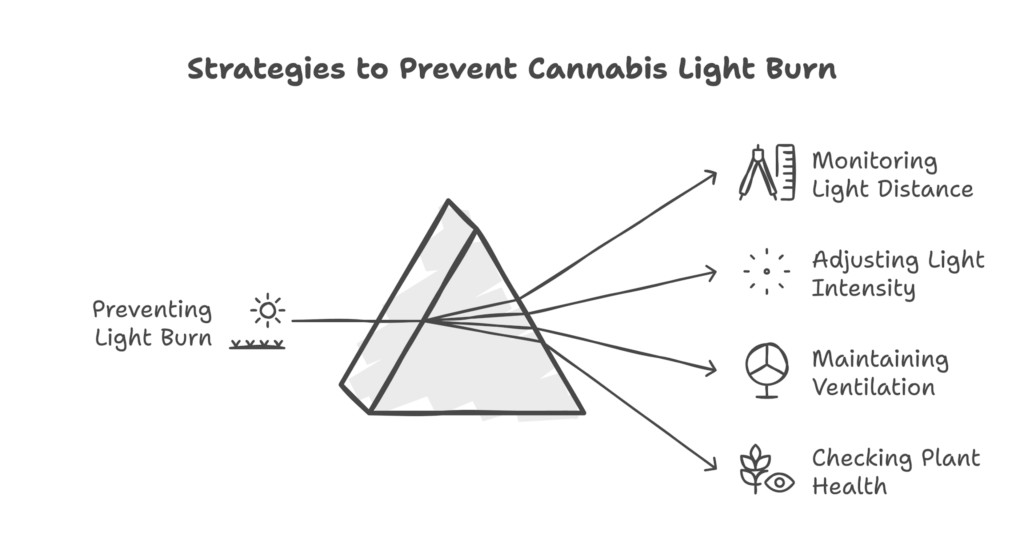
Preventing light burn requires careful attention to your grow setup and the needs of your plants at different stages.
Proper Light Distance and Intensity
Maintaining the optimal distance between your grow lights and plants is one of the most effective ways to avoid light burn.
- Use tools like lux meters or PAR meters to measure light intensity.
- Adjust the height of LED grow lights to keep them within a safe range, especially as plants transition from the seedling stage to the vegetative stage.
- Knowing how much light your plants need at each stage can prevent excessive exposure.
Maintaining Your Grow Room Environment
Cannabis plants thrive when environmental factors are carefully managed.
- Ventilation: Ensure proper airflow to reduce heat buildup and light stress.
- Temperature control: Prevent high temperatures by using fans, air conditioning, or exhaust systems.
- Humidity: Balance humidity levels to help plants recover from stress caused by excessive light intensity.
Before Adjustments:
- Look for early signs of light stress, such as curled leaves or white spots from light bleaching.
- Check the light schedule to match the plant’s current growth stage.
After Adjustments:
- Monitor plant response daily to ensure recovery.
- Gradually reduce light intensity to avoid shocking the plants.
These steps not only help prevent light burn but also improve overall plant performance by reducing stress and ensuring consistent growth.
What’s the Impact of Excessive Light and Heat on Cannabis Plants?
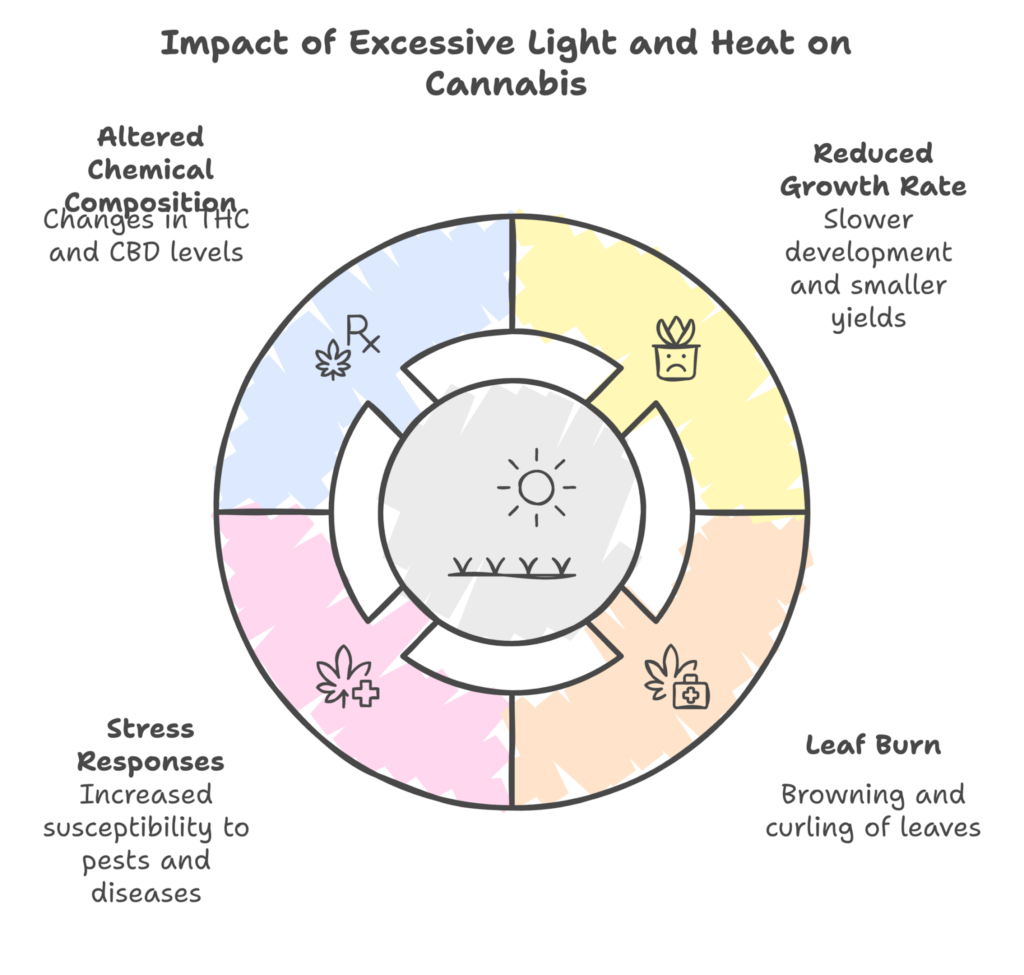
Too much light or heat can cause multiple issues, from stunted growth to a complete halt in plant development.
Effects of Excessive Light Exposure
Excessive light intensity can overwhelm cannabis plants, leading to irreversible damage.
- Bleached buds: Buds turn white and lose potency, becoming less desirable.
- Burn on your cannabis: Leaves may show physical signs of stress, such as brown spotting or curling.
- Impaired photosynthesis: Overexposed plants struggle to convert light into energy, affecting growth and yields.
Managing Excess Heat in Your Grow Room
Heat emitted from grow lights, especially older models like high-pressure sodium lamps, can exacerbate light burn.
- Position lights carefully to avoid direct exposure to intense beams.
- Use carbon dioxide supplementation to improve the plant’s resilience against heat stress and optimize photosynthesis.
- Invest in reflective materials that disperse light evenly across the grow room to prevent hotspots.
With a balanced setup, your cannabis plants will have the best chance to reach their full potential.
How Do You Identify and Treat Light Burn in Cannabis?
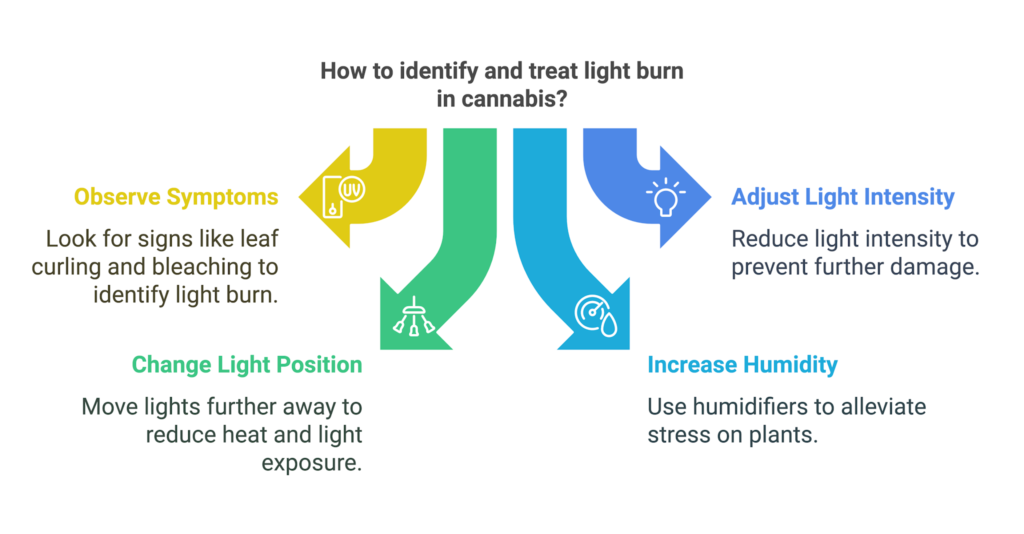
Quick action is essential when dealing with light burn. Here’s how to identify and address it effectively.
Early Signs of Light Burn
Early detection can minimize damage and save your plants from unnecessary stress.
- Leaves near the top of the canopy turn yellow and may curl upwards.
- Buds in the flowering stage develop white patches from light bleaching.
- Brown spotting appears on areas exposed to intense light.
Steps to Treat Light Burn
Addressing light burn involves making gradual adjustments to protect your plants.
- Adjust light distance: Move grow lights higher to ensure they’re at the optimal distance.
- Modify light cycles: Shorten exposure times to give plants adequate rest periods.
- Prevent light stress: Gradually acclimate plants to changes in light intensity.
- Enhance airflow: Improve ventilation to regulate temperature and disperse excess heat.
Additional Recovery Tips:
- Increase humidity slightly to reduce stress on leaves.
- Monitor high temperatures and adjust equipment to maintain a stable environment.
- Introduce light breaks during the day to reduce stress on your cannabis plants.
With consistent care, plants usually recover well, resuming healthy growth and yielding quality buds.
Final Thoughts on Cannabis Light Burn
Cannabis light burn is a challenge, but it’s entirely manageable with proper care and attention. By understanding how much light your plants need and maintaining a balanced grow room environment, you can prevent issues like light bleaching and stunted growth. Remember, healthy cannabis plants are a result of mindful cultivation practices that focus on their unique needs at every stage.
Frequently Asked Questions
How can you avoid light burn in cannabis plants?
Avoid light burn by maintaining the optimal distance between your grow lights and plants, monitoring light cycles, and ensuring proper ventilation. Gradually increase light intensity as your plants grow to prevent sudden stress.
What are the early signs of marijuana light burn?
Early signs of marijuana light burn include yellowing leaves, curling edges, and white patches on buds caused by light bleaching. These symptoms are most noticeable in the seedling stage and early vegetative stage.
Can high temperatures worsen light burn?
Yes, high temperatures amplify the effects of light burn by stressing the plant’s environment. Proper ventilation, consistent humidity, and reflective materials can help mitigate these risks.